Blog

  • DISM /Online /Cleanup-Image /RestoreHealth – Repair Corrupted Windows Images

    DISM /Online /Cleanup-Image /RestoreHealth – Repair Corrupted Windows Images

    The DISM /Online /Cleanup-Image /RestoreHealth command serves as one of Windows’ most powerful built-in repair tools, designed to fix corrupted system images from within the operating system. When Windows updates fail, applications crash unexpectedly, or system files become damaged, this command can often restore stability without requiring a full reinstallation. Understanding when and how to use it properly can save hours of troubleshooting and potential data loss.

    Unlike simple troubleshooting utilities, DISM RestoreHealth targets the foundation of Windows functionality—the component store and WinSxS folder where critical system files reside. The command operates by replacing corrupted or missing files with clean versions pulled from either Windows Update servers or a local installation source. This makes it an essential tool for both routine maintenance and emergency recovery scenarios.

    This guide covers the complete functionality of DISM /Online /Cleanup-Image /RestoreHealth, including proper execution syntax, common failure modes, and how it differs from other repair utilities. Whether working with Windows 10 or Windows 11, the information below applies to both consumer and server editions.

    What Does DISM /Online /Cleanup-Image /RestoreHealth Do?

    The DISM command, short for Deployment Image Servicing and Management, repairs the Windows component store—a protected area containing essential system files. When the /Online flag is added, the tool targets the running operating system’s image rather than an offline Windows file. The /Cleanup-Image parameter prepares the image for repair, while /RestoreHealth executes the actual restoration process by downloading clean copies of corrupted files from Windows Update.

    Quick Reference

    DISM /Online /Cleanup-Image /RestoreHealth repairs corrupted Windows system images by replacing damaged files with trusted copies from Windows Update or a local installation source.

    Purpose
    Repairs corrupted Windows system image using trusted sources
    When to Use
    After SFC /scannow fails or BSOD/system instability occurs
    Requirements
    Admin Command Prompt, internet (default), Windows 10/11
    Risk Level
    Low – non-destructive to user files

    Key Insights

    • Repairs the component store before SFC can successfully replace system files
    • Fetches replacement files from Windows Update servers by default
    • Often resolves approximately 80-90% of system file corruption issues
    • Microsoft recommends running DISM first, then SFC /scannow for complete repair
    • The command modifies protected system files but does not affect personal data
    • Works on both running operating systems and offline images
    • Supported across Windows 10, Windows 11, and Windows Server editions

    Quick Facts

    Fact Details
    Command Syntax DISM /Online /Cleanup-Image /RestoreHealth
    Default Source Windows Update (requires internet connection)
    Alternative Source /Source:WIM:<path> for offline repair
    Expected Duration 10-60 minutes depending on corruption level
    Supported OS Windows 10/11 (Server editions supported)
    Success Indicator Progress reaches 100%, message shows “operation completed successfully”

    How Do I Run DISM /Online /Cleanup-Image /RestoreHealth?

    Running DISM RestoreHealth requires administrator privileges to access and modify protected system files. The process begins by opening an elevated Command Prompt or PowerShell window, which can be accomplished by right-clicking the Start button and selecting “Terminal (Admin)” on Windows 11 or “Command Prompt (Admin)” on Windows 10.

    Standard Command Sequence

    Microsoft recommends running commands in a specific sequence to ensure comprehensive diagnostics. First, use DISM /Online /Cleanup-Image /CheckHealth for a quick status check. This completes almost instantly and reports whether the image is healthy, repairable, or requires manual intervention. Next, run DISM /Online /Cleanup-Image /ScanHealth for a deeper examination—this scan may take several minutes and can report whether corruption was found and if repair is possible.

    The actual repair command DISM /Online /Cleanup-Image /RestoreHealth should only be executed after these preliminary scans complete. The full restore operation downloads replacement files from Windows Update, which requires an active internet connection and can take anywhere from fifteen minutes to over an hour depending on system conditions.

    Using an Offline Source

    When Windows Update is inaccessible or unreliable, specifying a local source prevents the common error 0x800f081f (“The source files could not be found”). This approach requires a Windows installation media—either a USB drive or ISO file containing the same Windows version and edition as the installed system.

    DISM /Online /Cleanup-Image /RestoreHealth /Source:wim:E:\sources\install.wim:6 /LimitAccess

    The /Source parameter points to the Windows Image file (WIM) located in the sources folder of installation media. The colon followed by a number indicates the specific image index—for example, “:6” references the sixth edition within the WIM file. The /LimitAccess flag prevents DISM from attempting to contact Windows Update if the local source fails, which can otherwise cause delays or additional errors.

    Finding Your Index Number

    Use the command DISM /Get-WimInfo /WimFile:E:\sources\install.wim to list all editions contained in the WIM file. Match the index number to your installed Windows edition and build version to avoid source mismatches.

    Running in Safe Mode or Recovery Environment

    If the standard Windows environment fails to complete DISM successfully, booting into Safe Mode or the Windows Recovery Environment provides a cleaner operating context. To enter Safe Mode, navigate to Settings > Recovery > Advanced startup and click “Restart now.” After the system restarts, select Troubleshoot > Advanced options > Command Prompt.

    Alternatively, boot from a Windows installation USB drive and choose “Repair your computer” instead of proceeding with installation. From the Recovery Environment, run DISM commands against the attached installation media as the source. This method proves particularly valuable when corruption prevents normal Windows startup.

    Why Does DISM RestoreHealth Fail and How to Fix It?

    The most frequent DISM RestoreHealth failure occurs when the tool cannot locate the necessary replacement files. Error 0x800f081f, displaying the message “The source files could not be found,” indicates that neither Windows Update nor any specified local source could provide matching repair files. This typically happens when Windows Update is disabled, blocked by network configuration, or when the system image version does not align with available online sources.

    Fixing Error 0x800f081f

    The primary solution involves providing a matching Windows installation source. Download the Windows Media Creation Tool from Microsoft’s official website and create an ISO file matching your exact Windows version, edition, and build number. Mount the ISO or extract its contents, noting the drive letter assigned by Windows. Modify the DISM command to point toward the install.wim file within the sources folder.

    Version Matching Required

    DISM RestoreHealth fails if the source files do not exactly match your installed Windows edition. Mismatched versions—not just different editions but also different build numbers—will result in error 0x800f081f. Always verify your Windows version by running winver in Command Prompt before downloading installation media.

    Resolving Stuck or Hanging Processes

    DISM RestoreHealth sometimes stalls at a specific percentage, commonly around 20%, for extended periods. This behavior typically indicates network timeout issues when pulling files from Windows Update, particularly on slower connections or during high-traffic periods. Patience remains advisable as the process may eventually complete, but extended stalls beyond thirty minutes often warrant intervention.

    Running DISM /Online /Cleanup-Image /RestoreHealth /LimitAccess eliminates Windows Update as a fallback option, which can resolve hanging issues caused by the tool attempting multiple download sources. If this proves ineffective, switching to Safe Mode or the Recovery Environment eliminates background processes that might interfere with file replacement operations.

    Running SFC Before DISM

    Microsoft documentation recommends running sfc /scannow before attempting DISM RestoreHealth. While this might seem counterintuitive—the standard repair sequence is actually SFC followed by DISM followed by SFC again—the initial SFC run provides diagnostic information about system file integrity. Even if SFC reports no issues, the component store may still contain corruption that DISM can address.

    After DISM completes successfully, running SFC /scannow a second time leverages the repaired component store to fix any remaining system file issues. This two-stage approach addresses both component-level corruption and individual file damage, producing more comprehensive results than either tool alone.

    Checking CBS Logs

    When troubleshooting persistent failures, examining the CBS.log file often reveals specific error causes. This log file resides at C:\Windows\Logs\CBS\CBS.log and records every operation performed by the Windows servicing stack, including detailed error codes and file references. Searching within the log for “Error” or the specific error code (such as “0x800f081f”) narrows results to relevant entries.

    DISM RestoreHealth vs SFC /scannow: Key Differences

    The System File Checker (SFC) and DISM RestoreHealth serve complementary purposes but operate at different levels of the Windows architecture. Understanding these differences guides proper tool selection and explains why both commands often appear in the same repair procedures.

    Tool Purpose When to Use
    SFC /scannow Scans and replaces protected system files from local store First step; completes without internet or external source
    DISM RestoreHealth Repairs component store (WinSxS folder) using external source After SFC fails; fixes root corruption enabling future SFC success

    SFC /scannow operates entirely from local files, comparing protected system files against a cached version within the Windows component store. When corruption exists at the component store level, SFC cannot locate valid replacement files and reports that it could not repair some files—despite finding no individual file errors.

    DISM RestoreHealth addresses this limitation by downloading clean component store files from external sources, repairing the foundation upon which SFC depends. Once DISM completes successfully, the component store contains valid files that SFC can use for subsequent repairs.

    Recommended Repair Sequence

    Microsoft support documentation establishes a clear repair hierarchy: run sfc /scannow, then DISM /Online /Cleanup-Image /RestoreHealth, then sfc /scannow again. This three-step process addresses corruption at multiple levels—individual system files, component store integrity, and any remaining file-level issues after component repair.

    For complete information about the System File Checker and its capabilities, see our comprehensive guide on difference between dementia and Alzheimer’s that covers repair utilities in broader context.

    Is DISM /Online /Cleanup-Image /RestoreHealth Safe?

    DISM RestoreHealth presents minimal risk to user data and installed applications. The command modifies only protected system files within the Windows component store and related directories. Personal documents, photos, videos, and application data stored outside these protected areas remain completely unaffected by the repair process.

    File Safety Considerations

    The tool operates exclusively on Windows system components, never scanning or modifying user-accessible directories by default. Temporary files can be safely deleted after repair completes—using built-in utilities like cleanmgr—without impact on the system’s stability. Manual deletion of files within the WinSxS folder, however, is strongly discouraged; the proper DISM cleanup commands exist specifically to manage this folder safely.

    Duration and Performance Impact

    The time required for DISM RestoreHealth varies considerably based on several factors. Systems with minimal corruption and reliable internet connectivity often complete the process in fifteen to thirty minutes. Heavily corrupted images without functional Windows Update access may require an hour or longer, particularly when using offline sources that must be read from disk rather than downloaded.

    During execution, disk activity increases noticeably and system responsiveness may decrease slightly. Background applications can continue running, though performance in other tasks will suffer during active file downloads or disk reads. Scheduling the repair during low-usage periods or running it overnight prevents interference with productive work.

    When Repair Might Be Unnecessary

    DISM RestoreHealth addresses component store corruption, not all system issues. Hardware failures, driver conflicts, malware infections, and application-specific problems persist despite successful DISM operations. Running diagnostics to confirm that corruption actually exists within the component store prevents wasted time on unnecessary repairs.

    Error 0x800f081f specifically indicates source unavailability rather than necessarily confirming corruption. If Windows Update installs successfully after the error occurs, the underlying corruption may have resolved through other mechanisms. Only when update failures, blue screen errors, or application crashes persist should DISM RestoreHealth be considered essential rather than precautionary.

    Step-by-Step Timeline of a Typical DISM RestoreHealth Session

    1. Open Administrator Command Prompt — Right-click Start, select Terminal (Admin) or Command Prompt (Admin), confirm UAC prompt
    2. Run preliminary health check — Execute DISM /Online /Cleanup-Image /CheckHealth to verify image status (completes in seconds)
    3. Execute deep scan — Run DISM /Online /Cleanup-Image /ScanHealth to identify repairable corruption (may take 5-15 minutes)
    4. Execute restore command — Run DISM /Online /Cleanup-Image /RestoreHealth, monitoring progress bar (typically 15-60 minutes)
    5. Complete follow-up SFC scan — Run sfc /scannow to repair remaining system file issues using the restored component store
    6. Restart system — Reboot to apply changes and verify stability

    What Works and What Remains Uncertain

    Established Information Information That Remains Unclear
    DISM RestoreHealth repairs component store corruption effectively Precise success rates vary by corruption type and system configuration
    Error 0x800f081f indicates source unavailability Whether certain third-party antivirus software interferes with the repair process
    WIM sources are more reliable than ESD for offline repairs Optimal timing for running the command relative to pending Windows Updates
    Safe Mode and WinRE provide cleaner execution environments Whether specific cumulative update versions can cause recurring corruption requiring repeated DISM runs

    Background and Context

    The DISM tool originated as a component management utility for Windows deployment scenarios, initially appearing in Windows PE (Preinstallation Environment) and Windows Server deployment tools. Its inclusion as a standard Windows utility reflects Microsoft’s recognition that component store corruption represents a significant source of system instability.

    Common triggers for component store corruption include interrupted Windows Updates, sudden power loss during servicing operations, disk errors affecting system partitions, and software that modifies protected Windows files. Systems experiencing frequent blue screen errors, application crashes during startup, or Windows Update failure repeatedly often benefit most from DISM RestoreHealth execution.

    The relationship between DISM and SFC reflects an architectural evolution in Windows system repair. Older Windows versions relied primarily on SFC for all system file repairs, but modern Windows architecture separates file-level repairs (handled by SFC) from component-level repairs (handled by DISM), enabling more granular and reliable restoration.

    Official Documentation and Guidance

    Use the /RestoreHealth option to repair the corrupt component store using Windows Update as the source. If the operation fails, you can try specifying the /Source option with the location of the files that are required to repair the image.

    Microsoft Windows Image Repair Documentation

    Run System File Checker (SFC.exe) to repair corrupted or missing system files. If the SFC command is unable to repair the files, the CBS.log file contains details about the files that could not be restored.

    Microsoft System File Checker Documentation

    Next Steps After Running DISM RestoreHealth

    Completing DISM RestoreHealth successfully establishes a healthy component store, but additional steps ensure comprehensive system repair. The immediate follow-up action involves running SFC /scannow to leverage the restored component files for fixing any remaining corrupted system files. This secondary scan often completes more quickly than the initial attempt would have before DISM repair.

    After rebooting from the SFC scan, examine Event Viewer for any remaining errors in the System log. Persistent errors after both DISM and SFC completion suggest issues beyond file corruption—hardware problems, driver conflicts, or application-specific issues that require different remediation approaches.

    If system instability continues despite successful DISM and SFC operations, consider System Restore to a point before corruption appeared, an in-place upgrade using the Windows Media Creation Tool, or Reset PC while preserving files. These options address corruption that has spread beyond the component store into other system areas.

    For detailed information about common Windows errors and their resolution, see our guide on why certain tools carry specific risk profiles that contextualizes system repair within broader troubleshooting practices.

    Frequently Asked Questions

    How long does DISM /Online /Cleanup-Image /RestoreHealth take?

    Duration typically ranges from 15 to 60 minutes depending on the extent of corruption and whether files are downloaded from Windows Update or read from local installation media. Systems with minimal corruption and reliable internet often complete in 15-30 minutes, while heavily corrupted images without online access may require longer.

    Can I run DISM RestoreHealth without internet?

    Yes, but you must specify a local Windows installation source using the /Source parameter. Mount a Windows ISO matching your installed version and point DISM to the install.wim file, such as: DISM /Online /Cleanup-Image /RestoreHealth /Source:wim:D:\sources\install.wim:1 /LimitAccess

    What to do if DISM RestoreHealth gets stuck?

    Wait at least 30 minutes before assuming the process is hung, as network timeouts can cause extended delays. If genuinely stuck, terminate the process and run it again with the /LimitAccess flag, or boot to Safe Mode/Recovery Environment and run DISM using local installation media as the source.

    Is DISM RestoreHealth safe to run?

    Yes, the command modifies only protected Windows system files and does not affect personal data. It cannot delete user documents, photos, or applications. Some temporary files may be replaced, but these are regenerated as needed by Windows.

    Why does DISM fail with error 0x800f081f?

    This error indicates DISM cannot locate matching repair files from either Windows Update or a specified local source. Solutions include using the /LimitAccess flag to skip Windows Update, providing a matching Windows ISO as the /Source, or verifying that the ISO version exactly matches your installed Windows edition and build.

    Do I need to run SFC before or after DISM?

    Microsoft recommends running SFC first for diagnostics, then DISM to repair component store corruption, then SFC again to fix remaining system files using the restored component store. This three-step sequence addresses corruption at multiple levels of the Windows architecture.

    Can I use a USB drive as the source for DISM?

    Yes, any mounted Windows installation media works as a source, including USB drives containing Windows installation files. Ensure the media matches your installed Windows version and edition, then reference the install.wim file in the sources folder using the /Source parameter.

    What happens if DISM RestoreHealth fails completely?

    If DISM fails despite proper source configuration, consider an in-place upgrade using the Windows Media Creation Tool (which reinstalls Windows while preserving files and applications) or Reset PC from the Windows Recovery Environment. Both options rebuild system files from verified sources.

  • APA 7 Citation Generator – Best Free Tools Compared

    APA 7 Citation Generator – Best Free Tools Compared

    Formatting citations correctly remains one of the most time-consuming aspects of academic writing. The American Psychological Association released its seventh edition manual in 2019, introducing changes that affect how students, researchers, and professionals document their sources. Citation generators promise to automate this process, but the landscape of available tools varies significantly in accuracy, ease of use, and features.

    This guide examines the most reliable free APA 7 citation generators currently available, comparing their performance across different source types, explaining how to use them effectively, and addressing common concerns about accuracy. Whether you need to cite a website, book, or journal article, understanding the strengths and limitations of these tools will help you make informed decisions about your citation workflow.

    What is the Best Free APA 7 Citation Generator?

    Several free tools have established strong reputations for accuracy and user experience. Based on comparative reviews and user feedback, Scribbr, MyBib, ZoteroBib, EasyBib, and Cite This For Me consistently rank among the top options for APA 7 formatting. Each serves different needs and skill levels.

    Overview of Top Tools

    Quick Comparison

    A citation generator is a tool that automatically formats references according to specific style guidelines. The key benefit is time savings and reduced human error, though no tool replaces the need for manual verification against official style guides.

    • Definition: Tool that auto-formats references per APA 7 rules
    • Key Benefit: Saves time and reduces formatting errors
    • Popular Free Options: Scribbr, MyBib, ZoteroBib, EasyBib
    • Essential Practice: Always double-check output against the APA Publication Manual

    Key Insights for Choosing a Generator

    • Scribbr and ZoteroBib receive the highest praise for accuracy in student reviews and comparative tests
    • EasyBib and MyBib offer the most beginner-friendly interfaces with excellent autocite features
    • Zotero’s browser extension enables effortless source collection, though initial setup requires more time
    • Free tools generally handle common source types well but may struggle with complex or unusual citations
    • Manual verification remains essential even when using the most accurate generators
    • BibGuru and Sourcely offer AI-assisted features but rank mid-tier in overall accuracy
    • Consensus uses AI to pull APA 7 citations directly from verified research databases

    Accuracy Ratings and Performance Data

    Tool Accuracy Rating APA 7 Strengths Weaknesses
    Zotero/ZoteroBib 9.5/10 Handles journals/DOIs well; updated for style changes Learning curve; occasional metadata issues
    Scribbr High (expert-backed) Websites, books, journals; APA 6/7 support Premium features require payment
    MyBib Reliable Autocite via URL/ISBN/DOI; APA 7 updated Basic for unusual sources
    EasyBib 7.5/10 Quick for common undergrad sources Struggles with complex journals
    Cite This For Me 8.0/10 Simple APA/MLA; free basics Less precise for DOIs

    How Do I Use an APA 7 Citation Generator?

    Understanding the specific workflow for each tool helps maximize accuracy while minimizing frustration. The general process involves selecting the appropriate style edition, choosing your source type, and entering available metadata.

    Step-by-Step Process with Popular Tools

    Using Scribbr

    Navigate to the tool and select APA 7th edition from the style options. Choose your source type from the menu, which typically includes websites, books, journals, and DOIs. Enter the available details, paste a URL, or input an ISBN. The generator produces both the formatted citation and corresponding in-text reference. Free export to Word allows easy transfer to your document.

    Using MyBib

    Input a URL, ISBN, DOI, or search by title and keywords. The autocite feature attempts to populate fields automatically. MyBib has been updated for APA 7 with 2026 compatibility. Once satisfied with the output, copy the bibliography entry or import directly to your document management system.

    Using ZoteroBib

    Paste a URL or DOI directly into the input field, or use the browser extension to capture sources while browsing. Select APA 7 from the style menu for instant reference and in-text citation generation. Export options include BibTeX and Word formats. No account signup is required for basic use.

    Citing Specific Source Types

    How to Cite a Website in APA 7

    Website citations require the author name (if available), publication date, page title, website name, and URL. Most generators need you to identify that the source is a webpage rather than a journal article. For sites without clear authorship, start with the page title and omit the author element.

    How to Cite a Book in APA 7th Edition

    Books require ISBN input when available, as this allows generators to pull accurate metadata automatically. Essential elements include author name(s), publication year, title in italics, and publisher. For edited volumes, specify that the source is a book chapter and include the chapter author and editor information.

    Source-Specific Recommendations

    For journals and sources with DOIs, prioritize Zotero or Scribbr for superior metadata extraction. For books, MyBib’s ISBN-based autocite function typically produces the most reliable results.

    What is APA 7 Citation Style?

    The APA citation style, developed by the American Psychological Association, represents one of the most widely used formats in social sciences, education, and related fields. The seventh edition introduced significant changes from the sixth edition released in 2009.

    Core Principles of APA 7

    The APA 7 format follows an author-date system for in-text citations, meaning you include the author’s surname and publication year when referencing information. The reference list appears alphabetically at the end of your document, with each entry providing complete publication details sufficient for readers to locate the original source.

    Differences Between APA 6 and APA 7

    • Student papers no longer require a running head in APA 7
    • Reference lists may include up to 20 authors (reduced from seven before et al. in APA 6)
    • DOIs must appear as https://doi.org/xxx format, preferred over older URL formats
    • Simplified formatting for many source types, particularly websites
    • Inclusive language guidelines expanded in the seventh edition
    • Updated guidance for social media sources and digital content

    The official APA guide recommends using citation generators as helpful tools but emphasizes that authors retain responsibility for proofreading output against the Publication Manual. Style tools like Scribbr and MyBib include toggles between APA 6 and APA 7 editions to accommodate different assignment requirements.

    How Accurate Are APA 7 Citation Generators?

    Accuracy testing across standardized source types reveals meaningful differences between tools. Research comparing performance across websites, books, journals, and sources with DOIs consistently shows Zotero leading at 9.5 out of 10, followed by Scribbr with expert-backed algorithms. MyBib demonstrates reliable performance for autocite functionality, while EasyBib scores lower at 7.5 out of 10 when handling complex sources.

    Understanding Generator Limitations

    No citation generator produces completely error-free output in all circumstances. Metadata extraction errors occur occasionally even in top-rated tools, and unusual source types frequently confuse automated systems. Comparative studies used 20 different source types but were conducted before 2026, meaning some tools have received updates not reflected in earlier testing.

    Important Verification Step

    Manual verification against the APA Publication Manual remains essential regardless of which tool you choose. Double-check author name formatting, publication year placement, title capitalization, and DOI formatting before submitting any academic work.

    Can APA 7 Generators Handle DOIs?

    Most modern generators handle DOIs effectively, particularly those with dedicated input fields. Zotero and Scribbr excel at metadata extraction from DOI inputs, automatically retrieving author information, article titles, and publication details. However, older or less common DOIs may not resolve correctly, requiring manual entry of some fields.

    The Evolution of APA Style and Citation Tools

    The development of citation generators tracks closely with the release of major APA style editions. Understanding this timeline helps contextualize why certain tools excel at specific citation types.

    Key Milestones in APA Style Development

    1. 2009: APA 6 released, establishing many formatting rules still in use today
    2. 2019: APA 7 launched, introducing significant updates including inclusive language guidelines and revised website citation formats
    3. 2020 onward: Citation generators began comprehensive updates to support APA 7 requirements, particularly for digital sources and DOI formatting

    What Is Established Versus Uncertain in Citation Tools?

    Transparency about what we know with certainty versus what remains unclear helps readers make informed decisions about relying on automated citation tools.

    Established Information Information That Remains Unclear
    APA 7 official rules from Publication Manual Long-term accuracy of specific tool versions
    Comparative accuracy ratings from standardized testing How 2026 updates will affect different tools
    User experience differences between tools Frequency of updates for new source types
    Core features of major generators Reliability for highly specialized sources

    Why Use Citation Generators and What Are the Trade-offs?

    Citation generators offer substantial time savings, particularly for papers requiring numerous references. They reduce the cognitive load of memorizing intricate formatting rules and minimize typos in author names and publication details. For students managing heavy course loads, these tools can significantly streamline the writing process.

    However, over-reliance on automated tools carries risks. Academic integrity policies hold authors accountable for all content in their submissions, including citations. Tools that function well for common sources may produce incorrect output for less typical references. The American Psychological Association explicitly recommends generators as starting points while emphasizing the necessity of manual proofreading.

    For researchers working across multiple style formats or handling specialized sources like archival materials, generators may not yet offer adequate support. Understanding these limitations helps you know when to rely on automation and when to format citations manually.

    Official Sources and Professional Guidance

    The APA Style website provides the official reference for all APA formatting questions. The website includes examples, guidance on new source types, and answers to common formatting challenges.

    “The APA Style team recommends using citation management tools to help you organize your references and format them according to APA Style. However, you are responsible for the accuracy of your references.”

    — APA Style, apastyle.apa.org

    Purdue University’s Online Writing Lab (OWL) offers detailed explanations and examples for APA 7 formatting across various source types. These resources complement the official manual and provide practical guidance for common citation challenges.

    Summary and Recommendations

    Free APA 7 citation generators have matured considerably, with several options offering reliable accuracy for common source types. For most students and researchers, Scribbr and ZoteroBib represent the strongest combination of accuracy and features among free tools. MyBib excels for beginners with its intuitive autocite functionality, while EasyBib handles straightforward undergraduate sources effectively.

    Regardless of which tool you choose, verify all generated citations against the official APA Publication Manual before submission. For assistance with translation and documentation tasks, understanding the tools available to you remains valuable. Citation accuracy directly impacts the credibility of your academic work, making this verification step worthwhile.

    Frequently Asked Questions

    Can APA 7 generators handle DOIs?

    Yes, most modern generators including Zotero and Scribbr handle DOIs effectively by automatically extracting metadata from DOI inputs. However, verify the output manually, particularly for older or uncommon DOIs that may not resolve correctly.

    What if the generator produces an incorrect citation?

    If you notice errors, compare the output against the APA Publication Manual and correct specific elements. Common issues include author name formatting, year placement, and title capitalization. Report persistent errors to the tool’s developers to help improve accuracy for all users.

    Is it plagiarism to use a citation generator?

    Using citation generators is not plagiarism when you properly credit sources. These tools format your existing references; they do not generate original ideas or content. Always verify citations to ensure academic integrity.

    Which free tool is best for books?

    MyBib’s ISBN-based autocite function typically produces the most reliable results for books by automatically retrieving metadata. Enter the ISBN when available rather than manually typing all publication details.

    Do citation generators work on mobile devices?

    Most modern citation generators function through web browsers on mobile devices. However, desktop use generally provides a better experience for managing multiple citations and editing longer bibliographies.

    How often do APA 7 generators update their formatting?

    Major tools like Zotero and MyBib release updates when APA publishes significant changes. Scribbr and MyBib have already implemented 2026 updates. Check your tool’s update history or announcements to confirm current compliance.

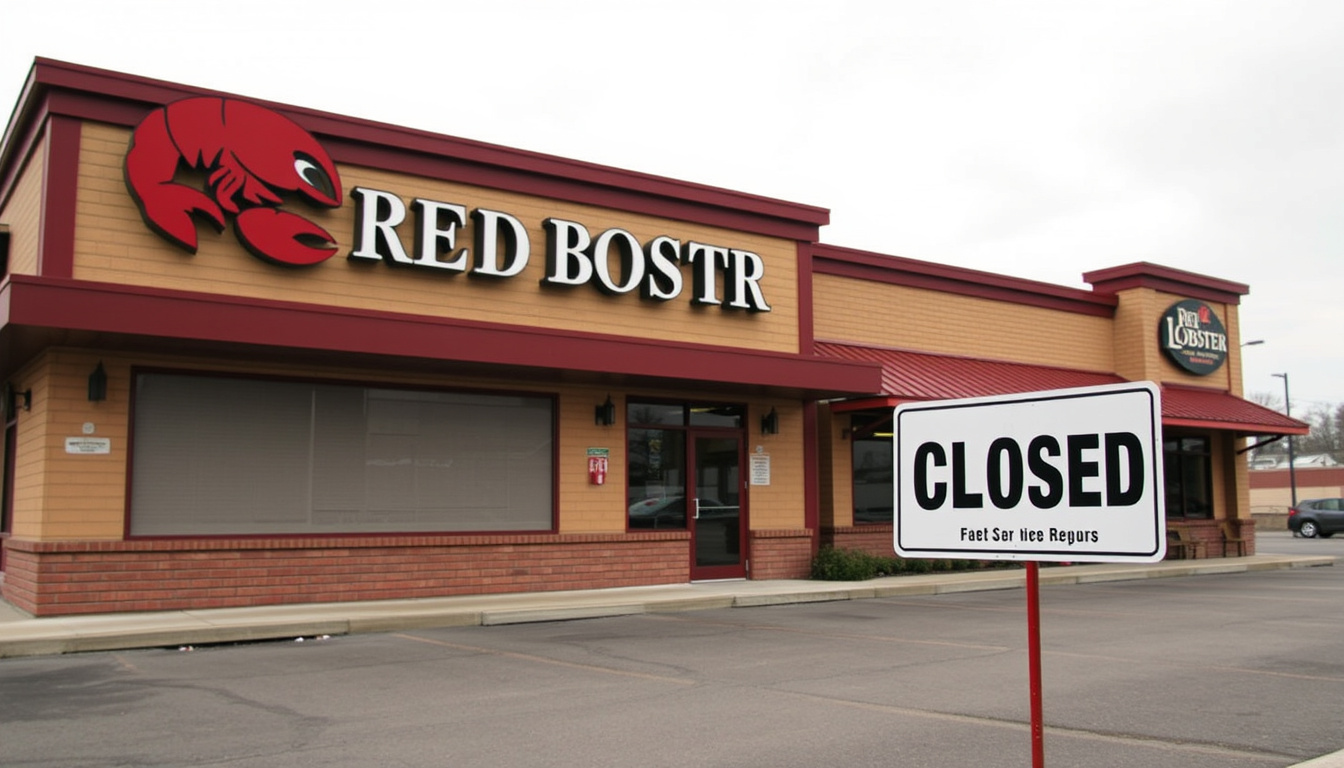
  • Popular Restaurant Chain Closing – Red Lobster Bankruptcy and Closures

    Popular Restaurant Chain Closing – Red Lobster Bankruptcy and Closures

    Red Lobster, the iconic American seafood chain known for its Cheddar Bay Biscuits and affordable lobster dishes, filed for Chapter 11 bankruptcy protection in May 2024. The filing marked a dramatic fall from grace for a brand that once operated more than 650 restaurants nationwide. As part of the restructuring process, the company has closed over 100 underperforming locations, with an additional 23 stores scheduled to cease operations by the end of August 2024.

    The closure wave affects restaurants across 14 states, from California to New York. Court documents describe these locations as financially unsustainable, noting they would likely continue dragging down the company’s performance. A Florida bankruptcy judge must still approve the proposed sale that would allow Red Lobster to emerge from bankruptcy proceedings.

    Why Is Red Lobster Closing Locations?

    Multiple factors converged to push Red Lobster toward bankruptcy and mass closures. The chain faced mounting pressure from intensifying competition in the fast-casual dining sector, rising inflation that squeezed both operational costs and consumer spending, and a heavy debt burden that limited strategic flexibility.

    Key Drivers Behind the Decline

    Root Causes of Financial Distress

    Internal missteps compounded external pressures. Former majority owner Thai Union Group, which acquired a leading stake in 2020, implemented cost-cutting measures that removed longtime suppliers and damaged product quality. Employee accounts describe a deteriorating company culture that further undermined operational standards.

    The most damaging strategic error involved the “Endless Shrimp” promotion. Originally conceived as a limited-time offer to attract customers, the $20 promotion became a permanent menu item. The promotion generated an $11 million loss for the company, according to court filings. Industry analysts noted that such aggressive pricing without proper margin controls could devastate a chain already struggling with debt service requirements.

    Mismanagement at multiple levels created a perfect storm. Supply chain disruptions, inconsistent restaurant experiences, and delayed responses to shifting consumer preferences all contributed to declining foot traffic. The chain’s attempt to compete on price with fast-casual alternatives ultimately proved unsustainable.

    • Heavy debt load limited investment in restaurant upgrades and marketing
    • Cost-cutting measures eliminated quality suppliers and damaged product consistency
    • Endless Shrimp promotion caused $11 million in losses
    • Competition from fast-casual restaurants intensified market pressure
    • Inflation reduced consumer discretionary spending on dining out
    • Toxic company culture contributed to operational instability
    Metric Details
    Founded 1968, Lakeland, Florida
    Pre-bankruptcy locations More than 650 restaurants
    Bankruptcy filing May 19, 2024
    Majority owner (2020-2024) Thai Union Group
    Summer 2024 closures More than 100 locations
    Additional closures (by August 31, 2024) 23 stores
    Expected remaining locations Approximately 500
    Endless Shrimp promotion loss $11 million

    How Many Red Lobster Stores Are Closing?

    The scale of Red Lobster’s contraction represents one of the most significant restaurant closures in recent American history. Beyond the initial wave of more than 100 restaurants shuttered during summer 2024, court-approved lease rejections added 23 more locations to the closure list by the end of August.

    Affected States and Locations

    The 23 locations subject to lease rejections span 14 states. Florida accounts for three closures, including stores in Fort Walton Beach, Pensacola, and Port Richey. Virginia also saw three locations affected in Alexandria, Richmond, and Virginia Beach. Illinois rounds out the states with multiple closures in Bourbonnais, Geneva, and Peoria.

    Stores by State

    Single locations closed in Arizona (Yuma), Arkansas (Little Rock), California (La Mesa), Colorado (Colorado Springs), Georgia (Jonesboro), Indiana (Michigan City), Missouri (Maplewood), New York (Bronx and Queensbury), North Carolina (Jacksonville), Ohio (Strongsville), and South Carolina (Cayce). Two stores closed in Minnesota (Golden Valley and Maple Grove).

    All 23 locations were classified as “underperforming” in court filings. The company determined these restaurants would likely continue generating losses and proved unnecessary for future operations under new ownership. Consumers seeking alternative seafood dining options may find it helpful to understand marine life cycles as part of broader seafood industry context.

    Red Lobster Bankruptcy Timeline

    Understanding the sequence of events helps contextualize how the chain reached this point. The bankruptcy represents the culmination of years of financial deterioration, though acceleration occurred in the months immediately preceding the May 2024 filing.

    1. 2020: Thai Union Group acquires majority ownership stake in Red Lobster, beginning a period of strategic changes
    2. 2023: Financial struggles become publicly visible as same-store sales decline and losses mount
    3. May 19, 2024: Red Lobster files for Chapter 11 bankruptcy protection in Florida federal court
    4. Summer 2024: More than 100 underperforming locations close permanently across multiple states
    5. August 31, 2024: Court approves rejection of leases for 23 additional stores, completing the closure wave
    6. Ongoing: Company awaits bankruptcy court approval for sale to Fortress Investment Group

    Throughout this period, Fortress Investment Group provided a $100 million loan to maintain operations during the bankruptcy proceedings. The financing allowed the chain to continue serving customers while restructuring negotiations proceeded. Court documents filed in the Eastern District of Florida outline the terms of the proposed sale.

    Is Red Lobster Going Out of Business?

    Despite the widespread closures, Red Lobster is not liquidating entirely. The company has reached an agreement to sell itself to Fortress Investment Group, a private equity firm with documented experience reviving struggling restaurant chains. Fortress currently operates Krystal, Logan’s Roadhouse, and J. Alexander’s, all brands that underwent successful turnarounds.

    What Remains Uncertain

    A Florida bankruptcy judge must approve the sale before it can finalize. The company expects to emerge from bankruptcy with approximately 500 locations remaining, representing a significant contraction from its pre-filing footprint but preserving a substantial national presence.

    Pending Approval

    The sale to Fortress Investment Group requires court confirmation. While the company has stated expectations for approval, bankruptcy proceedings can encounter unexpected complications. The outcome will determine whether Red Lobster survives as an ongoing concern or faces further restructuring.

    Damola Adamolekun, the former CEO of P.F. Chang’s, has been appointed to lead Red Lobster under the new ownership structure. His experience with restaurant brand revitalization will prove essential if the chain hopes to rebuild customer loyalty after the disruptions of bankruptcy and closure announcements.

    What We Know What Remains Unclear
    More than 100 stores closed in summer 2024 Whether all closures are finalized
    23 additional closures approved by August 31, 2024 Complete list of future potential closures
    Fortress Investment Group purchasing the chain Timeline for court approval
    $100 million loan provided by Fortress Impact on gift cards and loyalty programs
    Approximately 500 locations expected to remain Long-term viability under new ownership
    Damola Adamolekun appointed as new leader Specific turnaround strategy details

    Other Popular Restaurant Chains Closing in 2024

    Red Lobster’s struggles reflect broader challenges facing the American restaurant industry. Rising labor costs, shifting consumer preferences toward fast-casual options, and pandemic-era debt have strained many established chains. While specific announcements vary, analysts note that the restaurant sector has experienced significant consolidation throughout 2024.

    The closure of Red Lobster locations creates opportunities for competing seafood restaurants and casual dining chains. Consumers may explore alternatives ranging from local seafood establishments to regional chains expanding into vacated markets. Those interested in understanding aquatic ecosystems and marine conservation may find relevance in topics like fish care and lifespan patterns in the context of broader seafood industry discussions.

    Sources and Additional Information

    The company described these locations as “underperforming” and indicated they were likely to continue driving losses, according to court filings with the U.S. Bankruptcy Court for the Middle District of Florida.

    — 6abc Action News, reporting on court documents

    Multiple news organizations have tracked Red Lobster’s bankruptcy proceedings and closure announcements. CBS News reported on the additional 23 closures announced as part of the lease rejection process. The chain’s bankruptcy case number is pending with the appropriate federal court.

    Summary

    Red Lobster’s Chapter 11 filing in May 2024 triggered the closure of more than 100 restaurants during summer 2024, followed by 23 additional lease rejections scheduled for completion by August 31. The closures span 14 states and reduce the chain to approximately 500 locations nationwide. Fortress Investment Group’s $100 million financing and pending acquisition offer a path toward survival, though court approval remains necessary. The chain’s decline stems from a combination of heavy debt, operational missteps including the costly Endless Shrimp promotion, competition from fast-casual restaurants, and inflation pressures. Whether the new leadership can restore profitability at remaining locations will determine the chain’s long-term future.

    Frequently Asked Questions

    What happens to Red Lobster gift cards during bankruptcy?

    Information regarding gift card policies during the bankruptcy proceedings was not detailed in available court filings or public announcements. Customers with gift cards should contact Red Lobster directly or check the company’s official website for current policies regarding redemption at closing locations.

    Can I still order from Red Lobster locations scheduled to close?

    Many closed locations have already ceased operations. The 23 stores with lease rejections by August 31 may remain open until that date, though consumers should verify individual restaurant status before visiting. The remaining approximately 500 locations continue normal operations.

    Will Red Lobster close all locations?

    Current plans indicate Red Lobster will emerge from bankruptcy with approximately 500 remaining locations. The company has not announced plans for complete liquidation. The pending sale to Fortress Investment Group would preserve these locations under new ownership.

    Who is buying Red Lobster?

    Fortress Investment Group, which also owns Krystal, Logan’s Roadhouse, and J. Alexander’s restaurants, has agreed to purchase Red Lobster. The private equity firm has experience with restaurant turnarounds and appointed Damola Adamolekun, former P.F. Chang’s CEO, to lead the chain.

    Why did the Endless Shrimp promotion fail?

    The $20 Endless Shrimp promotion was originally a limited-time offer but became permanent after management decided to keep it on the menu. The promotion generated an $11 million loss for the company, according to court filings. Industry analysts noted that unlimited shrimp at a fixed low price without proper cost controls significantly eroded margins.

    How many employees were affected by the closures?

    Specific employment figures for affected locations were not detailed in available public documents. Restaurant closures typically impact hourly staff first, with management positions potentially transitioning to remaining locations or concluding with the closed restaurant’s operations.


  • Quarts in a Gallon – Exact US and Imperial Guide

    Quarts in a Gallon – Exact US and Imperial Guide


    A gallon contains exactly four quarts in both the US customary system and the imperial system, though the actual volume these units represent differs significantly between the two. This distinction matters considerably for anyone working across international contexts, whether cooking with recipes from different countries or purchasing fuel across borders. Understanding these measurements helps avoid costly errors and ensures accurate proportions in kitchen and automotive applications alike.

    The US liquid gallon measures precisely 3.785411784 liters, legally defined as 231 cubic inches, while the imperial gallon used in the United Kingdom and Commonwealth nations contains 4.54609 liters. Though both systems divide their respective gallons into four quarts, the larger imperial gallon means imperial quarts contain more volume than their US counterparts. This fundamental difference traces back to separate historical developments that occurred on either side of the Atlantic during the eighteenth and nineteenth centuries.

    How Many Quarts Are in a Gallon?

    The straightforward answer applies equally to both major gallon systems: one gallon always equals four quarts. The word “quart” itself derives from the Latin “quartus,” meaning quarter, which reflects this one-to-four relationship. However, the size of each quart varies considerably depending on which gallon standard applies. US quarts hold approximately 0.946 liters each, while imperial quarts contain roughly 1.136 liters. This means the US system fits four smaller quarts into a gallon, while the imperial system fits four larger quarts into its larger gallon.

    Quick Reference

    For everyday conversions, remember: multiply gallons by 4 to get quarts, divide quarts by 4 to get gallons. This works identically for both US and imperial measurements, just with different resulting volumes.

    US Liquid Gallon
    4 quarts
    Imperial Gallon
    4 quarts (~4.8 US)
    1 US Quart
    0.25 gallons
    Common Use
    Liquids (milk, gas)
    • A US gallon equals exactly 4 US quarts, or 231 cubic inches, or 3.785 liters
    • An imperial gallon also equals exactly 4 imperial quarts, but contains 4.546 liters
    • The quart is fundamentally a quarter-gallon, regardless of which system applies
    • US and imperial quarts differ in volume by approximately 20%
    • One US quart contains 32 US fluid ounces
    • One imperial quart contains 40 imperial fluid ounces
    • A dry gallon exists separately, containing approximately 4.4 liters, though it subdivides differently
    Unit US Gallon System Imperial Gallon System
    Gallon 4 quarts (3.785 L) 4 quarts (4.546 L)
    Quart 2 pints (0.946 L) 2 pints (1.136 L)
    Pint 2 cups (0.473 L) 2 pints (0.568 L)
    Cup 8 fluid ounces (0.237 L) Varies (non-standard)
    Fluid Ounces 128 per gallon 160 per gallon

    US Gallon vs. Imperial Gallon: Quarts Comparison

    The divergence between US and imperial measurement systems originated from different legislative choices made during the eighteenth and nineteenth centuries. The US gallon traces its legal definition to the Queen Anne Wine Gallon of 1707, which measured exactly 231 cubic inches. This wine gallon became codified in US law and remained unchanged even as the United States considered metric adoption. The imperial gallon, conversely, was defined by British legislation in 1824 as the volume occupied by ten pounds of water weighed at 62 degrees Fahrenheit, yielding the 4.54609-liter measurement still used today.

    Volume Differences in Practice

    When comparing the two systems directly, imperial gallons and their resulting quarts run approximately 20% larger than US equivalents. One imperial gallon equals approximately 1.20095 US gallons, meaning the same container holds about 20% more volume when measured under imperial standards. This discrepancy creates practical challenges for international trade, recipe conversion, and cross-border travel. A vehicle with a 10 US gallon fuel tank, for instance, requires roughly 8.33 imperial gallons to fill completely when operated in a country using imperial measurements.

    Why Both Systems Survived

    The persistence of both systems reflects the independent standardization paths taken by the United States and the British Empire during an era when international coordination on measurements did not exist. The US Customary System developed from colonial British units but diverged after American independence, while Britain reformed its own system with the Weights and Measures Act of 1824. Neither nation fully adopted the metric system, though metrication efforts in Britain accelerated during the late twentieth century, leaving the imperial system partially in place for everyday volume measurements.

    Cross-Border Consideration

    When purchasing fuel in the UK or Canada, remember that imperial gallons contain approximately 20% more volume than US gallons. A British gallon costs more per liter in absolute terms, but driving distance per gallon appears more favorable due to the larger measurement unit.

    Related Volume Conversions from Gallons and Quarts

    Understanding how quarts and gallons relate to other common volume measurements helps when scaling recipes or comparing measurements across different contexts. The US liquid system follows a consistent doubling pattern where each unit divides evenly into the next larger unit. This systematic approach makes mental calculations straightforward for those familiar with the relationships. The imperial system maintains similar hierarchical divisions but with different absolute values due to the larger gallon and quart sizes.

    Cups, Pints, and Fluid Ounces

    The US liquid gallon breaks down as follows: one gallon contains four quarts, each quart contains two pints, each pint contains two cups, and each cup contains eight fluid ounces. This creates a multiplication chain where one gallon equals 4 quarts, 8 pints, 16 cups, or 128 fluid ounces. These relationships prove useful when halving recipes that call for gallons of liquid or when converting between serving sizes measured in different units. A recipe requiring one gallon of broth, for example, could alternatively call for four quarts, eight pints, or sixteen cups depending on available measuring implements.

    Liters and Metric Equivalents

    Converting between US gallons and liters yields 1 US gallon equals approximately 3.785 liters, while 1 imperial gallon equals approximately 4.546 liters. For quarts, this translates to 1 US quart equaling roughly 0.946 liters and 1 imperial quart equaling approximately 1.136 liters. These conversions matter most in scientific contexts, international shipping documentation, and countries where recipes mix metric and imperial measurements. A chef following a British recipe calling for two quarts of stock, for instance, would measure approximately 2.27 liters using metric equipment.

    Dry Measurements: A Separate System

    The US dry gallon represents yet another volume standard, though it sees far less everyday use than liquid measurements. Defined as one-eighth of a US level bushel, the dry gallon equals approximately 4.405 liters, making it larger than the US liquid gallon but smaller than the imperial gallon. Dry quarts in this system measure roughly 1.1 liters, and while they divide into pints, the practical applications focus primarily on agricultural commodities and historical measurements rather than household cooking. Most modern recipes specify volume measurements in liquid form or weight for accuracy.

    Measurement Note

    Imperial measurements lack a standardized cup equivalent, though an informal imperial cup of approximately 10 imperial fluid ounces sometimes appears in older British recipes. This absence can cause confusion when adapting historical cooking instructions from the UK to US measurement systems.

    Historical Development of Gallon Measurements

    The gallon measurement traces its origins to medieval England, where wine merchants used containers of specific sizes to standardize trade. The wine gallon of 231 cubic inches eventually became the standard in the American colonies, while Britain maintained different gallon sizes for various commodities including wine, beer, and grain. The ale gallon of 282 cubic inches and the older wine gallon coexisted in British commerce, creating considerable confusion that the 1824 Weights and Measures Act eventually addressed by establishing a single imperial gallon definition.

    1. Medieval period: Wine merchants in England establish gallon containers for standardized trade, laying groundwork for later formal definitions
    2. 1707: Queen Anne standardizes the wine gallon at 231 cubic inches, a definition that later becomes US legal standard
    3. 1776-1789: Newly independent United States retains the Queen Anne wine gallon as the basis for US customary liquid measurements
    4. 1824: British Parliament defines the imperial gallon as exactly 4.54609 liters, replacing the earlier ale and wine gallons with a unified standard
    5. Modern era: Both systems persist internationally, with the US system primarily used in the United States and imperial measurements retained in several Commonwealth nations

    What We Know for Certain and What Remains Unclear

    Certain facts about gallons and quarts rest on unambiguous legal definitions and international agreements. The US liquid gallon contains exactly 231 cubic inches by statute, making all derived measurements precise and reproducible. The imperial gallon contains exactly 4.54609 liters by British legislation. Both gallons divide into exactly four quarts in their respective systems. These definitions allow anyone with proper measuring equipment to reproduce the measurements regardless of location or historical period.

    Established Information Less Certain or Context-Dependent
    US gallon = 231 cubic inches exactly Dry gallon usage varies by jurisdiction and commodity
    Imperial gallon = 4.54609 liters exactly Imperial cup measurements lack formal standardization
    Both systems divide into 4 quarts Conversion precision needed for scientific applications
    Imperial ~20% larger than US Some historical recipes lack clear measurement attribution

    Why These Measurements Matter Today

    Despite global trends toward metrication, gallons and quarts remain deeply embedded in everyday life across English-speaking nations. The United States continues using customary units for virtually all consumer transactions, from grocery shopping to automotive fuel. Several Commonwealth countries retain imperial measurements for specific applications even as they adopt metric units for scientific and industrial purposes. This hybrid situation creates ongoing needs for accurate conversion knowledge among cooks, mechanics, importers, and anyone working across international boundaries.

    The practical applications extend from kitchen recipes to industrial contexts. Milk is commonly sold in gallon and quart containers in the United States, while motor fuel consumption is measured in miles per gallon. In the United Kingdom, beer continues to be served by the pint, and road fuel is sold by the liter but fuel economy is often discussed in miles per gallon. These varied contexts ensure that understanding the relationship between gallons and quarts remains practically relevant across generations and borders.

    Authoritative Sources and Further Reference

    The National Institute of Standards and Technology maintains official definitions for US customary units, establishing the legal basis for the 231 cubic inch gallon used in American commerce. The NIST documentation provides precise conversion factors between US customary and metric units, ensuring consistency in trade and scientific applications. The Wikipedia coverage of the gallon includes extensive historical documentation and international comparison data sourced from official government measurements.

    The US liquid gallon is defined by federal law as exactly 231 cubic inches, or 3.785411784 liters. This definition applies to all commercial transactions and legal documentation within the United States.

    — National Institute of Standards and Technology, US Metric Relations for Volume

    Summary and Quick Conversion Guide

    A gallon contains four quarts in any measurement system, but the actual volume depends entirely on whether US or imperial units apply. The US gallon holds 3.785 liters while the imperial gallon holds 4.546 liters, meaning imperial quarts exceed US quarts by approximately 20%. For practical purposes, remembering the simple ratio of four quarts per gallon allows quick conversions, while consulting detailed tables provides precise values when accuracy matters. Whether measuring ingredients for a recipe or calculating fuel economy, these fundamental relationships form the basis for all volume calculations involving gallons and quarts.

    For those interested in comparing measurement systems used around the world, exploring the How Big Is a Queen Size Bed – Standard Dimensions Guide demonstrates how different countries approach standardizing household measurements. Similarly, understanding biological metrics provides interesting parallels to how societies standardize other quantitative measures.

    How many gallons are in a quart?

    One quart equals one-quarter of a gallon, or 0.25 gallons. This applies to both US and imperial quarts when converted to their respective gallon systems.

    How many quarts are in 5 gallons?

    Five gallons contain exactly 20 quarts in the US system. The same ratio holds for imperial measurements, yielding 20 imperial quarts, though these represent a larger total volume.

    How many quarts are in a liter?

    One US quart equals approximately 0.946 liters, meaning one liter contains roughly 1.057 US quarts. One imperial quart equals approximately 1.136 liters, with one liter containing roughly 0.880 imperial quarts.

    Is a quart exactly one-quarter of a gallon?

    Yes, the quart is defined as exactly one-quarter of a gallon in both the US and imperial systems. The name itself derives from this relationship, coming from the Latin word for fourth.

    How many cups are in a quart?

    One US quart contains 4 cups, following the US system’s consistent halving pattern (1 gallon = 4 quarts = 8 pints = 16 cups). Imperial quarts lack a standardized cup equivalent.

    How many fluid ounces are in a quart?

    One US quart contains 32 US fluid ounces. One imperial quart contains 40 imperial fluid ounces, reflecting the larger size of imperial measurements overall.


  • How Do You Say Seal In French – Phoque, Sceau, Sceller Explained

    How Do You Say Seal In French – Phoque, Sceau, Sceller Explained

    The English word “seal” does not have a single French equivalent. Depending on context—whether referring to the marine mammal, an official stamp, or the act of closing something—French speakers use three distinct terms: phoque, sceau, and sceller. This difference stems from French linguistic history, which developed each meaning from separate Latin roots rather than a shared origin.

    Understanding which term applies requires considering the situation. The animal belongs to the phoque family, administrative documents bear a sceau, and closing an envelope requires sceller. English consolidates these concepts under one word, but French maintains the separation. Learners often encounter confusion, particularly with phoque, due to its phonetic similarity to an English vulgarity.

    How do you say seal in French?

    The primary translation depends entirely on what type of seal you mean. French preserves distinct vocabulary for each meaning, unlike English, which uses “seal” for the animal, the stamp, and the action alike. This distinction matters for clear communication and correct usage.

    Seal (Animal)
    phoque
    /fɔk/
    Marine mammal
    Seal (Stamp)
    sceau
    /so/
    Official imprint or emblem
    Navy SEAL
    SEAL
    Retained in English
    U.S. special forces
    To Seal
    sceller
    /sɛ.le/
    Verb: to close or authenticate

    Key insights for using these terms

    • The correct French word depends entirely on context—animal, stamp, or action
    • Phoque refers exclusively to the marine mammal, never to stamps or sealing
    • Sceau refers only to official marks or imprints on documents
    • Sceller is the verb form meaning to close, seal, or make binding
    • English “seal” covers all three meanings; French separates them
    • Phuque is not a French word—confusion with phoque stems from pronunciation
    • Dictionaries confirm these distinctions consistently across sources
    English French Part of Speech Pronunciation (IPA)
    Seal (animal) phoque Noun /fɔk/
    Seal (stamp) sceau Noun /so/
    Navy SEAL SEAL or commando marine Proper noun Retained English
    To seal sceller Verb /sɛ.le/

    Is seal phoque or sceau in French?

    The choice between phoque and sceau hinges on whether you are discussing the marine creature or an official stamp. These terms never overlap in usage, though their similarity to English speakers sometimes creates confusion.

    When to use phoque

    Phoque applies strictly to the Pinniped mammal—the flippered, whiskered animal often seen on beaches or swimming in cold waters. Examples include harbor seals, grey seals, and ringed seals. In French, “the seal” is le phoque, and baby seals are les phoquaux or les nouveau-nés du phoque. This term has no connection to administrative or official contexts.

    When to use sceau

    Sceau refers exclusively to stamps, imprints, and official marks. Medieval documents bore wax sceaux; modern certificates may carry a company sceau; government documents sometimes feature an official sceau de l’État. The phrase cachet de sceau specifically describes a seal stamp. This word never describes animals.

    Navy SEAL in French

    The U.S. Navy SEAL special operations force retains its English designation in French. Speakers use Navy SEAL directly or commando SEAL de la Marine. There is no connection to the animal phoque despite the phonetic coincidence. French military terminology often preserves English terms for U.S. units.

    The verb sceller

    When English uses “seal” as a verb—to close, secure, or authenticate—French employs sceller. This covers sealing an envelope (sceller une enveloppe), sealing a deal (sceller un accord), or sealing an official document. The verb derives from sceau, sharing the Latin root sigillum.

    Context determines everything

    These three terms occupy separate semantic territories. Mixing them—using sceau for the animal or phoque for a stamp—would cause immediate confusion. Native French speakers distinguish these meanings naturally, just as English speakers distinguish “bear” (animal) from “bare” (without covering).

    How do you pronounce phoque?

    The pronunciation of phoque surprises many English speakers. The word sounds nothing like English “seal.” The ph produces an /f/ sound, the o is a short /ɔ/ (as in “got”), and the final que sounds like /k/. Together, phoque approximates “FOKE” with a shorter, more clipped vowel than “folk.”

    Pronunciation comparison

    French phoque (/fɔk/) differs sharply from English “seal” (/siːl/). The consonant sounds, vowel length, and ending all vary. English “seal” ends with an /l/ sound; phoque ends with a /k/. These differences matter for recognition and comprehension.

    • Phoque: /fɔk/ — sounds like “FOKE” (short o, no L)
    • Sceau: /so/ — sounds like “SO” with a nasal quality
    • Sceller: /sɛ.le/ — sounds like “sell-AY” with stress on first syllable

    The phoque pronunciation meme

    Since approximately 2020, phoque gained viral attention on social media platforms. The reason: its pronunciation /fɔk/ bears audible similarity to an English vulgarity. This coincidence generated countless memes and jokes, with users sharing awkward translation moments—like asking voice assistants “What is French for seal?” and receiving unexpected responses.

    The humor often arises in contexts like “A seal pushed me yesterday,” which translates to Un phoque m’a poussé hier. In isolation, this phrasing sounds comical to English ears. Language learners should recognize this cultural reference without feeling embarrassed—phoque is entirely standard and inoffensive in French.

    Learning pronunciation

    Audio resources from Forvo and Larousse provide native speaker recordings. Listening to these pronunciations helps distinguish phoque from similar-sounding French words. Regular practice with these tools builds confidence in using the term correctly.

    What is certain and uncertain about seal in French?

    Established information Notes and uncertainties
    Animal = phoque Standard, universally recognized
    Stamp = sceau Standard, documented in all major dictionaries
    Verb = sceller Standard, though alternatives exist in specific contexts
    Navy SEAL = Navy SEAL Retained English term; French military contexts use this
    Pronunciation /fɔk/ for phoque Confirmed by Larousse and CNRTL
    Meme status since 2020 Viral content on TikTok and YouTube; cultural phenomenon

    Etymology and linguistic background

    The three French terms for “seal” trace to distinct Latin origins. Phoque derives from Latin phoca, which entered Old French as foque during the 16th century. This root has no connection to the English word “seal,” which evolved from Proto-Germanic selh- through Old English seolh. The two animal terms developed entirely separately in different linguistic families.

    Sceau and sceller share a different Latin ancestor: sigillum, meaning “little sign” or “imprint.” Through Old French seel (12th century), sceau emerged as the noun for stamps and marks. The verb sceller followed, meaning to affix such a seal. This root connects French to English “seal” (the stamp), which also traces back through Norman French to sigillum.

    The linguistic split mirrors English: the animal “seal” and the stamp/verb “seal” have different Germanic and Romance origins, even though modern English consolidated them under one word. French preserved the separation; English merged the concepts.

    What do language sources say?

    Larousse defines phoque as “mammifère carnivore marin” (carnivorous marine mammal) and confirms pronunciation as [fɔk]. For sceau, Larousse specifies “empreinte, cachet officiel” (imprint, official stamp). Sceller appears as “fermer hermétiquement” (to close hermetically) or “authentifier par un sceau” (to authenticate with a seal).

    Source: Larousse Dictionary

    WordReference entries confirm the distinction: seal (animal) maps to phoque, seal (stamp) maps to sceau, and to seal maps to sceller. Forum discussions on this site frequently address learner confusion about homonyms and the pronunciation trap.

    Source: WordReference English-French Dictionary

    Collins dictionaries list all three meanings separately, noting the phonetic challenge for English speakers. The entry explicitly flags phoque as potentially humorous for English audiences due to its sound-alike quality with English profanity.

    Source: Collins English-French Dictionary

    Summary

    French uses three distinct words where English employs “seal”: phoque for the marine mammal, sceau for stamps and official marks, and sceller for the action of sealing. Pronunciation varies significantly from English—the animal word sounds nothing like “seal” and coincidentally resembles English profanity. This distinction, while confusing initially, follows logical patterns once context is established. For learners, consulting resources like Google Translate English to German – Usage and Accuracy Guide demonstrates how translation tools handle context-dependent vocabulary across languages.

    Frequently asked questions

    What is the French word for seal?

    It depends on meaning. The marine mammal is phoque (/fɔk/), the stamp is sceau (/so/), and the verb is sceller (/sɛ.le/).

    What does seal mean in French?

    French lacks a single equivalent. Each English meaning has its own term: phoque (animal), sceau (stamp), sceller (to seal).

    What is a Navy SEAL in French?

    French uses the English term Navy SEAL or the phrase commando SEAL de la Marine. There is no connection to the animal phoque.

    Is phoque the same as phuque?

    Phuque is not a standard French word. The correct spelling is phoque. Confusion arises from pronunciation, but the correct term refers only to the marine mammal.

    How do you pronounce phoque correctly?

    Pronounce it as /fɔk/, sounding roughly like “FOKE” with a short vowel. The ph sounds like /f/, the o is short, and que ends with a /k/ sound.

    Can I use Google Translate to learn French seal translations?

    Translation tools can provide initial translations, but context matters. Google Translate English to German – Usage and Accuracy Guide explores how such tools handle nuance.

    Why does phoque sound like an English swear word?

    The sounds /fɔk/ coincidentally match an English vulgarity in approximate pronunciation. This has made phoque famous in viral memes, though the French word itself is completely inoffensive and standard.

  • First Day of Spring 2026 – Exact Time and Equinox Facts

    First Day of Spring 2026 – Exact Time and Equinox Facts

    The astronomical start of spring arrives on March 20, 2026, when the vernal equinox occurs at precisely 14:46 UTC. This celestial event marks the moment the Sun crosses the celestial equator traveling northward, bringing the Northern Hemisphere into its spring season while the Southern Hemisphere transitions into autumn. For most of North America, this translates to mid-morning on March 20, making it a date worth marking on calendars across the continent.

    Unlike the fixed date approach used in calendars of decades past, modern astronomical calculations pinpoint the exact moment of the equinox with remarkable precision. The timing varies slightly each year due to the complexity of Earth’s orbit around the Sun, creating subtle shifts that require updated calculations annually.

    When is the First Day of Spring 2026?

    The vernal equinox in 2026 occurs on March 20 at 14:46 UTC, or 10:46 a.m. Eastern Daylight Time. This moment represents the astronomical beginning of spring in the Northern Hemisphere, when daylight and darkness achieve nearly perfect balance across the globe.

    Northern Hemisphere Date
    March 20, 2026
    UTC Time
    14:46
    Southern Hemisphere
    September 23, 2026
    Event Type
    Vernal Equinox

    Key Facts About the 2026 Vernal Equinox

    • The exact moment occurs at 14:46 UTC on March 20, 2026
    • Daylight length exceeds 12 hours by approximately 8 minutes due to atmospheric refraction
    • The Sun crosses the celestial equator moving from south to north
    • Earth’s 23.5-degree axial tilt creates the seasonal shift
    • The timing shifts slightly each year within a predictable 400-year cycle
    • Locations east of UTC+10 witness the equinox on March 21 locally
    • Traditional calendars once listed March 21, but astronomical precision now confirms March 20

    Spring Start Times Across Time Zones

    Time Zone Local Date/Time Region
    EDT (UTC-4) March 20, 10:46 a.m. Eastern North America
    CDT (UTC-5) March 20, 9:46 a.m. Central North America
    MDT (UTC-6) March 20, 8:46 a.m. Mountain North America
    PDT (UTC-7) March 20, 7:46 a.m. Western North America
    BST (UTC+1) March 20, 3:46 p.m. United Kingdom, Western Europe
    CEST (UTC+2) March 20, 4:46 p.m. Central Europe
    JST (UTC+9) March 20, 11:46 p.m. Japan
    AEST (UTC+10) March 21, 12:46 a.m. Eastern Australia
    Time Zone Consideration

    Locations west of the UTC time zone see the equinox earlier in their local day, while locations to the east experience it later. Parts of eastern Asia and all of eastern Australia transition into March 21 according to local calendars, though the astronomical moment remains fixed at March 20, 14:46 UTC.

    Astronomical vs. Meteorological Spring Start Dates

    Two different systems define the beginning of spring, each serving distinct purposes. The astronomical spring follows the precise position of Earth in its orbit, while meteorological spring uses fixed calendar dates for practical record-keeping and climate analysis.

    Understanding the Astronomical Definition

    Astronomical spring begins at the vernal equinox, when the Sun’s apparent path crosses the celestial equator. This definition relies on Earth’s axial tilt of 23.5 degrees relative to its orbital plane, creating the seasonal changes that define life in temperate regions. The exact moment varies annually because Earth’s orbit around the Sun takes approximately 365.25 days, with leap years and orbital variations causing the equinox to fall on March 20 or 21.

    According to Farmers’ Almanac, NASA historical models show the vernal equinox typically falls around March 20 at 7:30 GMT in a standardized 400-year cycle, though exact times vary slightly year-to-year. This precision ensures accurate seasonal tracking for agricultural, cultural, and scientific purposes.

    Understanding the Meteorological Definition

    Meteorological spring follows fixed calendar dates for consistency in weather statistics and climate monitoring. In the Northern Hemisphere, it spans March 1 through May 31, while the Southern Hemisphere experiences meteorological autumn from March 1 through May 31. This system ignores the precise astronomical moment in favor of uniform three-month periods that align with typical weather patterns.

    Why Two Definitions Exist

    Meteorological seasons divide the year into quarters based on monthly temperature patterns, making historical comparisons straightforward. Astronomical seasons, by contrast, vary in length and timing, which complicates long-term climate analysis but better reflects Earth’s actual position in space.

    First Day of Spring 2026 in the Southern Hemisphere

    While the Northern Hemisphere celebrates the arrival of spring on March 20, 2026, the Southern Hemisphere marks a different seasonal milestone. The same astronomical moment that brings spring to the north triggers the beginning of autumn south of the equator, creating a dramatic global contrast.

    In the Southern Hemisphere, daylight begins shortening after the March equinox as the Sun’s most direct rays target locations north of the equator. Countries like Australia, New Zealand, South Africa, and Argentina transition into their autumn months, with temperatures gradually cooling and foliage beginning its seasonal change.

    Southern Hemisphere Seasonal Dates

    • Astronomical autumn begins: March 20, 2026 at 14:46 UTC
    • Meteorological autumn spans: March 1 through May 31
    • Winter solstice arrives approximately June 21, 2026
    • Spring returns approximately September 23, 2026

    This opposite seasonal pattern stems directly from Earth’s axial tilt. When the Northern Hemisphere tilts toward the Sun during the March equinox, the Southern Hemisphere tilts away, resulting in shorter days and cooler conditions across that portion of the planet. More details about seasonal mechanics are available from EarthSky.

    What Defines the Vernal Equinox?

    The vernal equinox represents a specific astronomical configuration when the Sun crosses the celestial equator traveling from south to north. This event occurs because Earth maintains a constant 23.5-degree tilt relative to its orbital plane throughout the year, causing different hemispheres to receive varying amounts of solar energy as the planet orbits the Sun.

    The Science Behind the Equinox

    At the precise moment of equinox, the Sun’s most direct rays strike the equator, creating nearly equal periods of daylight and darkness worldwide. According to EarthSky, the term “equinox” derives from Latin words meaning “equal night,” reflecting this balanced condition. However, actual daylight typically exceeds 12 hours by approximately 8 minutes due to atmospheric refraction bending sunlight and the geometric size of the Sun’s disk.

    NASA’s ephemeris data confirms the March 2026 timing aligns closely with historical patterns established through centuries of astronomical observation and mathematical modeling. The agency maintains precise calculations tracking Earth’s position relative to the Sun, enabling predictions accurate to the minute across decades.

    Why Daylight Exceeds 12 Hours

    Atmospheric refraction causes sunlight to bend slightly as it passes through Earth’s atmosphere, allowing the Sun to be visible for a few minutes before it actually rises above the horizon and after it sets. Combined with the angular size of the Sun itself, this effect adds roughly 8 minutes of additional daylight beyond the theoretical 12 hours of equal day and night.

    Historical Calendar Shifts

    Traditional calendars once designated March 21 as the first day of spring, a convention that persisted for generations. Modern astronomical calculations, however, now place the equinox on March 20 for most years when observed from North America. This shift results from the gradual change in Earth’s orbital parameters over long timescales, including the precession of equinoxes.

    The NASA Goddard Institute for Space Studies provides historical models showing the equinox typically falls around March 20 at 7:30 GMT in a standardized 400-year cycle, though exact times vary slightly year to year based on the precise geometry of Earth’s orbit.

    Historical Vernal Equinox Timing

    The vernal equinox timing shifts slightly each year due to variations in Earth’s orbital velocity and the gravitational influences of other planets. A timeline of recent and upcoming equinoxes illustrates this predictable variability while showing the overall consistency of the March 20-21 window.

    1. 2024: March 20 at 03:06 UTC
    2. 2025: March 20 at 09:01 UTC
    3. 2026: March 20 at 14:46 UTC
    4. 2027: March 20 at 19:24 UTC
    5. 2028: March 20 at 01:17 UTC

    This progression shows the equinox occurring approximately 6 hours later each year in a four-year cycle, with leap year adjustments resetting the pattern. The gradual drift over centuries will eventually shift the equinox to March 19 or March 21 for certain years, though within our current lifetime, March 20 dominates the calendar for Northern Hemisphere spring arrivals.

    Confirmed Facts and Areas of Uncertainty

    What We Know With Certainty

    • The astronomical spring equinox occurs on March 20, 2026 at 14:46 UTC
    • The Sun crosses the celestial equator traveling northward at this moment
    • Northern Hemisphere enters astronomical spring; Southern Hemisphere enters autumn
    • Meteorological spring begins March 1 regardless of astronomical timing
    • Daylight lengthens in the Northern Hemisphere after this date until the June solstice
    • The event marks approximately 12 hours of daylight and 12 hours of darkness globally

    Where Variations Occur

    • Local date depends on time zone; eastern Asia and Australia see March 21
    • Exact seconds of the moment may vary slightly between different calculation methods
    • Daylight duration varies by latitude; polar regions experience more extreme differences
    • Weather conditions on the day bear no relationship to astronomical timing
    • Regional cultural celebrations may occur on different dates around the equinox

    Seasonal Significance and Cultural Context

    The vernal equinox carries profound significance across human cultures and natural systems. For millions of years, the cyclical return of spring has marked renewal, fertility, and new beginnings in agricultural societies worldwide. Modern science confirms what ancient civilizations observed: this astronomical moment genuinely represents a turning point in Earth’s annual journey around the Sun.

    After the March equinox, the Northern Hemisphere experiences progressively longer days as the Sun’s most direct rays shift toward the Tropic of Cancer. This increase in solar energy drives blooming flowers, emerging wildlife, and warming temperatures that characterize the spring season. The timing of this shift influences everything from agricultural planning to energy consumption patterns.

    Many cultures continue celebrating spring festivals around the equinox, including Nowruz (Persian New Year), Easter (which follows the spring equinox), and various agricultural observances. These traditions reflect humanity’s enduring connection to astronomical cycles despite increasingly urbanized lifestyles. Information about equinox mechanics and seasonal astronomy is available from NASA’s official resources.

    Looking Ahead: The Rest of 2026

    Following the vernal equinox, the astronomical calendar continues with several notable seasonal markers. The summer solstice on June 21, 2026 marks the longest day of the year in the Northern Hemisphere, occurring at approximately 02:25 UTC. This date represents the peak of solar energy received in the north before days begin shortening again.

    The autumnal equinox arrives September 23, 2026 at approximately 06:05 UTC, marking the transition back toward winter for the Northern Hemisphere. This symmetry in the astronomical calendar creates a predictable framework for understanding Earth’s seasonal patterns across the globe.

    “The equinox occurs when Earth’s equator passes through the plane of the ecliptic, the apparent path of the Sun across our sky.”

    NASA

    Summary

    The first day of spring 2026 in the Northern Hemisphere falls on March 20 at 14:46 UTC, when the vernal equinox marks the astronomical beginning of the season. This moment brings approximately equal daylight and darkness worldwide, though atmospheric effects add roughly 8 minutes of additional daylight beyond the theoretical 12 hours. For viewers in North America, the event occurs during mid-morning hours, while European observers experience it in the afternoon and Asian regions see it late evening or early morning the following day.

    The distinction between astronomical and meteorological spring affects how different industries and cultures define the season, with meteorologists using fixed three-month periods for consistency while astronomers track Earth’s precise orbital position. Understanding these different frameworks helps clarify why spring sometimes seems to arrive on different dates depending on context. Those interested in Color Analysis Near Me topics or How Do Eels Reproduce can explore related articles on our site.

    Frequently Asked Questions

    What time does spring officially start in 2026?

    Spring officially begins at 14:46 UTC on March 20, 2026, when the vernal equinox occurs. This translates to 10:46 a.m. Eastern Daylight Time for North America.

    Is the first day of spring March 20 or 21 in 2026?

    The astronomical first day of spring falls on March 20, 2026, for most of the world. However, locations in eastern Asia and all of Australia experience the equinox on March 21 according to their local calendars.

    What causes the first day of spring?

    The first day of spring occurs when Earth’s axial tilt positions the Northern Hemisphere to receive more direct sunlight as the planet orbits the Sun. The precise moment happens when the Sun crosses the celestial equator traveling northward.

    How long is daylight on the vernal equinox?

    Daylight on the equinox is theoretically 12 hours, but actual daylight typically exceeds 12 hours by approximately 8 minutes due to atmospheric refraction and the Sun’s apparent disk size.

    When does meteorological spring begin?

    Meteorological spring begins March 1 in the Northern Hemisphere and runs through May 31. This fixed definition helps maintain consistent weather records regardless of the astronomical equinox timing.

    What happens in the Southern Hemisphere on March 20, 2026?

    The same equinox that starts spring in the Northern Hemisphere begins autumn in the Southern Hemisphere. Countries south of the equator experience shortening days and cooling temperatures following this date.

    Why does the equinox sometimes fall on March 21?

    Earth’s orbit takes approximately 365.25 days, with leap years and orbital variations causing the equinox to occasionally fall on March 21. This most commonly occurs in years following leap years when leap days shift the calendar relative to astronomical positions.

  • Ohio State Football News – Latest Injuries, Transfers and Updates

    Ohio State Football News – Latest Injuries, Transfers and Updates

    Ohio State football continues to capture national attention as the Buckeyes build on their 2024 national championship season. Under the leadership of head coach Ryan Day, the program has maintained its position atop the Big Ten standings while navigating roster changes and spring preparations heading into the 2026 season.

    Recent developments include notable injuries along the offensive line and strategic additions through the transfer portal. The Buckeyes’ championship momentum has translated into continued recruiting success, with the program securing key commitments for the 2025 class while developing emerging talent from recent transfers.

    From their dramatic playoff run to current spring camp updates, here is a comprehensive look at the latest Ohio State football news and what lies ahead for the program.

    What Is the Latest Ohio State Football News?

    As of April 2026, Ohio State is managing several significant roster developments heading into spring practices. The offensive line faces notable challenges with two starting tackles undergoing procedures that will sideline them for the remainder of spring camp.

    Current Standing
    1st Place
    Big Ten Conference

    2024 Record
    14-2
    National Champions

    Head Coach
    Ryan Day
    6th Season

    Playoff Seed
    No. 8 Seed
    2024-25 CFP

    Key Insights from Recent Ohio State Developments

    • Offensive Line Adjustments: Austin Siereveld and Phillip Daniels will miss spring practice after minor procedures, forcing the program to develop depth at tackle.
    • Transfer Success: Ja’Kobi Jackson joins the roster with a rare seventh year of eligibility granted following a season-ending shoulder injury in 2025.
    • Defensive Additions: John Walker, a transfer from UCF, recently earned his black stripes during spring camp as a defensive tackle.
    • Tight End Development: Mason Williams transferred from Ohio University and has also earned his black stripes this spring.
    • Championship Momentum: The Buckeyes carry their 2024 national title confidence into the current season preparations.
    • Conference Dominance: Ohio State currently holds first place in the Big Ten standings.

    Ohio State Football Quick Facts

    Category Details
    Head Coach Ryan Day (6th Season)
    2024 Season Record 14-2 (National Champions)
    Conference Big Ten
    Home Stadium Ohio Stadium (Columbus, Ohio)
    National Titles 8 (Last: 2024)
    Starting Quarterback Will Howard (Kansas State Transfer)
    Current Big Ten Standing 1st Place

    What Is the Ohio State Football Schedule and Record?

    The 2024 season delivered one of the most dramatic turnaround stories in recent college football history. Ohio State finished with a 14-2 record, capturing the national championship for the first time since 2014. The journey included heartbreak and redemption in equal measure.

    2024 Regular Season Breakdown

    The Buckeyes opened the season with five consecutive victories, building momentum and climbing the national rankings. However, a 32-31 road loss to No. 3 Oregon at Autzen Stadium delivered a significant setback, exposing vulnerabilities that would resurface later in the season.

    Ohio State responded with five straight wins, including statement victories over ranked opponents No. 3 Penn State and No. 5 Indiana. The team appeared destined for the Big Ten Championship Game until an unexpected home loss to unranked Michigan ended those hopes. The defeat marked Ohio State’s fourth consecutive loss in the storied rivalry, a sobering reality for a program accustomed to dominance.

    Rivalry Context

    The four-game losing streak to Michigan represents the longest drought in the rivalry since the 1990s, adding significance to the program’s eventual championship run.

    2024-25 College Football Playoff Run

    Despite missing the conference championship, Ohio State earned the No. 8 seed in the College Football Playoff and executed a dominant postseason run that silenced doubters:

    • First Round: Defeated No. 9 Tennessee 42-17
    • Rose Bowl: Avenged regular season loss to No. 1 Oregon with 41-21 victory
    • Cotton Bowl Classic: Defeated No. 5 Texas 28-14
    • National Championship: Defeated No. 7 Notre Dame 34-23

    Who Are the Top Ohio State Football Recruits?

    The 2025 recruiting cycle represents a strategic priority for head coach Ryan Day and his staff. While detailed commitment rankings continue to evolve, the program’s championship pedigree provides significant recruiting advantages in the competitive Big Ten landscape.

    Beyond traditional recruiting, Ohio State has demonstrated aggressive utilization of the transfer portal. Recent additions have addressed specific roster needs, including the acquisition of Ja’Kobi Jackson, a Florida running back who received unprecedented seventh-year eligibility consideration following a career-threatening shoulder injury during the 2025 season.

    Transfer Portal Impact

    The Buckeyes have strategically leveraged the transfer portal to reinforce critical positions. John Walker arrived from UCF as a defensive tackle and recently completed his black stripe designation during spring practices. Mason Williams joined from Ohio University at tight end, achieving the same milestone, indicating rapid integration into the program culture.

    Transfer Strategy

    Ohio State’s approach prioritizes immediate contributors while developing homegrown talent, creating a roster construction model that balances experience with long-term program building.

    Who Is the Head Coach of Ohio State Football?

    Ryan Day is entering his sixth season as Ohio State head coach, having transformed the program into a national powerhouse since taking over in 2019. His tenure has been marked by consistent conference competitiveness, multiple College Football Playoff appearances, and the ultimate validation: a national championship in 2024.

    Day’s leadership guided Ohio State through a challenging 2024 season that required resilience. After the devastating home loss to Michigan that eliminated the team from Big Ten Championship contention, Day’s squad regrouped to execute a flawless four-game playoff run, defeating three top-10 opponents en route to the title.

    Quarterback Development

    A defining decision of Day’s coaching tenure came when he named Will Howard as Ohio State’s starting quarterback two weeks before the 2024 season opener. Howard, a Kansas State transfer, proved instrumental in the championship campaign, providing steady leadership at the sport’s most critical position.

    Under Day’s guidance, Ohio State has maintained offensive innovation while establishing a physical identity that proved crucial during the playoff run. His ability to adapt the offensive scheme to his personnel’s strengths demonstrated the tactical flexibility required for championship-level success.

    Ohio State Football 2024 Season Timeline

    The Buckeyes’ championship journey featured defining moments that shaped their season narrative. Here is a chronological overview of their path to the national title:

    1. August/September 2024: Ohio State opens season with 5-0 start, climbing to top of national rankings
    2. October 2024: 32-31 road loss to No. 3 Oregon at Autzen Stadium ends unbeaten run
    3. November 2024: Five-game winning streak includes victories over No. 3 Penn State and No. 5 Indiana
    4. Late November 2024: Upset home loss to unranked Michigan; fourth consecutive loss in rivalry
    5. December 2024: Selected as No. 8 seed for College Football Playoff despite missing conference championship
    6. December 2024: First Round playoff victory over No. 9 Tennessee, 42-17
    7. January 2025: Rose Bowl victory avenges Oregon loss; 41-21 win over top-seeded Ducks
    8. January 2025: Cotton Bowl Classic defeat of No. 5 Texas, 28-14
    9. January 2025: CFP National Championship victory over No. 7 Notre Dame, 34-23

    Confirmed vs Unconfirmed Updates

    Understanding which reports are verified and which remain under investigation helps separate fact from speculation in Ohio State football coverage:

    Confirmed Information Unconfirmed / Developing
    2024 national championship, 14-2 record 2025 season projections and expectations
    Injuries to Siereveld and Daniels Recovery timelines and fall camp status
    Transfer additions: Jackson, Walker, Williams Additional transfer portal targets
    Ryan Day returning as head coach Contract extension negotiations
    Current Big Ten standing: 1st place 2025 schedule details

    Ohio State’s Path to National Championship

    The 2024 championship run demonstrated Ohio State’s capacity to overcome adversity and execute under pressure. The playoff performance revealed a team that peaked at the right moment, defeating higher-seeded opponents through physical play and tactical discipline.

    The revenge victory against Oregon in the Rose Bowl proved particularly significant, transforming the regular season’s most painful defeat into postseason redemption. The defense, which had struggled at times during Big Ten play, tightened considerably during the playoff stretch, allowing just 21 points or fewer in each postseason contest.

    Looking Ahead

    Spring 2026 developments, including offensive line injuries and roster transitions, will test the program’s depth as the Buckeyes aim to defend their championship status.

    Expert Analysis and Official Sources

    Coverage of Ohio State football draws from multiple authoritative sources, providing comprehensive coverage across different aspects of the program:

    The Buckeyes’ championship run validated the program’s investment in experienced transfer quarterback Will Howard, who provided the steady leadership necessary for postseason success.

    What’s Next for Ohio State Football

    The Buckeyes enter spring 2026 with championship expectations but realistic challenges ahead. Developing depth along the offensive line represents the most pressing concern, particularly with Siereveld and Daniels sidelined during spring drills. The program must identify capable replacements or restructuring options before fall camp.

    The transfer additions of Jackson, Walker, and Williams provide immediate experience at key positions. Jackson’s rare seventh-year eligibility represents a unique opportunity for a proven running back to contribute to a championship-caliber program. Integrating these newcomers while maintaining program culture remains a delicate balance that Day’s staff must navigate.

    For fans seeking comprehensive coverage of the program, resources like Go Go Loser Ranger – Plot, Anime, Characters Guide offer additional context on sports media coverage, while Google Translate English to German – Usage and Accuracy Guide can assist international fans in accessing German-language coverage of college football.

    Frequently Asked Questions

    What are the current Ohio State football injuries?

    Offensive tackles Austin Siereveld and Phillip Daniels will miss the remainder of spring practice after undergoing minor procedures. Both players were returning starters.

    How did Ohio State perform against Michigan in 2024?

    Ohio State suffered an upset home loss to unranked Michigan, marking their fourth consecutive loss in the rivalry and eliminating them from Big Ten Championship contention.

    What was Ohio State’s final 2024 record?

    The Buckeyes finished 14-2, capturing the national championship with a 34-23 victory over Notre Dame in the CFP National Championship game.

    Who is Ohio State’s starting quarterback?

    Will Howard, a Kansas State transfer, was named the starting quarterback two weeks before the 2024 season opener and led the team throughout their championship run.

    What is Ohio State’s current Big Ten standing?

    Ohio State currently holds first place in the Big Ten Conference as of the current season.

    Who are recent Ohio State transfer portal additions?

    Recent additions include Ja’Kobi Jackson (running back, Florida), John Walker (defensive tackle, UCF), and Mason Williams (tight end, Ohio University). All three recently earned black stripes this spring.

    How many national championships has Ohio State won?

    Ohio State has won eight national championships, with the most recent coming in 2024 when they defeated Notre Dame 34-23.

  • Go Go Loser Ranger – Plot, Anime, Characters Guide

    Go Go Loser Ranger – Plot, Anime, Characters Guide

    When the Villainous Army of Evil invaded Earth thirteen years ago, the Divine Dragon Rangers appeared as humanity’s saviors. Yet beneath this heroic façade lies a sinister arrangement: the Rangers force their defeated foes to stage weekly fake battles, maintaining a cycle of manufactured glory. This subversion of Super Sentai tropes defines Go! Go! Loser Ranger! (Sentai Daishikkaku), a manga series by Negi Haruba that transformed into one of 2024’s most talked-about anime adaptations.

    The narrative centers on Footsoldier D, an immortal “Duster” who infiltrates the Ranger organization disguised as human cadet Hibiki Sakurama. His mission: dismantle the corrupt system from within. Serialized in Kodansha’s Weekly Shōnen Magazine since February 2021, the series has garnered attention for its dark comedy, political undertones, and action sequences that invert traditional hero-villain dynamics.

    Unlike conventional tokusatsu narratives where heroes protect the innocent, Haruba’s creation exposes the exploitation inherent in perpetual conflict, drawing parallels to media manipulation and institutional corruption.

    What is Go Go Loser Ranger?

    Genre: Action, Comedy, Parody
    Author: Negi Haruba
    Status: Ongoing Manga, Anime Aired 2024
    Publisher: Kodansha (EN: Yen Press)

    Key Insights

    1. The series functions as a direct deconstruction of Super Sentai conventions, positioning the “monster of the week” as the protagonist.
    2. Footsoldier D possesses shape-shifting and regenerative abilities, allowing him to survive fatal injuries while maintaining his human disguise.
    3. The anime adaptation produced by Yostar Pictures premiered in Spring 2024 with two consecutive seasons.
    4. The manga has exceeded 70 chapters, with English localization handled by Yen Press.
    5. Disney+ holds distribution rights for the anime, with Crunchyroll streaming in select regions.
    6. The narrative explores themes of performative heroism and systemic oppression through its “Sunday Show” battle rituals.

    Series Facts at a Glance

    Attribute Details
    Original Title Sentai Daishikkaku (戦隊大失格)
    Also Known As Ranger Reject
    Serialization Start February 2021
    Manga Chapters 70+ (Ongoing)
    Anime Studio Yostar Pictures
    Anime Episodes 24 (Seasons 1 & 2, 2024)
    English Publisher Yen Press
    Protagonist Footsoldier D / Hibiki Sakurama
    Core Conflict Dusters vs. Dragon Keepers

    Go Go Loser Ranger Plot Summary

    The Invasion and Occupation

    Thirteen years prior to the main narrative, the Villainous Army of Evil descended from a sky fortress to conquer Earth. The Divine Dragon Rangers—Red, Blue, Pink, Green, and Yellow Keepers—defeated the invasion force, leaving only immortal foot soldiers called Dusters alive. Rather than imprisoning these survivors, the Rangers implemented a system of forced labor.

    Every Sunday, the Rangers compel Dusters to participate in elaborately staged battles. These performances maintain the heroes’ public image while generating revenue and political capital. Critics note that this arrangement critiques the commodification of heroism and the military-industrial entertainment complex.

    The Sunday Show System

    The weekly battles serve as both psychological torture and public theater. Dusters who refuse participation face “retirement”—a euphemism for permanent disposal. This mechanism ensures the Rangers’ continued dominance while providing the public with consistent heroic narratives.

    The Rebellion of Footsoldier D

    Footsoldier D, designated by his inability to regenerate properly after injuries, develops a revolutionary strategy. He eliminates the human cadet Hibiki Sakurama and assumes his identity, infiltrating the Ranger Academy to climb the organizational hierarchy. His objective involves stealing the Divine Tools—super weapons wielded by the Keepers—and assassinating the corrupt heroes.

    Unlike typical revenge narratives, D’s campaign requires maintaining his disguise while navigating Ranger politics, training regimens, and inter-squad rivalries. His status as a “monster” pretending to be human creates dramatic irony throughout the series.

    Alliances and Conspiracies

    Within the organization, D encounters Ranger Yumeko Suzukiri, a Junior First-Class officer in the Yellow Battalion. Despite her position, Suzukiri harbors her own grievances against the Dragon Keepers. Their uneasy alliance forms the narrative’s emotional core, complicated by the emergence of other Dusters who view D’s rebellion as a threat to their survival.

    The plot thickens with revelations regarding Hibiki’s true connections—including his sister’s identity as the Pink Keeper—and the complex backstories of the Dragon Keepers themselves. Reviewers highlight how Blue Keeper’s flashbacks add moral ambiguity to what initially appears as straightforward corruption.

    Identity and Substitution

    The narrative employs multiple identity swaps and body-switching mechanics. When the real Hibiki survives and returns, the philosophical conflict between original and copy becomes central to the story’s examination of selfhood and authenticity.

    Is There a Go Go Loser Ranger Anime?

    Production and Broadcast History

    Yes. Yostar Pictures adapted the manga into a television anime that premiered in April 2024. The first season comprised twelve episodes, immediately followed by a second season of equal length. This back-to-back broadcast schedule allowed the adaptation to cover significant portions of the manga’s ongoing storyline.

    Streaming Platforms and Accessibility

    The series streams globally on Disney+, representing a significant licensing acquisition for the platform’s expanding anime catalog. In select territories, Crunchyroll also hosts the series, though regional restrictions apply based on distribution agreements.

    English Dub Cast

    An English dub accompanies the subtitled release. Zeno Robinson voices Footsoldier D, capturing the character’s calculated aggression and dry wit. Heather Gonzalez portrays Yumeko Suzukiri, balancing the character’s professional demeanor with underlying resentment. The Japanese cast features Yūsuke Kobayashi as D and Yumika Yano as Suzukiri.

    Who Created Go Go Loser Ranger and Main Characters?

    Negi Haruba’s Career

    Negi Haruba previously gained recognition for The Quintessential Quintuplets, a romantic comedy that concluded in 2020. His pivot to action-parody with Go! Go! Loser Ranger! demonstrates significant tonal range, trading harem comedy dynamics for political satire and supernatural combat.

    Primary Protagonists

    Footsoldier D operates as an anti-hero whose methods include assassination, deception, and betrayal. His regenerative capabilities allow him to survive dismemberment, though he experiences pain normally. The character’s lack of facial features in Duster form contrasts with his transformation into the handsome Hibiki Sakurama.

    Yumeko Suzukiri presents as a loyal Ranger but secretly conspires against the system that killed her parents. Her alliance with D remains precarious, as both parties withhold critical information while working toward overlapping goals.

    The Dragon Keepers

    The five Dragon Keepers function as the story’s primary antagonists. Each wields a Divine Tool granting unique abilities. Red Keeper leads with authoritarian zeal, while Blue Keeper demonstrates occasional moral complexity. Pink Keeper’s relationship with Hibiki adds personal stakes to the conflict.

    Character Alliances Shift

    The narrative features frequent betrayals and faction changes. Characters initially presented as allies may serve opposing agendas, while apparent enemies reveal sympathetic motivations. This structure reflects the series’ themes of hidden truth and performative identity.

    Go Go Loser Ranger Publication and Broadcast Timeline

    1. : Manga serialization begins in Weekly Shōnen Magazine.
    2. : Anime adaptation officially announced by Yostar Pictures.
    3. : Season 1 premieres on Japanese television and streaming platforms.
    4. : Season 2 begins immediately after Season 1 conclusion.
    5. : Manga exceeds 70 chapters; new volumes release quarterly.

    Established Facts and Ongoing Questions

    Confirmed Information Uncertain or Developing Details
    Manga ongoing with 70+ chapters Season 3 anime production status
    Anime Seasons 1-2 aired 2024 (24 episodes total) Complete English dub schedule for all regions
    Yen Press holds English manga license Final manga chapter count
    Disney+ and Crunchyroll hold streaming rights Specific international theatrical release plans
    Negi Haruba remains sole author/illustrator Future spin-off or side-story projects

    Go Go Loser Ranger in the Landscape of Sentai Parodies

    The series enters a tradition of tokusatsu deconstruction that includes The Boys and Watchmen, though filtered through specifically manga storytelling conventions. By focusing on the grunt-level soldiers rather than the heroes or civilians, Haruba examines labor exploitation within hero narratives.

    The anime’s visual execution emphasizes the grotesque nature of Duster regeneration while maintaining the bright color palette associated with Super Sentai aesthetics. This visual dissonance reinforces the thematic content regarding surface appearances versus underlying rot.

    Critical Reception and Source Verification

    The series’ strength lies in its commitment to the protagonist’s moral ambiguity while maintaining the kinetic energy of classic battle manga.

    — Anime News Network Encyclopedia

    A slick subversion that questions who truly benefits from perpetual heroic narratives.

    — Harper Anime Reviews

    Why Go Go Loser Ranger Matters

    Harry Potter and the Half-Blood Prince – Plot Summary, Key Facts, Movie Guide represents another example of franchise storytelling that subverts expectations, though Haruba’s work maintains a sharper political edge. By reframing villainous minions as revolutionary protagonists, the series challenges readers to examine power structures within entertainment and governance. The ongoing manga and completed anime adaptation provide multiple entry points for audiences interested in action narratives with substantive thematic content.

    Frequently Asked Questions

    Is Go Go Loser Ranger connected to Power Rangers?

    No direct connection exists. While both draw from Super Sentai tropes, Go Go Loser Ranger is an original creation by Negi Haruba that satirizes the genre rather than existing within the Power Rangers/Super Sentai franchise.

    How many manga volumes are available in English?

    Yen Press releases volumes periodically. The exact count updates as new translations ship; check their official catalog for current availability.

    Does the anime cover the entire manga?

    The 24 episodes cover specific early arcs but stop well before the manga’s current chapter count. The manga continues beyond the anime’s endpoint.

    Who is XX in the story?

    XX represents a high-ranking Duster who initially opposes Footsoldier D’s rebellion, viewing it as dangerous to remaining survivors.

    Is there a Season 3 announced?

    As of the latest information, Season 3 remains unconfirmed. The anime adapted through specific manga arcs, with future production dependent on commercial performance and source material availability.

    Where does the title “Sentai Daishikkaku” come from?

    The Japanese title translates roughly to “Great Defeat of the Squadron” or “Ranger Reject,” referencing both the heroes’ moral failure and the protagonist’s status as a loser/villain.

    Is the series appropriate for younger viewers?

    The content includes violence, body horror regarding regeneration, and political themes suited for teen and adult audiences rather than young children.

    How does Footsoldier D’s regeneration work?

    Dusters possess near-immortality, recovering from any physical damage. However, they retain pain sensation and require rest periods after severe trauma.

  • Google Translate English to German – Usage and Accuracy Guide

    Google Translate English to German – Usage and Accuracy Guide

    Google Translate processes billions of daily translations between English and German using neural machine translation technology, offering instant text conversion, voice recognition, and offline capabilities across web browsers and mobile applications.

    Accessing the service requires no account for basic text conversion. Users navigate to translate.google.com or install the mobile application from Google Play or the App Store. The platform supports over 249 languages as of February 2025, with the English-German pair benefiting from specialized neural network training.

    Accuracy varies significantly based on content complexity. While the system handles straightforward vocabulary with high speed, independent benchmarks reveal limitations when processing idiomatic expressions or cultural nuances.

    How Do I Use Google Translate from English to German?

    • Access Points: Web interface, iOS/Android native apps
    • Language Coverage: 249+ total languages with dedicated EN-DE neural models
    • Cost Structure: Free consumer tier with Cloud Translation API for developers
    • Core Technology: Neural Machine Translation with PaLM 2 integration
    • Neural shift: Migration to GNMT in 2016 improved contextual accuracy by mimicking brain-like pattern recognition
    • Benchmark performance: UCLA 2021 study documented 82.5% meaning preservation across all languages
    • Accuracy variance: English-German pairs perform stronger than low-resource languages but remain inconsistent
    • Offline capability: German language packs available among 59 offline-supported languages
    • Processing volume: System handles billions of daily translations at unprecedented speeds
    • Competitive comparison: DeepL demonstrates 1.3x higher accuracy in blind testing for European language pairs
    • Use case recommendation: Optimal for casual communication requiring human review for professional publication
    Feature English-German Support Operational Notes
    Text Translation Yes Real-time character-by-character processing
    Document Upload Yes Supports .docx, .pdf with formatting preservation
    Voice Input Yes Speech-to-text with conversation mode
    Offline Mode Yes Requires prior download of German language pack
    Website Translation Yes URL input or Chrome extension integration
    Camera Translation Yes Real-time image scanning; functional offline
    Conversation Mode Yes Online only; disabled in offline configuration
    Handwriting Input Yes Character drawing interface for complex scripts

    Is Google Translate Accurate for English to German?

    What Do Independent Benchmarks Reveal?

    Research from Smartling indicates Google Translate achieves 82.5% meaning preservation overall according to a 2021 UCLA study. However, accuracy fluctuates between 55% and 94% depending on the specific language pair. English-German translation performs within the upper quartile but exhibits inconsistency with complex sentence structures.

    Neural Machine Translation models excel in producing fluent surface-level text. The system analyzes vast bilingual datasets to predict contextual word relationships. Yet this statistical approach falters when encountering idiomatic expressions requiring cultural knowledge rather than linguistic pattern matching.

    Where Do Common Errors Emerge?

    Round-trip translation tests expose significant drift. When researchers translate text from English to German and back to English, meaning alterations occur frequently. Specific failure points include sentence boundary detection in voice input and incorrect handling of formal address forms like “Entschuldigen Sie,” which may render as “to apologize” rather than “Excuse me.”

    Recent app updates have introduced mid-sentence cutoffs during voice processing, compounding parsing errors. Users report particularly unreliable results with regional slang and industry-specific terminology.

    Critical Limitation for Professional Use

    The platform remains unsuitable for certified document translation, legal contracts, or medical instructions without expert post-editing. Neural networks lack the contextual awareness to navigate liability implications or cultural sensitivities inherent in professional German business communication.

    How to Translate Documents, Websites, and More from English to German

    Handling Complex Documents and Web Content

    Document translation supports batch processing of .docx and .pdf files while attempting to preserve original formatting. Users upload files directly through the web interface or mobile application. For websites, inputting a URL generates a fully translated version accessible through the browser, though dynamic content may require manual refresh.

    Cloud Translation API integration allows developers to embed English-to-German capabilities directly into third-party applications and services. This enterprise functionality extends beyond the consumer interface, though pricing and usage limits apply differently than the free tier.

    Voice Input and Offline Accessibility

    Voice translation requires tapping the microphone icon for speech-to-text conversion. The conversation mode facilitates bilingual dialogue but demands continuous internet connectivity. Offline functionality requires navigating to Menu > Offline translation > Download German pack before disconnecting.

    Camera translation functions without connectivity for downloaded language pairs, though image recognition accuracy may degrade. The “Tap to Translate” feature generates in-app popups when copying text on mobile devices.

    Offline Preparation Protocol

    Download the German language pack before traveling. Verify sufficient storage space; packs typically require several hundred megabytes. Test camera functionality offline as image rendering may scramble without server support.

    Voice Conversation Constraints

    Conversation mode disables entirely without internet access. Speak slowly to reduce sentence boundary errors. Enable pronunciation practice through audio playback to verify German phonetic output.

    How Has English-German Translation Technology Evolved?

    1. : Google Translate launches utilizing statistical machine translation methods
    2. : Neural Machine Translation (GNMT) replaces statistical engines, dramatically improving English-German contextual accuracy
    3. : Conversation mode expansion enables real-time bilingual dialogue processing
    4. : PaLM 2 integration introduces advanced linguistic fluency models
    5. : Platform reaches 249+ supported languages with optimized English-German neural pathways

    What Is Certain vs. Uncertain About Translation Quality?

    Established Capabilities

    • Processes billions of translations daily at high velocity
    • Achieves 82.5% meaning preservation in controlled tests
    • Operates on neural networks mimicking human cognitive patterns
    • Supports 59 languages including German in offline mode
    • Provides free access to core text, voice, and image translation

    Unresolved Limitations

    • Consistency of idiomatic expression handling across contexts
    • Reliability of cultural nuance preservation in professional settings
    • Accuracy variance when processing regional German dialects
    • Long-term contextual coherence in extended document translations
    • Validation requirements for legally or medically sensitive content

    Why Does Accessible English-German Translation Matter?

    The English-German language pair facilitates significant economic and academic exchange. Anne Hathaway (Wife of Shakespeare) represents historical linguistic evolution, much as modern tools accelerate contemporary cross-cultural communication. Immediate translation capability reduces barriers for travelers, students, and businesses operating between Anglophone and German-speaking regions.

    Neural machine translation democratizes access to information previously requiring specialized linguistic training. However, the technology functions most effectively as an aid rather than replacement for human expertise, particularly in scenarios requiring emotional intelligence or subject-matter precision. Neural machine translation democratizes access to information previously requiring specialized linguistic training, and you can find more information about this topic at John 3.

    What Do Experts Say About Machine Translation?

    Neural Machine Translation marked a fundamental shift from statistical methods, enabling contextual accuracy by mimicking brain-like neural networks trained on vast bilingual datasets.

    — Smartling Comparative Analysis

    Round-trip translation tests reveal meaning drift when converting German back to English, particularly with sentences containing multiple clauses or cultural references.

    — Ehlion Translation Technology Review

    While Google Translate demonstrates superior versatility and scale, DeepL achieves 1.3x higher accuracy in blind testing for European language pairs including English-German.

    — UCLA 2021 Study via Smartling

    What Is the Bottom Line for English-German Translation?

    Google Translate serves as a reliable first-layer tool for English-German conversion, excelling in speed and accessibility while requiring human verification for professional contexts. Users seeking superior nuance should consider Harry Potter and the Half-Blood Prince as an example of complex text where cultural context proves critical—similar to how idiomatic German demands careful interpretation beyond literal word substitution.

    Frequently Asked Questions

    Can Google Translate handle regional German dialects?

    The platform primarily processes High German (Hochdeutsch). Support for Bavarian, Swiss German, or other regional variants remains inconsistent and unpredictable.

    Is there a character limit for text translation?

    While the platform accepts lengthy passages, accuracy degrades with extended complex sentences. Breaking text into shorter segments yields better results.

    How do I save translations for later reference?

    The mobile app and web interface maintain translation history for users signed into Google accounts. Star specific phrases for quick retrieval.

    Does the camera feature work with handwritten German text?

    Camera translation optimizes for printed text. Handwritten content recognition varies significantly based on legibility and script style.

    Can I translate emails directly within Gmail?

    Integrated Google Translate functionality allows inline conversion of received messages, though formatting and embedded images may require manual adjustment.