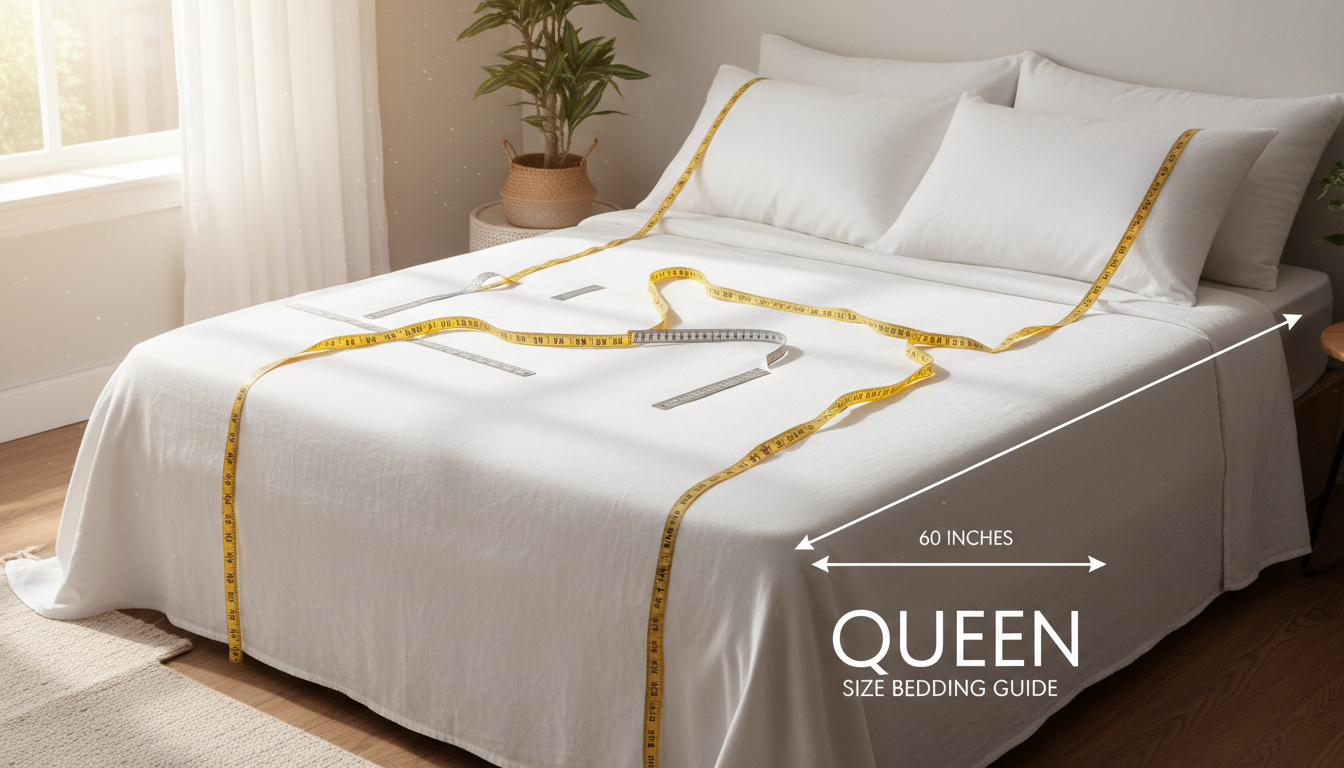
The queen size mattress occupies a unique position in American bedrooms, balancing spatial efficiency with adequate sleeping area for two adults. Measuring 60 inches in width and 80 inches in length, this configuration has emerged as the dominant standard for couples seeking comfort without overwhelming residential floor plans.
Understanding the precise dimensions of queen bedding proves essential during relocation, renovation, or initial mattress purchases. While retailers and manufacturers uniformly advertise the 60-by-80 specification, practical installation requires awareness of frame additions, regional variations, and comparative sizing against alternative mattress formats.
This examination draws from manufacturer specifications and industry sizing charts to establish definitive measurements, comparison metrics, and spatial requirements for the standard queen bed.
What Are the Standard Dimensions of a Queen Size Bed?
Industry data confirms the queen mattress spans exactly 60 inches horizontally and 80 inches vertically, translating to 152 centimeters by 203 centimeters in metric measurements. Turmerry’s dimensional charts and Nectar Sleep’s specifications independently verify these figures as the uncontested North American standard, while DreamCloud Sleep’s market analysis identifies this format as the most popular mattress size for American couples.
Key Specifications
- Surface area provides approximately 4,800 square inches of sleeping space
- Each occupant receives roughly 30 inches of personal width when shared
- Total length accommodates individuals up to 6 feet 8 inches without diagonal positioning
- Frame installation typically expands footprint to 62–65 inches wide by 82–85 inches long
- Requires minimum clear floor space of 10 feet by 10 feet for functional bedroom layout
- Represents the most popular mattress selection among American couples
| Measurement | Inches | Metric/Feet | Context |
|---|---|---|---|
| Mattress Width | 60″ | 152 cm / 5 ft | Standard manufacturing spec |
| Mattress Length | 80″ | 203 cm / 6.67 ft | Accommodates 6’8″ sleeper |
| Per-Person Width | 30″ | 76 cm | When shared by two adults |
| With Frame | 62–65″ | 157–165 cm | Varies by frame design |
| With Frame Length | 82–85″ | 208–216 cm | Includes headboard/footboard |
| Minimum Room | 120″ × 120″ | 305 × 305 cm / 10×10 ft | Recommended clearance |
How Does a Queen Size Bed Compare to Other Mattress Sizes?
Selecting appropriate bedding requires understanding relative scale against alternative configurations. The queen occupies the middle position in the standard sizing hierarchy, offering distinct advantages over full-size predecessors while remaining more spatially conservative than king-tier options.
Queen versus Full Size
The full, or double, mattress measures 54 inches wide by 75 inches long, dimensions originally conceived for single occupancy. The queen adds six inches of horizontal space and five inches of vertical length. Comparative studies demonstrate this expansion translates to three additional inches of personal width per sleeper when the mattress is shared, elevating the per-person allocation from 27 inches to 30 inches.
Queen versus King and California King
Standard king mattresses extend 76 inches wide, providing 16 inches of additional horizontal space beyond the queen, while maintaining identical 80-inch lengths. California king configurations invert this relationship, offering 72 inches of width paired with 84 inches of length, prioritizing vertical extension over horizontal expansion. Both king variants demand substantially larger bedroom footprints and correspondingly increased bedding costs.
For couples debating between queen and king, measure available bedroom clearance carefully. King mattresses require significantly wider rooms to accommodate frame overhang and walking space, while queen dimensions fit comfortably within standard 10-foot-wide bedrooms.
Queen Size Bed Dimensions in Different Regions
While North American markets standardize the 60-by-80 configuration, international markets employ alternative nomenclature and dimensional standards. These variations create potential confusion for importers, international travelers, or online shoppers navigating global retail platforms.
North American Standard
United States, Canadian, and Mexican markets uniformly recognize the queen as 152 centimeters by 203 centimeters. This specification has remained consistent across domestic manufacturers, establishing the de facto continental baseline.
United Kingdom and Ireland Variations
British and Irish markets classify their 60-by-78-inch mattresses as “king” size rather than queen. Regional sizing data confirms these units measure 152 centimeters by 198 centimeters, falling two inches shorter than American queens. True queen-sized bedding sold in UK markets often corresponds to American “full” dimensions, requiring careful label verification when purchasing internationally.
When ordering bedding or frames from European retailers, verify whether dimensions follow American or British standards. Sheet sets purchased for UK “kings” will fit American queens lengthwise but may expose two inches of mattress at the foot.
Practical Considerations for Queen Size Beds
Beyond raw measurements, functional implementation of queen bedding demands evaluation of residential architecture, occupancy patterns, and accessory compatibility. These practical factors determine whether the theoretical advantages of queen dimensions translate to lived comfort.
Minimum Room Requirements
Spatial planning guidelines specify 10 feet by 10 feet as the minimum recommended room size for queen installation. This clearance accommodates the mattress footprint plus frame overhang while preserving adequate circulation space for wardrobe access and emergency egress. Bedrooms measuring smaller than 100 square feet risk constrained movement and visual overcrowding.
Comfort for Two Sleepers
With 30 inches of individual width per occupant, queen mattresses provide six inches less personal space than twin beds offer single sleepers. Occupancy studies indicate this allocation satisfies most couples, though heavier individuals or those requiring expansive sleeping positions may experience constraint. The dimensions accommodate standard cribs or co-sleeping infants at the mattress edge when necessary.
Sheet and Accessory Sizing
Standard queen sheets measure approximately 90 inches by 102 inches for flat options, with fitted variants designed specifically for 60-by-80 mattresses. Purchasing “deep pocket” variants becomes necessary when mattress thickness exceeds 12 inches or when using additional toppers. Comforters and duvet covers typically measure 86 inches by 86 inches or larger to ensure adequate drape over frame edges.
Bed frames typically add 2 to 5 inches to both mattress width and length. Before purchasing, measure your bedroom’s available floor space rather than relying on mattress dimensions alone to ensure adequate clearance for walking and furniture placement.
Development of Queen Size Standards
The queen size specification emerged through decades of bedding industry evolution, responding to housing trends and changing demographic needs. This progression reflects shifting preferences toward master bedroom optimization and dual-occupancy comfort.
- Standard Specification: North American bedding manufacturers established and maintain the 60-by-80 inch configuration as the definitive queen size across United States and Canadian markets.
- Popularity Recognition: Industry sales data subsequently documented the queen as the most frequently purchased mattress size among American couples seeking dual-occupancy solutions.
- Olympic Queen Expansion: The 66-by-80 Olympic Queen variant entered production, offering six additional inches of width for consumers requiring expanded sleeping area without graduating to full king dimensions.
- International Classification: United Kingdom and Irish markets adopted alternative nomenclature, classifying 60-by-78 inch mattresses as “king” size rather than employing American queen terminology.
Established Facts and Remaining Variations
While mattress sizing operates under apparent standardization, certain specifications remain fixed while others exhibit manufacturer-dependent variability. Understanding this distinction prevents installation errors and compatibility failures.
| Established Standards | Variable Factors |
|---|---|
| Standard queen mattresses measure exactly 60″ × 80″ across all major North American manufacturers | Bed frame dimensions vary by 2–5 inches beyond mattress measurements depending on design and material thickness |
| Minimum recommended room size is consistently cited as 10 × 10 feet for functional furniture placement | Sheet depth requirements fluctuate based on mattress thickness, topper usage, and individual brand specifications |
| Per-person width allocation calculates to 30 inches when shared by two adults | International “queen” equivalents, particularly UK classifications, use divergent dimensions (60″ × 78″) |
| Olympic Queen variants maintain 80″ length while expanding width to 66″ | Availability of Olympic Queen and specialized variants remains limited compared to standard queen production |
Why Queen Dimensions Became the Residential Standard
The ascendancy of queen size bedding reflects architectural trends in residential construction and evolving sleep habits. Housing increasingly incorporated dedicated master bedrooms designed to accommodate 10-foot-square dimensions, creating spatial envelopes perfectly suited to queen installations.
Demographic shifts toward dual-income households and shared master suites necessitated bedding solutions accommodating two adults without the spatial penalties imposed by king-sized footprints. The 30-inch per-person allocation struck a calculated balance between intimacy and individual space, while the 80-inch length addressed height demographics among American adults. Anne Hathaway Wife of Shakespeare historical records indicate sleeping arrangements contrasted sharply with modern standards, highlighting how contemporary queen dimensions reflect industrial manufacturing capabilities and standardized construction.
Source Documentation and Industry Standards
Dimensional data presented derives from manufacturer specifications and bedding industry measurement protocols. Independent verification across multiple sources confirms the consistency of standard queen sizing while highlighting regional deviations.
A standard queen mattress measures 60 inches wide by 80 inches long (152 cm × 203 cm, or 5 feet × 6.67 feet). This makes it the most popular mattress size in America, particularly for couples.
— Turmerry Mattress Dimensions Chart and DreamCloud Sleep Guide
A queen bed is 6 inches wider and 5 inches longer than a full size bed, while a king is 16 inches wider than a queen.
— Nectar Sleep Comparative Analysis
The minimum recommended room size for a queen bed is 10 × 10 feet. When accounting for a bed frame, the total queen bed footprint is approximately 62-65 inches wide by 82-85 inches long.
— Turmerry Spatial Planning Guidelines
Key Measurements Summary
The queen size bed maintains standardized dimensions of 60 inches width by 80 inches length across North American markets, providing 30 inches of individual space per occupant when shared. These measurements require minimum 10-foot-square bedrooms for practical installation and accommodate standard bedding accessories designed for the 60-by-80 specification. International markets, particularly the UK, employ differing nomenclature where similar dimensions are classified under alternative sizing categories. White Spots on Skin Causes and Treatments research emphasizes the importance of precise measurement in all health and housing contexts.
Frequently Asked Questions
How wide is a queen size bed?
A queen size bed measures 60 inches wide (152 centimeters or 5 feet).
How long is a queen size bed?
The standard length is 80 inches (203 centimeters or 6.67 feet), accommodating sleepers up to 6 feet 8 inches tall.
Is a queen size bed bigger than a full size bed?
Yes. A queen is 6 inches wider and 5 inches longer than a full size bed, providing 3 additional inches of width per person when shared.
What size sheets fit a queen bed?
Standard queen sheets fit 60-by-80 mattresses. Fitted sheets should specify 15-inch depth or “deep pocket” for thicker mattresses.
Can a queen bed fit in a small bedroom?
The minimum recommended room size is 10 feet by 10 feet. Smaller rooms may accommodate the mattress but restrict movement and furniture placement.
Does a queen bed fit two people comfortably?
Yes, with 30 inches of personal width per person. This exceeds the 27 inches per person offered by full size beds but is 6 inches less than individual twin beds.