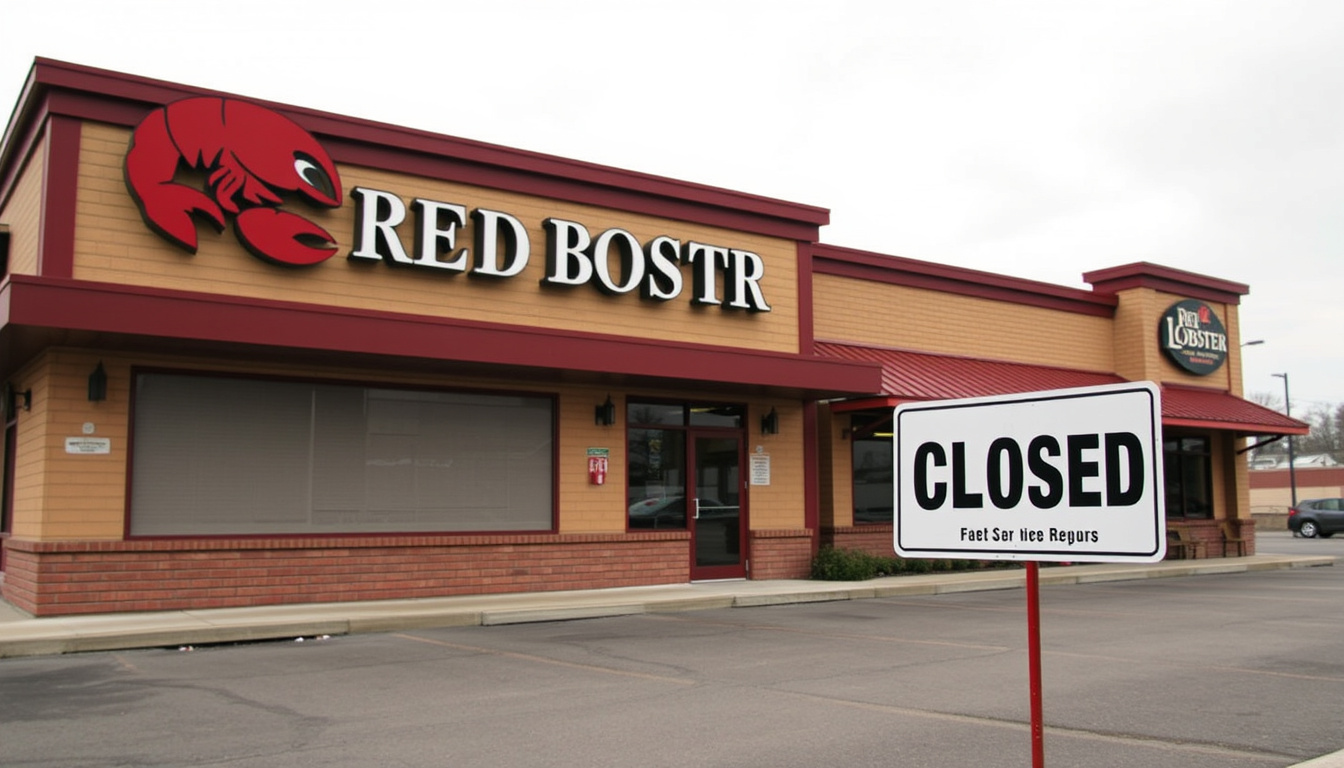
Red Lobster, the iconic American seafood chain known for its Cheddar Bay Biscuits and affordable lobster dishes, filed for Chapter 11 bankruptcy protection in May 2024. The filing marked a dramatic fall from grace for a brand that once operated more than 650 restaurants nationwide. As part of the restructuring process, the company has closed over 100 underperforming locations, with an additional 23 stores scheduled to cease operations by the end of August 2024.
The closure wave affects restaurants across 14 states, from California to New York. Court documents describe these locations as financially unsustainable, noting they would likely continue dragging down the company’s performance. A Florida bankruptcy judge must still approve the proposed sale that would allow Red Lobster to emerge from bankruptcy proceedings.
Why Is Red Lobster Closing Locations?
Multiple factors converged to push Red Lobster toward bankruptcy and mass closures. The chain faced mounting pressure from intensifying competition in the fast-casual dining sector, rising inflation that squeezed both operational costs and consumer spending, and a heavy debt burden that limited strategic flexibility.
Key Drivers Behind the Decline
Internal missteps compounded external pressures. Former majority owner Thai Union Group, which acquired a leading stake in 2020, implemented cost-cutting measures that removed longtime suppliers and damaged product quality. Employee accounts describe a deteriorating company culture that further undermined operational standards.
The most damaging strategic error involved the “Endless Shrimp” promotion. Originally conceived as a limited-time offer to attract customers, the $20 promotion became a permanent menu item. The promotion generated an $11 million loss for the company, according to court filings. Industry analysts noted that such aggressive pricing without proper margin controls could devastate a chain already struggling with debt service requirements.
Mismanagement at multiple levels created a perfect storm. Supply chain disruptions, inconsistent restaurant experiences, and delayed responses to shifting consumer preferences all contributed to declining foot traffic. The chain’s attempt to compete on price with fast-casual alternatives ultimately proved unsustainable.
- Heavy debt load limited investment in restaurant upgrades and marketing
- Cost-cutting measures eliminated quality suppliers and damaged product consistency
- Endless Shrimp promotion caused $11 million in losses
- Competition from fast-casual restaurants intensified market pressure
- Inflation reduced consumer discretionary spending on dining out
- Toxic company culture contributed to operational instability
| Metric | Details |
|---|---|
| Founded | 1968, Lakeland, Florida |
| Pre-bankruptcy locations | More than 650 restaurants |
| Bankruptcy filing | May 19, 2024 |
| Majority owner (2020-2024) | Thai Union Group |
| Summer 2024 closures | More than 100 locations |
| Additional closures (by August 31, 2024) | 23 stores |
| Expected remaining locations | Approximately 500 |
| Endless Shrimp promotion loss | $11 million |
How Many Red Lobster Stores Are Closing?
The scale of Red Lobster’s contraction represents one of the most significant restaurant closures in recent American history. Beyond the initial wave of more than 100 restaurants shuttered during summer 2024, court-approved lease rejections added 23 more locations to the closure list by the end of August.
Affected States and Locations
The 23 locations subject to lease rejections span 14 states. Florida accounts for three closures, including stores in Fort Walton Beach, Pensacola, and Port Richey. Virginia also saw three locations affected in Alexandria, Richmond, and Virginia Beach. Illinois rounds out the states with multiple closures in Bourbonnais, Geneva, and Peoria.
Single locations closed in Arizona (Yuma), Arkansas (Little Rock), California (La Mesa), Colorado (Colorado Springs), Georgia (Jonesboro), Indiana (Michigan City), Missouri (Maplewood), New York (Bronx and Queensbury), North Carolina (Jacksonville), Ohio (Strongsville), and South Carolina (Cayce). Two stores closed in Minnesota (Golden Valley and Maple Grove).
All 23 locations were classified as “underperforming” in court filings. The company determined these restaurants would likely continue generating losses and proved unnecessary for future operations under new ownership. Consumers seeking alternative seafood dining options may find it helpful to understand marine life cycles as part of broader seafood industry context.
Red Lobster Bankruptcy Timeline
Understanding the sequence of events helps contextualize how the chain reached this point. The bankruptcy represents the culmination of years of financial deterioration, though acceleration occurred in the months immediately preceding the May 2024 filing.
- 2020: Thai Union Group acquires majority ownership stake in Red Lobster, beginning a period of strategic changes
- 2023: Financial struggles become publicly visible as same-store sales decline and losses mount
- May 19, 2024: Red Lobster files for Chapter 11 bankruptcy protection in Florida federal court
- Summer 2024: More than 100 underperforming locations close permanently across multiple states
- August 31, 2024: Court approves rejection of leases for 23 additional stores, completing the closure wave
- Ongoing: Company awaits bankruptcy court approval for sale to Fortress Investment Group
Throughout this period, Fortress Investment Group provided a $100 million loan to maintain operations during the bankruptcy proceedings. The financing allowed the chain to continue serving customers while restructuring negotiations proceeded. Court documents filed in the Eastern District of Florida outline the terms of the proposed sale.
Is Red Lobster Going Out of Business?
Despite the widespread closures, Red Lobster is not liquidating entirely. The company has reached an agreement to sell itself to Fortress Investment Group, a private equity firm with documented experience reviving struggling restaurant chains. Fortress currently operates Krystal, Logan’s Roadhouse, and J. Alexander’s, all brands that underwent successful turnarounds.
What Remains Uncertain
A Florida bankruptcy judge must approve the sale before it can finalize. The company expects to emerge from bankruptcy with approximately 500 locations remaining, representing a significant contraction from its pre-filing footprint but preserving a substantial national presence.
The sale to Fortress Investment Group requires court confirmation. While the company has stated expectations for approval, bankruptcy proceedings can encounter unexpected complications. The outcome will determine whether Red Lobster survives as an ongoing concern or faces further restructuring.
Damola Adamolekun, the former CEO of P.F. Chang’s, has been appointed to lead Red Lobster under the new ownership structure. His experience with restaurant brand revitalization will prove essential if the chain hopes to rebuild customer loyalty after the disruptions of bankruptcy and closure announcements.
| What We Know | What Remains Unclear |
|---|---|
| More than 100 stores closed in summer 2024 | Whether all closures are finalized |
| 23 additional closures approved by August 31, 2024 | Complete list of future potential closures |
| Fortress Investment Group purchasing the chain | Timeline for court approval |
| $100 million loan provided by Fortress | Impact on gift cards and loyalty programs |
| Approximately 500 locations expected to remain | Long-term viability under new ownership |
| Damola Adamolekun appointed as new leader | Specific turnaround strategy details |
Other Popular Restaurant Chains Closing in 2024
Red Lobster’s struggles reflect broader challenges facing the American restaurant industry. Rising labor costs, shifting consumer preferences toward fast-casual options, and pandemic-era debt have strained many established chains. While specific announcements vary, analysts note that the restaurant sector has experienced significant consolidation throughout 2024.
The closure of Red Lobster locations creates opportunities for competing seafood restaurants and casual dining chains. Consumers may explore alternatives ranging from local seafood establishments to regional chains expanding into vacated markets. Those interested in understanding aquatic ecosystems and marine conservation may find relevance in topics like fish care and lifespan patterns in the context of broader seafood industry discussions.
Sources and Additional Information
The company described these locations as “underperforming” and indicated they were likely to continue driving losses, according to court filings with the U.S. Bankruptcy Court for the Middle District of Florida.
— 6abc Action News, reporting on court documents
Multiple news organizations have tracked Red Lobster’s bankruptcy proceedings and closure announcements. CBS News reported on the additional 23 closures announced as part of the lease rejection process. The chain’s bankruptcy case number is pending with the appropriate federal court.
Summary
Red Lobster’s Chapter 11 filing in May 2024 triggered the closure of more than 100 restaurants during summer 2024, followed by 23 additional lease rejections scheduled for completion by August 31. The closures span 14 states and reduce the chain to approximately 500 locations nationwide. Fortress Investment Group’s $100 million financing and pending acquisition offer a path toward survival, though court approval remains necessary. The chain’s decline stems from a combination of heavy debt, operational missteps including the costly Endless Shrimp promotion, competition from fast-casual restaurants, and inflation pressures. Whether the new leadership can restore profitability at remaining locations will determine the chain’s long-term future.
Frequently Asked Questions
What happens to Red Lobster gift cards during bankruptcy?
Information regarding gift card policies during the bankruptcy proceedings was not detailed in available court filings or public announcements. Customers with gift cards should contact Red Lobster directly or check the company’s official website for current policies regarding redemption at closing locations.
Can I still order from Red Lobster locations scheduled to close?
Many closed locations have already ceased operations. The 23 stores with lease rejections by August 31 may remain open until that date, though consumers should verify individual restaurant status before visiting. The remaining approximately 500 locations continue normal operations.
Will Red Lobster close all locations?
Current plans indicate Red Lobster will emerge from bankruptcy with approximately 500 remaining locations. The company has not announced plans for complete liquidation. The pending sale to Fortress Investment Group would preserve these locations under new ownership.
Who is buying Red Lobster?
Fortress Investment Group, which also owns Krystal, Logan’s Roadhouse, and J. Alexander’s restaurants, has agreed to purchase Red Lobster. The private equity firm has experience with restaurant turnarounds and appointed Damola Adamolekun, former P.F. Chang’s CEO, to lead the chain.
Why did the Endless Shrimp promotion fail?
The $20 Endless Shrimp promotion was originally a limited-time offer but became permanent after management decided to keep it on the menu. The promotion generated an $11 million loss for the company, according to court filings. Industry analysts noted that unlimited shrimp at a fixed low price without proper cost controls significantly eroded margins.
How many employees were affected by the closures?
Specific employment figures for affected locations were not detailed in available public documents. Restaurant closures typically impact hourly staff first, with management positions potentially transitioning to remaining locations or concluding with the closed restaurant’s operations.