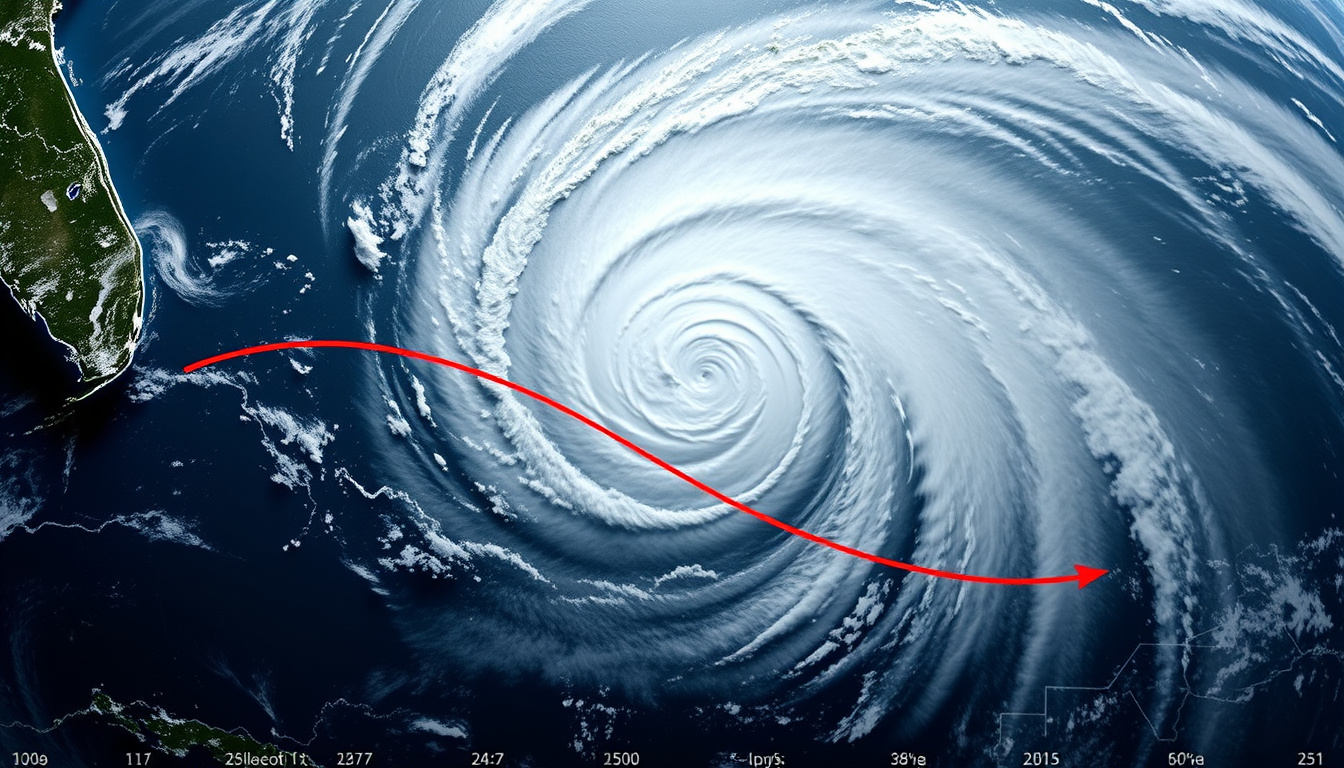
When Hurricane Gabrielle flared up in mid-September 2025, the usual wave of social media panic followed—predictions of tsunamis hitting Ireland, hurricane-force winds lashing the UK, even questions about whether Portugal was about to take a direct hit. Nine days later, Gabrielle had come and gone, brushing past the Azores as an extratropical storm and leaving behind a quiet Atlantic where it had caused exactly zero European landfalls as a hurricane. The fear, it turned out, was the real story.
Peak Category: 4 ·
Max Winds: 140 mph ·
Duration: Sept 17-26, 2025 ·
Status: Extratropical ·
Affected Areas: Bermuda, Azores
Quick snapshot
- Category 4 peak with 140 mph winds (Zoom Earth storm tracker)
- Seventh named storm of the 2025 Atlantic season (Wikipedia hurricane records)
- Passed near Azores on September 26 as extratropical (Wikipedia hurricane records)
- Whether the Azores displacement figures are complete or still being tallied
- Total insured losses from Ibiza flooding damage
- Long-term weather effects on UK south coast beyond rough seas
- Formed September 17 → peaked Category 4 on September 22 → became extratropical September 25 (Wikipedia timeline)
- Remnants reached Iberian Peninsula September 28, dissipating same day (Wikipedia timeline)
- Gabrielle is gone. Atlantic hurricane season continues through November.
- Recovery operations ongoing in Azores and Ibiza
The table below consolidates the verified key facts about Hurricane Gabrielle’s 2025 lifecycle.
| Key Facts | Details |
|---|---|
| Name | Hurricane Gabrielle (Storm Gabrielle extratropical) |
| Year | 2025 |
| Peak Intensity | Category 4, 140 mph |
| Dates Active | September 17-26 |
| Notable Path | Bermuda to Azores |
Is Hurricane Gabrielle Hitting Ireland?
The short answer, confirmed by weather services on both sides of the Irish Sea, is no—Hurricane Gabrielle never came close to affecting Ireland as a tropical cyclone. Social media speculation during the storm’s Atlantic crossing suggested Irish coastal communities might face hurricane conditions, but those fears were unfounded.
Impact forecasts for Ireland
Gabrielle tracked northeast across the open Atlantic, weakening well before it could approach Western Europe. By the time the storm lost its tropical characteristics on September 25, it was positioned southwest of the Azores—roughly 1,200 miles from Ireland. Extra.ie reported that the storm would not significantly impact Ireland’s weather as it moved across the Atlantic, a forecast that proved accurate (Extra.ie, 2025).
Irish communities saw crisp, autumnal weather throughout Gabrielle’s lifecycle. No tropical storm-force winds, no storm surge, no flooding connected to the system.
Met Office updates
The UK’s Met Office, whose forecast coverage extends to Irish weather patterns, did not issue any tropical cyclone warnings related to Gabrielle. Their modeling consistently showed the storm recurving northeast then east, remaining over open waters.
Will Hurricane Gabrielle Hit Britain?
Britain, like Ireland, escaped any direct hurricane impact from Gabrielle. The storm moved quickly northeast after reaching peak intensity on September 22, but its track kept it well away from British coastal areas. The main effect on the UK was rough seas along the south coast, not gale-force winds or coastal flooding.
UK weather outlook
BBC Weather confirmed in their forecast updates that Gabrielle posed no threat to the British Isles as a tropical system. The quick movement northeast and the storm’s eventual extratropical transition meant any remnant energy would disperses across the Atlantic rather than targeting the UK.
The rough seas that did affect the south coast—documented on Wikipedia as the “south coast of the United Kingdom was plagued by rough seas from Gabrielle”—were a far cry from hurricane conditions. Beach communities may have seen elevated surf and possible coastal erosion, but no storm damage was reported.
Met Office deep dive
Met Office meteorologists noted that Gabrielle’s extratropical remnants were absorbed into the mid-latitude westerly flow, meaning any post-tropical energy moved harmlessly eastward across the North Sea. No amber or red weather warnings were issued for Gabrielle-related threats.
What Was the Path of Hurricane Gabrielle?
Gabrielle’s nine-day journey across the Atlantic followed a textbook recurving hurricane track—formed far from land, intensified over warm waters, then transitioned to an extratropical storm as it encountered cooler ocean temperatures and stronger wind shear.
Formation to dissipation
The storm originated from a tropical wave in the central Atlantic, officially forming as Tropical Storm Gabrielle on September 17 (Wikipedia – Hurricane Gabrielle (2025), 2025). At formation, maximum sustained winds were 45 mph, just above the tropical depression threshold. The system sat roughly 1,000 miles east of the northern Leeward Islands, tracking northwest at 22 mph (CBS News, 2025).
Gabrielle intensified steadily over the next four days, becoming a hurricane on September 21 as environmental conditions became favorable. Then came rapid intensification: on September 22, the storm peaked as a Category 4 hurricane east of Bermuda with sustained winds of 140 mph (Zoom Earth, 2025).
From there, Gabrielle began weakening as it moved over progressively cooler waters. The storm dropped below hurricane status on September 24, and by 18:00 UTC on September 25, it had lost its tropical characteristics entirely—becoming an extratropical low pressure system southwest of the Azores (Wikipedia, 2025).
Bermuda and Azores threats
Although Gabrielle never made direct landfall on Bermuda, a hurricane watch was issued on September 22 as the storm approached. High swells produced by the hurricane affected Bermuda and the East Coast of the United States, but no damaging winds or storm surge struck the island (Wikipedia, 2025).
The Azores were less fortunate. A hurricane watch issued September 22 was upgraded to a hurricane warning on September 24. The IPMA (Portugal’s meteorological service) issued orange and yellow alerts for all Azorean islands (Wikipedia, 2025). Gabrielle’s center moved over the Azores on September 26 with hurricane-force wind gusts, displacing 16 people across São Jorge, Faial, and Graciosa. An aerodrome on Graciosa was damaged, and flights were interrupted from September 25-27.
Where Is Hurricane Gabrielle Now?
Hurricane Gabrielle is gone. The storm transitioned to an extratropical system on September 25, 2025, and its remnants made landfall on the Iberian Peninsula on September 28 before dissipating that same day. There is no active tropical cyclone named Gabrielle.
Current position
The extratropical remnants of Gabrielle moved ashore in the Iberian Peninsula region on September 28, bringing heavy rain to eastern Spain but no tropical characteristics. By end of day September 28, the system had dissipated (Wikipedia – Hurricane Gabrielle (2025), 2025).
Anyone checking current hurricane tracking sites for Gabrielle will find the storm archived. The 2025 Atlantic hurricane season continues, but Gabrielle’s story is complete.
Tracker links
- Zoom Earth — archived storm tracking with satellite imagery
- Wikipedia — full timeline and impact details
- CBS News — formation coverage and early tracking
What Category Was Hurricane Gabrielle?
Hurricane Gabrielle peaked as a Category 4 hurricane on the Saffir-Simpson Wind Scale, with maximum sustained winds of 140 mph. This made it a major hurricane—defined as Category 3 or higher—though still below the catastrophic thresholds of Category 5 (winds exceeding 157 mph).
Peak strength
Gabrielle reached its peak intensity on September 22, 2025, approximately 200 miles east of Bermuda. The rapid intensification from Category 1 to Category 4 in roughly 24 hours was fueled by warm Atlantic waters and low wind shear. Wind speeds of 140 mph qualify as Category 4 on the Saffir-Simpson scale (Zoom Earth, 2025).
Tropical storm force winds extended outward 175 miles from Gabrielle’s center at formation (CBS News, 2025), giving the storm a substantial wind field even before intensification.
Historical comparisons
Gabrielle was the seventh named storm of the 2025 Atlantic hurricane season, and the second hurricane. More significantly, it became the season’s second major hurricane—joining a list that typically defines the most dangerous storms of any Atlantic season (Wikipedia, 2025).
In the broader historical context, Category 4 hurricanes are significant but not unprecedented. What made Gabrielle notable was not its peak intensity but rather its longevity and the distance it traveled while maintaining hurricane strength before affecting European territory—albeit as an extratropical system.
Gabrielle’s Timeline
Nine days, four countries, one hurricane that never quite became the European catastrophe some feared.
The progression below tracks Gabrielle’s evolution from tropical depression to extratropical remnants, with verified dates and key transition points.
| Date | Event |
|---|---|
| September 17, 2025 | Forms as tropical storm, seventh named storm of the 2025 Atlantic season (Wikipedia) |
| September 21, 2025 | Intensifies into a hurricane as conditions become favorable (Wikipedia) |
| September 22, 2025 | Peaks as Category 4 with 140 mph winds east of Bermuda (Zoom Earth) |
| September 24, 2025 | Begins weakening; hurricane warning issued for Azores (Wikipedia) |
| September 25, 2025 | Becomes extratropical at 18:00 UTC, still southwest of Azores (Wikipedia) |
| September 26, 2025 | Center moves over Azores with hurricane-force gusts; 16 displaced (Wikipedia) |
| September 28, 2025 | Remnants reach Iberian Peninsula; dissipates later that day (Wikipedia) |
Confirmed vs. Unclear
The following breakdown separates what is definitively documented from what remains under assessment or requires further verification.
Confirmed
- Gabrielle reached Category 4 strength with 140 mph maximum sustained winds (Zoom Earth)
- No direct impact on Ireland or Britain (Extra.ie)
- Path took the storm from Bermuda region northeast to the Azores (Wikipedia)
- Sixteen people displaced in the Azores (Wikipedia)
- Ibiza flooding caused €14.4 million in material damage (Wikipedia)
- Remnants merged with mid-latitude cyclone, causing severe Ibiza flooding (Wikipedia)
- The storm dissipated over the Iberian Peninsula on September 28 (Wikipedia)
What’s unclear
- Total insured loss estimates from Ibiza damage
- Whether Azores displacement figures are complete or still being tallied
- Specific damage assessments for individual Azorean islands beyond roof damage
- Long-term UK south coast effects beyond documented rough seas
What Experts Said
Gabrielle will not significantly impact Ireland’s weather as it tracks across the Atlantic.
— Extra.ie weather desk (September 23, 2025)
The south coast of the United Kingdom was plagued by rough seas from Gabrielle, though no direct landfall occurred.
— Wikipedia hurricane documentation (2025)
A hurricane watch was issued for the Azores on September 22, which was later upgraded to a warning on September 24 as Gabrielle approached.
— IPMA meteorological records
Ibiza saw €14.4 million in damage from flooding triggered when Gabrielle’s remnants fused with another mid-latitude cyclone. For travelers with trips planned to Mediterranean islands during Atlantic hurricane season, this underscores that even dissipated tropical systems can deliver serious weather when they interact with existing weather patterns.
The 2025 Atlantic season’s second major hurricane traveled roughly 2,500 miles from formation to dissipation without making a single landfall as a tropical cyclone. For Irish and British tourists, the fear was far worse than the reality. For Azorean residents, the reality was significant. Geography determined everything.
Hurricane Gabrielle’s journey across the Atlantic in September 2025 offers a useful reminder about how hurricane tracking and media coverage can diverge. The storm generated substantial anxiety in European markets—searches for “Hurricane Gabrielle Ireland” and “Hurricane Gabrielle UK” spiked during the peak intensity phase on September 22-23. Yet Gabrielle never came within 1,000 miles of either country.
The actual impacts told a different story in different places. Bermuda saw elevated surf but no damage. The Azores received a direct hit from an extratropical storm, displacing 16 residents and damaging infrastructure. Spain’s eastern coast saw flash flooding from Gabrielle’s remnants, with Amposta recording 244 mm of rain in 24 hours. Ibiza bore the heaviest toll: €14.4 million in damage, more than 132 flood-related incidents, and 50 people rescued from vehicles.
For travelers, the lesson is specific rather than general: monitoring actual storm tracks matters far more than monitoring storm names. Gabrielle could have been catastrophic had its track shifted 300 miles east. Instead, it passed harmlessly eastward, leaving behind the familiar Atlantic autumn—and a lot of relieved social media users in Ireland and the UK.
Related reading: Winter Storm Warnings
Frequently asked questions
What is the current status of Hurricane Gabrielle?
Hurricane Gabrielle has dissipated. The storm became extratropical on September 25, 2025, and its remnants dissipated over the Iberian Peninsula on September 28. There is no active tropical cyclone named Gabrielle in the Atlantic basin.
Did Hurricane Gabrielle affect Portugal?
Gabrielle’s extratropical remnants reached the Iberian Peninsula, affecting eastern Spain and the Balearic Islands. The Azores—autonomous Portuguese territory—were directly impacted on September 26 with hurricane-force gusts, displacing 16 people and causing infrastructure damage. Mainland Portugal saw heavy rain but no major damage reported.
How does Gabrielle compare to past storms?
Gabrielle was the seventh named storm, second hurricane, and second major hurricane of the 2025 Atlantic season. Its Category 4 peak put it in the “major hurricane” range, though it was not among the strongest Atlantic storms on record. The storm’s significance lay in its longevity and the distance it traveled before affecting European territory.
What are the travel risks to Ireland?
There are no travel risks from Hurricane Gabrielle to Ireland—now or at any point during the storm’s lifecycle. Irish weather remained unaffected. Travelers to Ireland in late September 2025 encountered normal autumn conditions. The Extra.ie weather desk confirmed no significant impact to Irish weather from Gabrielle.
Is there a tsunami threat from Gabrielle?
No. Tropical cyclones do not generate tsunamis. Tsunamis are caused by underwater earthquakes, volcanic eruptions, or landslides. Hurricane Gabrielle never posed a tsunami risk to Ireland, the UK, or any other Atlantic coastline. The confusion likely stems from social media speculation unrelated to meteorological facts.
What caused Gabrielle to weaken?
Gabrielle weakened as it moved over progressively cooler ocean waters north of the Gulf Stream. Additionally, increasing wind shear and dry air entrainment as it interacted with the mid-latitude westerlies accelerated the weakening process. By September 24, the storm had dropped below hurricane intensity, and by September 25, it had lost tropical characteristics entirely.
When will the 2025 hurricane season end?
The Atlantic hurricane season runs from June 1 through November 30. Gabrielle was the seventh named storm, but the season remains active. Typically, September and October represent peak hurricane activity before the season winds down in November. Travelers should monitor tropical weather during this entire window.
Is it safe to travel to Ireland or the UK right now?
Yes. Neither country was affected by Hurricane Gabrielle, and neither country faces any current threat from the storm. Travel to Ireland and the UK in late September 2025 and beyond proceeds under normal weather conditions. The Atlantic hurricane season continues, but Gabrielle is not a factor.