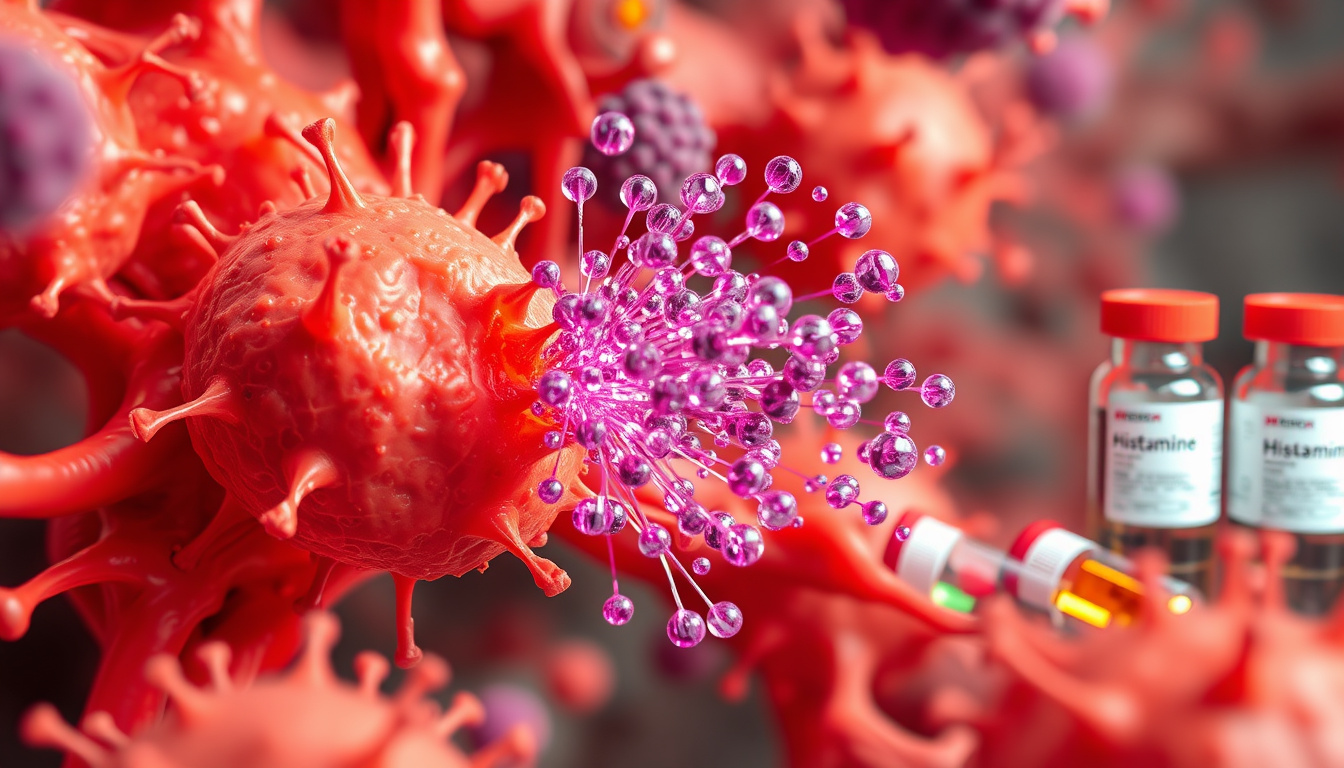
If your body suddenly reacts with swelling, breathing trouble, hives, or digestive issues—and the usual allergy treatments don’t help—you might be dealing with mast cell activation syndrome (MCAS). Unlike a straightforward allergic reaction, MCAS involves mast cells releasing dozens of inflammatory chemicals on their own, sometimes triggered by stress or weather rather than a specific allergen. This guide walks through what leading medical institutions and research currently understand about symptoms, causes, diagnosis, and treatment options for this complex condition.
Also known as: MCAS · Key symptoms: swelling, shortness of breath, hives, diarrhea, vomiting · Primary trigger: mast cell mediator release
Quick snapshot
- Mast cells release 60–200 chemical mediators per episode (The Dysautonomia Project)
- Diagnostic tryptase rise: 20% + 2 ng/mL above baseline (PMC)
- Long-term outcomes and standardized cure rates remain uncertain (Australasian Mastocytosis Society)
- Exact prevalence data varies by region and diagnostic criteria (PMC)
- Management focuses on symptom control—no cure exists (The Dysautonomia Project)
- Criteria not yet universally adopted; regional variations in diagnostic practice persist (Australasian Mastocytosis Society)
The table below summarizes key definitions and associations that frame how clinicians and researchers approach MCAS.
| Fact | Details |
|---|---|
| Full name | Mast Cell Activation Syndrome |
| Abbreviation | MCAS |
| Cell type involved | Mast cells |
| Key release | Chemical mediators |
| Associated conditions | PoTS, mastocytosis |
The pattern confirms that MCAS centers on abnormal mast cell behavior rather than excessive mast cell numbers—a distinction that shapes both diagnosis and treatment.
What is Mast Cell Activation Syndrome (MCAS)?
Mast cells are white blood cells that normally help defend the body against infection. In MCAS, these cells become overreactive and release excessive amounts of inflammatory chemicals, including histamine and leukotrienes. The Cleveland Clinic describes MCAS as a condition causing intense episodes of symptoms that mimic anaphylaxis—reactions like hives, swelling, breathing problems, stomach issues, and drops in blood pressure that can range from mild to life-threatening.
According to the AAAAI, the repeated episodes set MCAS apart from typical allergic reactions. While allergies respond to predictable triggers, MCAS symptoms may surface unexpectedly during exercise, stress, or exposure to temperature changes.
How MCAS differs from mastocytosis
The key difference: mastocytosis involves too many mast cells in the body, while MCAS involves a normal number of mast cells behaving abnormally. The Primary Immune organization explains that MCAS falls under the broader mast cell activation disease (MCAD) umbrella, alongside mastocytosis. Both involve mast cell dysfunction, but the underlying mechanism differs.
Patients and doctors sometimes confuse these conditions. Knowing which one applies shapes which tests to run and which treatments make sense.
The most common systemic mast cell disease is MCAS, caused by spontaneous or triggered mast cell activation due to mutations, releasing 60–200 mediators that cause multi-organ symptoms. There is no cure, but treatments can significantly improve quality of life.
— The Dysautonomia Project
What are three common symptoms of mast cell activation?
MCAS produces symptoms across nearly every organ system. The Cleveland Clinic lists episodes affecting multiple areas simultaneously—low blood pressure, flushing, itchy skin, hives, nasal congestion, swelling of face or throat, constipation or diarrhea, abdominal pain, vomiting, shortness of breath, weakness, and anaphylaxis.
Core symptoms like hives and swelling
Symptoms range from mild headaches or urticaria to life-threatening anaphylaxis. A review published in PMC describes how vasoactive and pro-inflammatory mediators from mast cells drive symptoms affecting the skin (pruritus, flushing, urticaria, angioedema), cardiovascular system (low blood pressure), gastrointestinal tract (cramping, diarrhea, vomiting), and respiratory system (shortness of breath).
The PMC review notes that typical episodes resolve within hours—which distinguishes acute MCAS from chronic conditions. However, many patients seeking care present with persistent symptoms rather than episodic ones, and these may not meet MCAS diagnostic criteria.
Many patients have MCAS-like symptoms but don’t meet formal criteria. The Australasian Society of Clinical Immunology and Allergy notes that when symptoms are chronic rather than episodic, doctors may need to investigate other causes.
First signs of MCAS
Initial presentations often involve skin symptoms—itching, flushing, hives, or facial swelling—alongside gastrointestinal disturbances or unexplained drops in blood pressure. Because symptoms overlap with many other conditions, MCAS frequently goes unrecognized initially.
How do you know if you have MCAS?
Diagnosing MCAS requires ruling out other conditions and confirming mast cell involvement through testing. According to the AAAAI, diagnosis relies on detecting elevated mediators—tryptase, N-methylhistamine, prostaglandins, or leukotriene E4 (LTE4)—during episodes compared to a baseline sample drawn days later.
Diagnostic tests for MCAS
The consensus criteria, as outlined in a PMC review, require three elements: typical multi-organ symptoms (often anaphylaxis), a serum tryptase increase of 20% + 2 ng/mL above baseline, and response to mast cell-targeted drugs. The AAAAI specifies that blood for tryptase testing should be drawn within 30 minutes to 2 hours after an episode begins.
TMS—The Mast Cell Disease Society adds that symptoms must affect two or more organ systems repeatedly, with elevated tryptase during episodes or alternative mediator evidence, plus treatment response. Testing also includes ruling out the KIT D816V mutation, which points to mastocytosis instead.
Elevated tryptase alone does not confirm MCAS—it rises in other conditions too. Doctors must interpret results in the context of symptom patterns and response to treatment.
The first step is to evaluate whether the clinical presentation is consistent with MCAS, recognizing that the prototypical presentation is idiopathic anaphylaxis.
— PMC review, Practical diagnosis of MCAS
Conditions mistaken for MCAS
Because MCAS symptoms overlap with allergies, anxiety, gastrointestinal disorders, and cardiovascular conditions, misdiagnosis is common. Testing helps distinguish MCAS from true IgE-mediated allergy, NSAID hypersensitivity, and mastocytosis. The Primary Immune organization notes that triggers like Ehlers-Danlos syndrome, thyroid disease, and immunodeficiency can also drive MCAS-like presentations.
What is the root cause of mast cell activation?
MCAS stems from several distinct mechanisms. According to BMJ Best Practice, there are three subtypes: primary MCAS involves clonal mast cell proliferation (similar to mastocytosis but without excessive cell numbers); secondary MCAS links to IgE-allergy or other non-specific triggers; and idiopathic MCAS has no identified underlying cause.
Seven root causes of MCAS
Reported causes include genetic mutations affecting mast cell behavior, allergic sensitization driving IgE responses, non-immunologic triggers like Ehlers-Danlos syndrome or mast cell defects, infections, thyroid disease, medication reactions, and environmental factors. The exact combination varies by individual.
MCAS rarely has a single cause. Most patients have a mix of genetic predisposition and environmental triggers—which is why tailored treatment matters more than a one-size-fits-all approach.
Primary vs secondary MCAS
Primary MCAS involves KIT-mutated mast cells with clonal characteristics, carrying higher anaphylaxis risk. Secondary MCAS often involves IgE-allergy mechanisms and responds to allergen avoidance alongside mediator-targeting drugs. A PMC review notes that severe anaphylaxis events frequently occur in combined forms involving both KIT mutations and IgE-allergy.
What is the treatment for mast cell activation syndrome?
Treatment aims to stabilize mast cells and manage episodes. According to BMJ Best Practice, first-line therapy typically involves H1 and H2 antihistamines, with leukotriene antagonists, cromolyn (a mast cell stabilizer), and omalizumab (an IgE-blocker) added as needed. For acute anaphylaxis, epinephrine remains essential.
Medications and management
The PMC review describes how severe cases—particularly combined MCAS with KIT-mutated mast cells and high anaphylaxis risk—may require cytoreductive therapy. For hymenoptera-sensitive patients, lifelong venom immunotherapy is an option. Management also involves identifying and avoiding individual triggers, which may include stress, temperature changes, certain foods, or medications.
The Australasian Mastocytosis Society emphasizes that MCAS management is complex due to variability between patients, and established diagnostic criteria are not yet universally adopted in clinical practice.
No cure exists for MCAS—treatment focuses on controlling symptoms. Patients often require ongoing adjustments to their regimen as triggers and responses evolve.
Once you’ve identified someone that has MCAS or MCAD and you’ve identified why… you then can tailor the therapies based on the positive testing.
— Maitland, Expert presentation via Primary Immune
Life expectancy and long-term outlook
While MCAS significantly impacts quality of life, it does not transform into leukemia—a key distinction from some forms of mastocytosis. With appropriate treatment, most patients manage symptoms effectively. The Dysautonomia Project confirms that early diagnosis and tailored therapy offer the best outcomes, though long-term standardized data remains limited.
Related reading: Difference Between Dementia and Alzheimer’s · What Is Borderline Personality Disorder
my.clevelandclinic.org, aaaai.org, bestpractice.bmj.com, webmd.com
Frequently asked questions
What are the first signs of MCAS?
Early signs often include skin reactions (itching, flushing, hives, facial swelling), gastrointestinal disturbances, or unexplained blood pressure drops. Because symptoms overlap with many conditions, MCAS is frequently underrecognized initially.
What gets mistaken for MCAS?
MCAS is commonly confused with allergies, anxiety, gastrointestinal disorders, cardiovascular conditions, and mastocytosis. Testing helps differentiate, but overlap in symptom presentation often leads to delayed diagnosis.
Can mastocytosis turn into leukemia?
Some forms of mastocytosis carry this risk, but MCAS does not. MCAS involves mast cells behaving abnormally without excessive proliferation, and it does not transform into leukemia.
What is the mast cell activation syndrome test?
The primary test measures serum tryptase levels during and after episodes. A rise of 20% + 2 ng/mL above baseline supports diagnosis. Blood should be drawn within 30 minutes to 2 hours after an episode starts, with a baseline sample days later.
What is the mast cell activation syndrome medication?
First-line treatment includes H1 and H2 antihistamines. Additional options are leukotriene antagonists, cromolyn, and omalizumab. For acute reactions, epinephrine is used. Severe cases may require cytoreductive therapy.
What is the life expectancy of someone with mast cell activation syndrome?
MCAS does not directly reduce life expectancy, though severe anaphylaxis episodes carry risk. With proper management and trigger avoidance, most patients maintain good quality of life.
What are the 7 causes of MCAS?
Reported causes include genetic mutations (KIT D816V and others), IgE-allergy sensitization, non-immunologic triggers (Ehlers-Danlos syndrome, mast cell defects), infections, thyroid disease, medication reactions, and environmental factors. Individual presentations typically combine multiple causes.