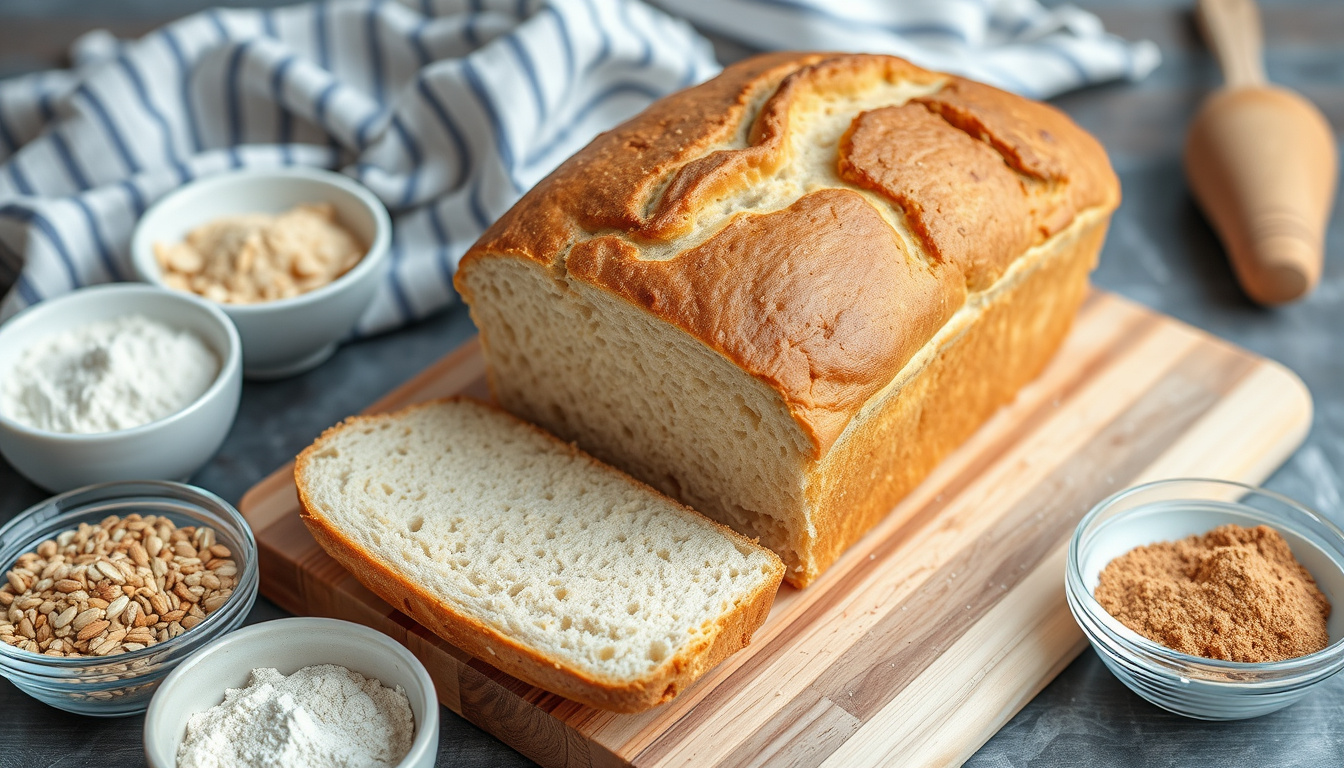
Anyone who has tried baking gluten-free bread knows the struggle: dense, crumbly loaves that taste more like sawdust than sandwich bread. But with the right flour blend and a few technique tweaks, you can bake a soft, sliceable loaf at home.
Gluten-free bread market growth (2023–2030): 7.6% CAGR ·
Ideal internal temperature for gluten-free bread: 205–210°F (96–99°C) ·
Common gluten-free flour blend ratio: 60% whole grain + 40% starch ·
Minimum hydration recommended for gluten-free dough: 75% of flour weight
Quick snapshot
- Use high hydration (75%+ liquid to flour) (King Arthur Baking)
- Weigh ingredients for consistency (King Arthur Baking)
- Rest batter 20 min before baking (The Loopy Whisk)
- Brown rice flour: structure (Caputo Flour)
- Buckwheat flour: flavor (Caputo Flour)
- Potato starch: lightness (Bake from Scratch)
- Tapioca starch: chew (Caputo Flour)
- Use self-rising flour blend (Mama Knows Gluten Free)
- Single 30-min rise (Mama Knows Gluten Free)
- Bake at 375°F for 35–40 min (Mama Knows Gluten Free)
- Don’t over-mix batter
- Add enough liquid — don’t skimp
- Rest dough or get gritty crumb
Four key facts from the test kitchen, one pattern: hydration and blend ratio matter more than any single flour.
| Fact | Value |
|---|---|
| Ideal hydration for gluten-free dough | 75%–80% of flour weight |
| Baking temperature for best rise | 375°F (190°C) |
| Time to bake a standard loaf | 35–40 minutes |
| Common flour blend ratio | 60% whole grain + 40% starch |
What is the trick to making good gluten-free bread?
Hydrate the flour blend adequately
Gluten-free dough needs higher hydration — at least 75% of the flour weight — to compensate for the lack of gluten’s water-binding structure. King Arthur Baking (a leading flour mill and recipe developer) recommends a batter that is “thick but pourable,” similar to a quick bread. The extra liquid ensures the starches gelatinize fully during baking, yielding a tender crumb rather than a dry, crumbly one.
Use a scale for accurate measurements
Weighing ingredients by grams improves consistency dramatically over volume measures. King Arthur Baking advises spooning flour into a cup and leveling it off, but a kitchen scale removes all guesswork. A difference of 10–15 grams of flour can shift your dough from soft to stiff.
Let the dough rest before baking
Resting the batter for 20–30 minutes allows starches to absorb the liquid, reducing grittiness. The Loopy Whisk (a gluten-free baking blog) notes that a rest period is critical for whole-grain flours like brown rice and millet, which otherwise leave a sandy texture.
Home bakers who skip the rest end up with a gritty loaf. A 20-minute pause is the single cheapest fix for better texture.
The implication: three simple changes — more water, a scale, and a rest — can transform a mediocre gluten-free loaf into a sandwich-worthy one.
What flours are best for gluten-free bread?
Brown rice flour for structure
Brown rice flour provides the backbone of many gluten-free blends. It’s high in protein (about 7%) and gives structure, but it can be gritty if used alone. The Loopy Whisk pairs it with finer starches to smooth out the texture.
Buckwheat flour for flavor
Buckwheat flour adds an earthy, nutty flavor and a dose of nutrients. Caputo Flour (an Italian mill specializing in gluten-free flours) uses buckwheat in its bread recipe for depth. It’s also a strong source of fiber and minerals.
Potato starch for lightness
Potato starch (not flour) is a pure starch that lightens the crumb and adds a soft, airy texture. Bake from Scratch (a baking magazine) includes potato starch in its sandwich bread recipe for a tender interior.
Tapioca starch for chew
Tapioca starch lends elasticity and a chewy bite reminiscent of wheat bread. The Loopy Whisk uses tapioca starch in its 2024 recipe to mimic the stretch of gluten. It’s the secret to a loaf that doesn’t fall apart when sliced.
What this means: no single flour replicates gluten. The best approach is a blend — roughly 60% whole grain (brown rice, buckwheat, millet, sorghum) and 40% starch (potato, tapioca, arrowroot). Taste of Home (a trusted recipe publisher) uses a store-bought all-purpose blend plus added xanthan gum to stabilize the dough.
How to make gluten-free bread quickly?
Use self-rising gluten-free flour blend
Self-rising gluten-free flour (with added baking powder and salt) eliminates the need for yeast rising time. Mama Knows Gluten Free (a celiac-friendly recipe site) offers an easy bread that combines gluten-free flour, baking powder, instant yeast, olive oil, honey, apple cider vinegar, and warm water — total rise time just 30 minutes.
Skip the second rise
Most quick gluten-free bread recipes call for a single rise. King Arthur Baking rises the batter for one hour before shaping, then a short proof. For a faster loaf, port the batter directly into the pan after mixing and let it rise once for 30 minutes.
Bake at higher temperature for shorter time
Baking at 375°F (190°C) for 35–40 minutes yields a crusty loaf without over-drying. Bake from Scratch uses a two-temperature method: 400°F for 15 minutes, then 350°F for 30–35 minutes. The initial high heat creates a nice crust, while the lower temperature finishes the interior.
- Combine self-rising gluten-free flour, baking powder, instant yeast, olive oil, honey, apple cider vinegar, and warm water.
- Let the batter rise for 30 minutes.
- Bake at 375°F (190°C) for 35–40 minutes.
Quick breads will never have the same deep flavor as a slow-fermented loaf. But for a weekday sandwich, a 1-hour start-to-finish recipe is a game-changer for busy families.
The trade-off: speed vs. flavor depth. If you have time, a longer rise with yeast improves complexity. For a 30-minute fix, self-rising blends are your best bet.
What are common mistakes when making gluten free dough?
Over-mixing the batter
Over-mixing develops too much air, which can cause the loaf to collapse. Bake from Scratch beats the batter for exactly 5 minutes at medium speed — enough to incorporate air and strengthen the structure, but not so long that the starches break down.
Undershooting liquid amount
Gluten-free batter should be thicker than pancake batter but still pourable. Adding an extra 1–2 tablespoons of liquid can prevent a dry, crumbly loaf. King Arthur Baking emphasizes that the consistency should be “very smooth and thick” — not stiff like wheat dough.
Skipping the resting period
Resting the batter for 20–30 minutes allows starches to hydrate fully. Without it, the loaf will be gritty and prone to crumbling. The Loopy Whisk calls this step “non-negotiable” for a tender crumb.
Why this matters: these three mistakes account for most of the failed gluten-free loaves posted in baking forums. Fixing them alone can turn a dense brick into a usable sandwich bread.
Is sourdough bread gluten-free?
Traditional sourdough still contains gluten
Traditional sourdough made from wheat or rye still contains gluten. Fermentation reduces gluten content but does not eliminate it. BeyondCeliac.org (a celiac disease advocacy organization) states that people with celiac disease should avoid all wheat-based sourdough.
True gluten-free sourdough uses alternative starters
A gluten-free sourdough starter is made with gluten-free flours such as brown rice, sorghum, or buckwheat. Land O’Lakes (a dairy and baking brand) offers a gluten-free sandwich bread recipe that uses yeast, not a sourdough starter, but the principle is the same: any gluten-free flour can be fermented.
Commercial gluten-free sourdough exists
Some specialty bakeries and brands now sell certified gluten-free sourdough loaves. Taste of Home notes that these products are often made with a blend of rice flour, potato starch, and xanthan gum to mimic the tangy flavor of sourdough without the gluten.
The pattern: unless a loaf is explicitly labeled “certified gluten-free,” assume it contains gluten — even if it’s fermented for 24 hours.
“Fermentation reduces gluten but does not eliminate it. Only certified gluten-free products are safe for people with celiac disease.”
— Celiac dietitian, BeyondCeliac.org
“Protein content varies across gluten-free flours; blending provides balanced nutrition and better texture.”
— Baker at Bob’s Red Mill
For home bakers in the U.S. and Europe, the choice is clear: either invest in a gluten-free sourdough starter or stick with yeast-based recipes that use certified gluten-free flours. The risk of contamination from wheat-based sourdough is too high for anyone with celiac.
lifeabundantlyblog.com, tasteofhome.com, letsgoglutenfree.com, moysglutenfreekitchen.com, thebananadiaries.com, youtube.com
Frequently asked questions
Can I substitute almond flour for gluten-free bread flour?
Almond flour is high in fat and lacks starch, so it will not produce the same structure. It works best in combination with other flours or in recipes specifically designed for nut flours. For a light sandwich loaf, stick with a blend of whole grains and starches.
How do I store gluten-free bread to keep it fresh?
Store gluten-free bread in an airtight container at room temperature for up to 3 days. For longer storage, slice and freeze the loaf. Gluten-free bread tends to stale faster than wheat bread because of lower moisture retention.
What happens if I use too much xanthan gum?
Excess xanthan gum makes the crumb gummy and sticky. Stick to the recommended amount in the recipe — usually 1 teaspoon per cup of flour blend. King Arthur Baking uses 1½ teaspoons in its sandwich bread recipe.
Why did my gluten-free bread sink in the middle?
This often happens from over-mixing, too much liquid, or opening the oven door too early. The collapse indicates the structure wasn’t strong enough to hold the rise. Try reducing liquid by 1 tablespoon and beating the batter for the full recommended time.
Can I freeze gluten-free bread?
Yes. Freeze sliced gluten-free bread in a sealed bag for up to 3 months. Thaw slices as needed in a toaster or microwave. Freezing actually improves texture by slowing starch retrogradation.
What is the best gluten-free flour for bread machines?
For bread machines, use a blend that includes xanthan gum. Many brands offer “bread machine” blends. Taste of Home recommends a gluten-free all-purpose flour plus added xanthan gum for machine baking.
Does gluten-free bread need more or less yeast?
Gluten-free bread typically uses the same amount of yeast as wheat bread, but the rise time is shorter. Because the structure is weaker, over-proofing can cause collapse. Stick to the recipe’s rise time.
Can I add seeds or nuts to gluten-free bread dough?
Yes. Add up to ½ cup of seeds or chopped nuts per loaf after the batter is mixed. Chia, flax, sunflower seeds, and pumpkin seeds work well. Land O’Lakes includes a version with sesame seeds on top.
For the home baker in 2025, the path to a good gluten-free loaf is clearer than ever: hydrate well, weigh your ingredients, let the batter rest, and use a balanced flour blend. The quick recipe using self-rising flour gets you a sandwich-ready loaf in under an hour, while the longer yeast-based method rewards patience with better flavor. Best Cream of Mushroom Soup Recipe and Are Peanuts Good for You? are two related reads to explore next.