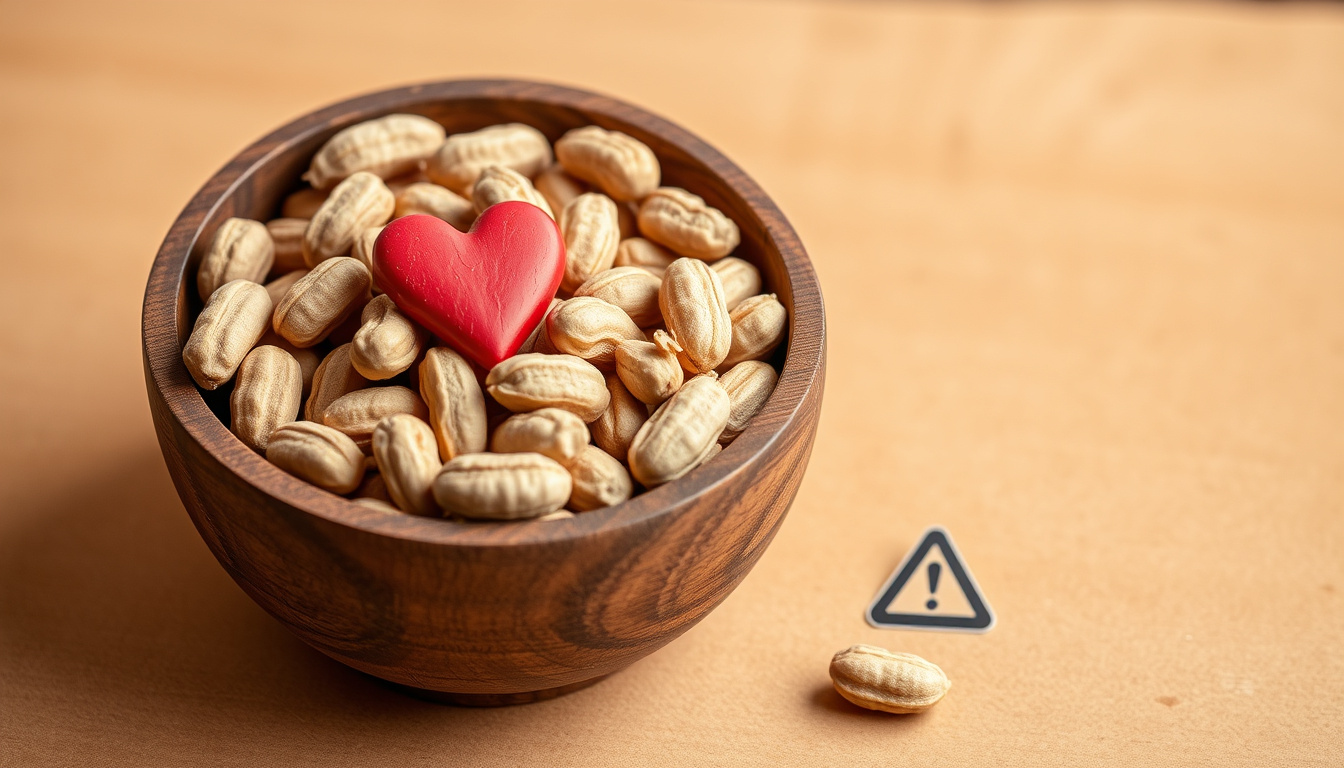
There’s a jar of peanut butter in most American pantries and a bag of roasted peanuts at most convenience store counters — yet few snack foods inspire as many conflicting health opinions. A meta-analysis of 29 clinical trials found that people who ate peanuts regularly had significantly lower triglycerides and a better LDL-to-HDL cholesterol ratio (peer-reviewed review in PMC).
Calories per ounce (28g): 161 ·
Protein per ounce: 7g ·
Fiber per ounce: 2.4g ·
Unsaturated fat per ounce: 12g ·
Magnesium per ounce: 48mg
Quick snapshot
- Lowers LDL cholesterol when replacing saturated fats (Cleveland Clinic)
- Rich in unsaturated fats that support cardiovascular function (Cleveland Clinic) (Cleveland Clinic)
- High protein and fiber promote fullness (Healthline)
- Moderate intake supports weight control despite calorie density (Cleveland Clinic) (Healthline)
- Source of vitamin E, magnesium, and B vitamins (British Heart Foundation)
- Contains antioxidants like resveratrol (Healthline) (British Heart Foundation)
Six key facts, one takeaway: peanuts pack more nutritional density per ounce than most snacks, but their calorie load demands mindful portions.
| Fact | Value |
|---|---|
| Botanical classification | Legume, not a true nut |
| Calories per 1 oz (28g) | 161 |
| Protein per 1 oz | 7g |
| Fiber per 1 oz | 2.4g |
| Total fat per 1 oz | 14g (12g unsaturated, 2g saturated) |
| USDA MyPlate serving recommendation | 1.5 oz per day as part of a balanced diet |
Is it okay to eat peanut everyday?
What does the research say about daily peanut consumption?
- Peanuts are calorie-dense but provide beneficial fats, protein, and fiber (British Heart Foundation)
- Moderate daily intake (about 1 ounce) is generally safe for most people (WebMD)
- Overconsumption may lead to weight gain or digestive issues
Clinical evidence indicates that daily peanut consumption does not cause weight gain when calories are accounted for. An analysis cited by the Cleveland Clinic found that people who ate nuts regularly had a lower risk of obesity than those who avoided them — a counterintuitive result for a food that packs 161 calories per ounce. The mechanism appears to be satiety: the combination of protein, fiber, and fat keeps hunger at bay, which can lead to a net reduction in overall calorie intake across the day.
How many peanuts can you eat per day?
- A standard serving is 1 ounce (about a handful or 28g)
- The USDA MyPlate guidelines recommend 1.5 oz of nuts per day as part of a 2,000-calorie diet
- For weight maintenance, stick to 1–1.5 oz and choose unsalted varieties when possible
The British Heart Foundation notes that because peanuts are high in unsaturated fat — the beneficial kind — they are calorie-dense by nature. That doesn’t make them unhealthy, but it does mean portion awareness matters. A heaping cup of roasted peanuts can easily top 800 calories, turning a healthy snack into a calorie surplus.
The implication: portion control is the key to reaping benefits without negative caloric outcomes.
What are the pros and cons of peanuts?
Key health benefits of peanuts
- Rich in unsaturated fats, which support heart health (Cleveland Clinic)
- Good source of magnesium, vitamin E, and B vitamins (British Heart Foundation)
- Contains antioxidants including resveratrol (Healthline)
- May reduce heart disease risk when substituted for less healthy fats
Peanuts deliver more protein than any tree nut — 7 grams per ounce — which makes them uniquely filling for a snack. The Cleveland Clinic notes that their phytosterols (plant compounds structurally similar to cholesterol) may also block cholesterol absorption in the gut, adding another layer of cardiovascular benefit.
Potential risks and downsides
- High in calories; portion control is essential (British Heart Foundation)
- Risk of aflatoxin contamination from improper storage (WebMD)
- Common allergen that can cause severe reactions (WebMD)
- Salted and flavored varieties add sodium and sugar (British Heart Foundation)
Aflatoxins are naturally occurring molds that can develop when peanuts are stored in warm, humid conditions. Regulatory standards in the U.S. and Europe keep levels low in commercial products, but the WebMD review notes that long-term exposure to high levels is a concern — a reason to buy from reputable brands and avoid peanuts that taste bitter or look moldy.
Who should limit peanut intake?
- People with peanut allergies (can be life-threatening) (WebMD)
- Individuals with advanced kidney disease or certain types of kidney stones (oxalate content) (WebMD)
- Patients with liver cirrhosis or ascites may need to restrict sodium from salted peanuts (Cleveland Clinic)
The trade-off is straightforward: for the vast majority, the benefits outweigh the risks. But for those with specific medical conditions — allergies, advanced kidney disease, or certain liver conditions — peanuts can pose real problems. We’ll cover the liver-specific concerns in a dedicated section below.
The pattern: most consumers can safely include peanuts, but those with allergies or certain medical conditions must take extra precautions.
Are peanuts good or bad for cholesterol?
How peanuts affect LDL and HDL cholesterol
- Peanuts can lower LDL (“bad”) cholesterol when substituted for less healthy fats (Cleveland Clinic)
- They do not significantly raise total cholesterol despite containing some saturated fat (Cleveland Clinic)
- The unsaturated fat and fiber content contribute to improved cholesterol profiles (Cleveland Clinic)
The mechanism is tied to replacement. When peanuts (or their oils) replace foods high in saturated fat — think processed snacks or fatty meats — the net effect is a drop in LDL cholesterol. The PMC meta-analysis of clinical trials found that healthy peanut consumers had lower total cholesterol and a more favorable LDL-to-HDL ratio compared to control groups who did not eat peanuts.
What do clinical studies say?
- Meta-analysis of 29 trials: peanuts lower triglycerides (PMC peer-reviewed review)
- Phytosterols in peanuts may block dietary cholesterol absorption (Cleveland Clinic)
- A high-MUFA diet that includes peanuts is as effective as a low-fat diet for heart risk reduction
The Cleveland Clinic points to research showing that the phytosterols in peanuts — particularly beta-sitosterol — compete with cholesterol for absorption in the digestive tract. Over time, this competition can reduce circulating LDL levels without requiring a drastic drop in total fat intake.
Comparison with other nuts and legumes
Four major nuts, one pattern: all improve lipid profiles, but peanuts offer the most protein per gram.
| Nut (1 oz) | Protein | Fiber | Unsaturated fat | Key cholesterol effect |
|---|---|---|---|---|
| Peanuts | 7g | 2.4g | 12g | Lowers LDL, improves LDL/HDL ratio |
| Almonds | 6g | 3.5g | 13g | Reduces LDL, raises HDL modestly |
| Walnuts | 4g | 1.9g | 14g | Lowers total cholesterol, rich in omega-3 |
| Cashews | 5g | 0.9g | 11g | Modest LDL reduction, lower fiber |
The implication: peanuts hold their own against tree nuts in cholesterol management, largely because their unsaturated fat content is comparable and their protein payload is unmatched. The British Heart Foundation places them on equal footing with almonds and walnuts for heart health, with the caveat that salted versions add sodium that can counteract some of the cardiovascular benefit.
For someone swapping a bag of chips for a handful of peanuts daily, the net effect on LDL cholesterol is clinically meaningful — estimated at a 5–10% reduction based on the meta-analytic data. That’s in the same range as some mild statins, without the side effects.
The pattern: even small daily substitutions yield measurable lipid improvements.
Can we eat peanuts in liver cirrhosis?
Dietary considerations for liver cirrhosis
- Patients with liver cirrhosis often need higher protein intake to prevent muscle wasting
- Sodium restriction is important for those with ascites (fluid retention)
- Unsalted peanuts are a protein-dense option, but salted varieties can worsen fluid balance
For cirrhosis patients without complications, unsalted peanuts can be a useful source of plant-based protein. The challenge is that many commercial peanut products are heavily salted, and a single ounce of salted peanuts can contain 100–200 mg of sodium — significant for someone on a 1,500 mg daily limit typical for ascites management.
Are peanuts safe for the liver?
- Peanuts provide protein and healthy fats that may support liver function
- Aflatoxin contamination can worsen liver damage, especially in already-compromised livers
- General recommendation: unsalted, moderate amounts unless contraindicated
Aflatoxin is the primary concern here. The WebMD review notes that the liver is responsible for detoxifying aflatoxins, and in cirrhosis — where liver function is already reduced — even low-level exposure could accelerate further damage. This doesn’t mean peanuts are off-limits, but it does mean sourcing from reputable brands that test for aflatoxin is more important for this population.
When to avoid peanuts in liver disease
- Ascites: avoid salted peanuts to manage fluid retention
- Hepatic encephalopathy: very high protein loads may need to be monitored
- Known aflatoxin sensitivity or mold allergy
The pattern is conditional, not absolute. For a cirrhosis patient with well-controlled ascites and no history of aflatoxin sensitivity, an ounce of unsalted peanuts daily is likely safe. But for someone with decompensated cirrhosis or recurrent encephalopathy, any concentrated protein source — peanuts included — should be discussed with a hepatologist.
The implication: peanut consumption in liver disease requires individual assessment and medical input.
What are the top 3 healthiest nuts to eat everyday?
Why peanuts are often included among the healthiest nuts
- Highest protein content of any nut or legume commonly eaten as a nut
- Comparable unsaturated fat profile to almonds and walnuts
- More affordable and accessible than most tree nuts
For heart health, weight management, and nutritional density, almonds, walnuts, and peanuts consistently appear at the top of ranking lists from organizations like the British Heart Foundation. Peanuts are technically legumes, but their nutritional profile — particularly their protein and unsaturated fat content — places them squarely in the “nut” category for dietary guidance.
Nutritional comparison: peanuts vs. almonds vs. walnuts
Three contenders, one clear trade-off: almonds lead on fiber, walnuts on omega-3s, peanuts on protein.
| Nutrient (per 1 oz) | Peanuts | Almonds | Walnuts |
|---|---|---|---|
| Calories | 161 | 164 | 185 |
| Protein | 7g | 6g | 4g |
| Fiber | 2.4g | 3.5g | 1.9g |
| Unsaturated fat | 12g | 13g | 14g |
| Vitamin E | 2.4 mg | 7.3 mg | 0.2 mg |
| Magnesium | 48 mg | 76 mg | 44 mg |
What this means: if protein density is your priority, peanuts win. If you want maximum fiber and vitamin E, almonds are the choice. For omega-3 fatty acids (alpha-linolenic acid), walnuts are unmatched. The Cleveland Clinic recommends rotating across all three to get a broad range of nutrients.
How to choose the best nut for your health goals
- For heart health: all three work; peanuts offer the most protein per calorie
- For weight loss: almonds (highest fiber) or peanuts (highest protein) support satiety
- For brain health: walnuts (high ALA omega-3s)
- For affordability: peanuts are typically half the price of almonds or walnuts
The Healthline analysis notes that no single nut is “best” for everyone. The optimal choice depends on your specific health goals, dietary restrictions, and budget. Peanuts have the unique advantage of being both the most protein-rich and the most budget-friendly — a combination that’s hard to beat.
Peanuts deliver more protein per dollar than any tree nut, but their omega-3 content is negligible compared to walnuts. A consumer focused on brain health should pay the walnut premium; a consumer focused on muscle maintenance and budget should reach for peanuts.
The pattern: no single nut is universally best — your personal priorities determine the smartest choice.
Clarity section
Confirmed facts
- Peanuts reduce LDL cholesterol when replacing saturated fats (PMC meta-analysis)
- Peanuts are a good source of plant-based protein and fiber (British Heart Foundation)
- Regular nut consumption is associated with lower risk of cardiovascular disease (Cleveland Clinic)
- A standard serving of peanuts contains 161 calories and 7g of protein per ounce
What’s unclear
- The precise impact of aflatoxin levels in commercial peanuts on long-term health (WebMD)
- Whether peanut allergies can be prevented through early introduction in infants
- Optimal intake for specific populations (e.g., females with hormone-sensitive conditions, liver patients)
“Peanuts are a great source of unsaturated fats, which are heart-healthy fats. They also contain protein and fibre — all important parts of a balanced diet.”
— British Heart Foundation nutritionist, ask-the-expert article
“Research suggests that eating peanuts may help you maintain a healthy weight and avoid obesity, despite their calorie content.”
— Cleveland Clinic Registered Dietitian, health guide
“Peanuts are a concentrated source of nutrition that may offer potential health benefits, but they are high in calories, so it is important to eat them in moderation.”
— WebMD medical reviewer, peanut butter nutrition article
The evidence converges on a clear verdict: peanuts are a nutrient-dense food that supports heart health, weight management, and overall nutrition for the vast majority of people. For someone in the U.S. choosing between a bag of chips and a handful of peanuts, the choice backed by 29 clinical trials is unambiguous. The only real caveats are portion size (keep it to an ounce or so), aflatoxin awareness (buy from reputable brands), and medical conditions that demand sodium or protein restriction. For the average consumer, the answer to “are peanuts good for you” is a straightforward yes — with the understanding that no food, no matter how healthy, is a free pass to eat unlimited quantities.
For a closer look at the benefits and risks of peanuts, a separate guide breaks down the pros, cons, and daily recommendations.
Frequently asked questions
Are peanuts good for weight loss?
Yes, in moderation. Peanuts are high in protein and fiber, which promote satiety and can help reduce overall calorie intake. The Healthline analysis notes that despite being calorie-dense, regular peanut consumption is not associated with weight gain — and may actually support weight maintenance. Stick to a 1-ounce serving (about a handful) of unsalted peanuts.
Can peanuts cause inflammation?
No — peanuts do not cause inflammation in most people. They contain anti-inflammatory compounds like resveratrol and unsaturated fats. However, for individuals with a peanut allergy, consumption triggers an inflammatory immune response. Additionally, aflatoxin-contaminated peanuts could theoretically promote inflammation in the liver, which is why quality sourcing matters.
Do peanuts have omega-3 fatty acids?
Peanuts contain very low levels of omega-3s compared to walnuts or flaxseeds. They provide about 0.2g of omega-3s per ounce, while walnuts provide roughly 2.5g. For omega-3 intake, walnuts or fatty fish are far better sources. Peanuts are, however, rich in omega-6 fatty acids (linoleic acid), which are essential but should be balanced with omega-3s.
Are chocolate peanuts healthy?
Chocolate-covered peanuts combine the nutritional benefits of peanuts with the antioxidants of dark chocolate — but they also add sugar and calories. A 1-ounce serving of chocolate peanuts has roughly 170–200 calories and 8–12g of added sugar, compared to 161 calories and zero added sugar for plain peanuts. If you choose chocolate peanuts, opt for dark chocolate (70% cocoa or higher) and treat them as an occasional snack rather than a daily habit.
Are peanuts bad for kidney stones?
Peanuts contain oxalates, which can contribute to calcium oxalate kidney stones — the most common type — in susceptible individuals. For someone with a history of oxalate stones, limiting high-oxalate foods (including peanuts, spinach, and almonds) may be advisable. However, for most people, the benefits of peanuts outweigh the oxalate risk. The WebMD review suggests moderation rather than elimination for those concerned.
How do peanuts affect blood sugar?
Peanuts have a low glycemic index (GI of about 14) and do not spike blood sugar. The combination of protein, fiber, and healthy fats slows glucose absorption, making peanuts a good snack for people with diabetes or insulin resistance. The Cleveland Clinic notes that research suggests peanut consumption may improve insulin sensitivity over time.
Is peanut butter as healthy as whole peanuts?
Natural peanut butter (with no added sugar, salt, or hydrogenated oils) is nutritionally similar to whole peanuts. However, many commercial peanut butters contain added sugar, salt, and partially hydrogenated oils (trans fats). Check the label: the ingredient list should say just “peanuts” and maybe “salt”. Per the WebMD guide, natural peanut butter offers the same protein, fiber, and healthy fats as whole peanuts, but you lose the satisfying crunch and may be more likely to overeat it.