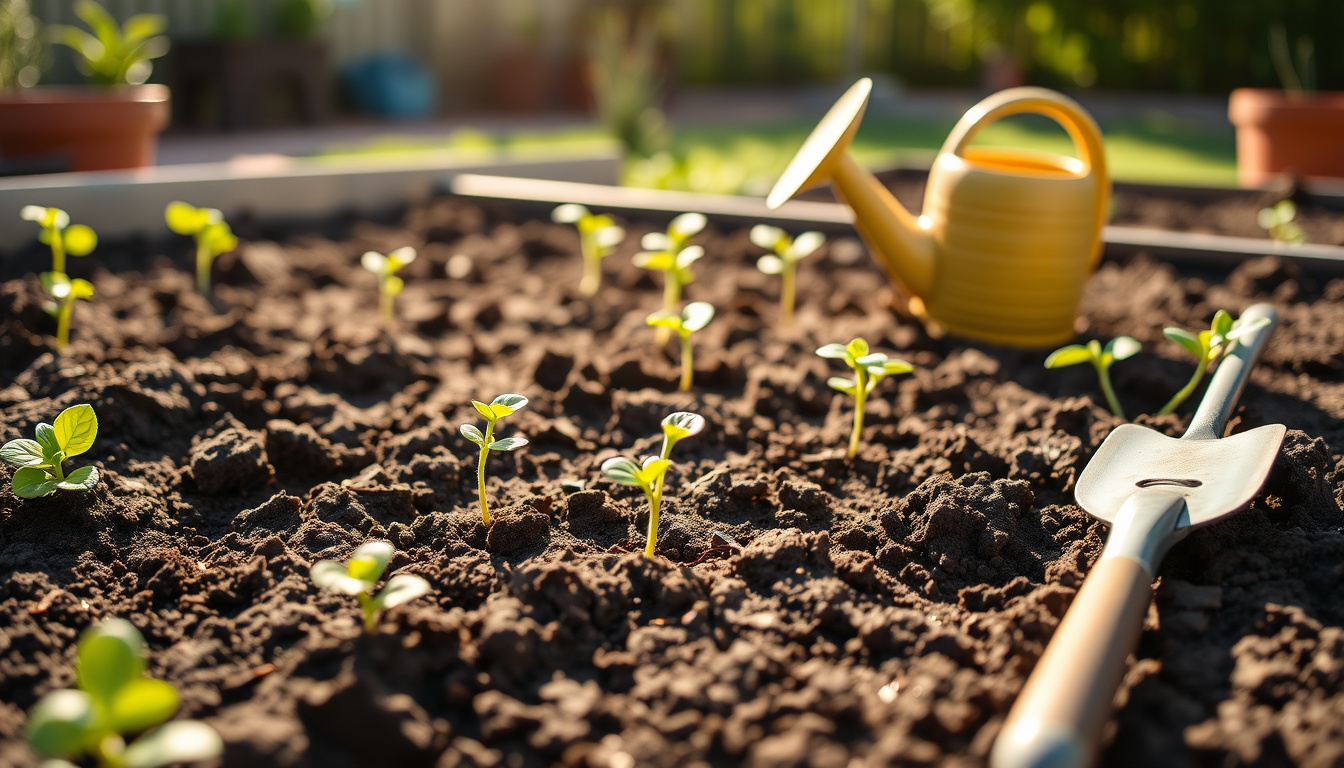
The first time you stick a seed in dirt and it actually grows, something shifts. It’s not hard to see why beginners get hooked — but the gap between that first spark and a harvest on your plate trips up more gardeners than you’d expect. This guide cuts through the noise with a step-by-step blueprint drawn from university extension programs and seasoned gardeners who know what actually works. By the time you’re done, you’ll know exactly where to put your beds, what to fix in your soil, and how to sidestep the mistakes that send most first-timers packing by July.
Recommended sunlight: 6+ hours daily · Ideal start season: Spring (March-May) · Top beginner tip: Start small · Soil check needed: pH and clay content · Essential skills: Planting, feeding, watering
Quick snapshot
- Optimal vegetable soil pH sits at 6.5, tolerably between 6.0 and 7.2 (University of Wisconsin Extension)
- Add 2–3 inches of compost into soil at least one month before planting (University of Wisconsin Extension)
- Never use fresh manure — it burns plant roots due to high nitrogen (Melissa K. Norris)
- Best planting month varies by climate zone — spring generally works, but exact timing depends on your last frost date
- Whether October planting succeeds hinges on your USDA zone and what you’re trying to grow
- Begin site prep the fall before spring planting to let soil settle and weeds decompose (University of Wisconsin Extension)
- Add compost one month before transplanting seedlings outdoors (University of Wisconsin Extension)
- Harden off seedlings gradually over one week before moving them outside permanently (Melissa K. Norris)
- Sketch your garden layout with paths roughly 3 feet wide for wheelbarrow access (Gardenary garden design specialists)
- Test soil pH and clay content before choosing amendments (University of Wisconsin Extension)
- Pick three to five easy crops — radishes, lettuce, bush beans — to build confidence before scaling up (Homestead and Chill)
Several key numbers anchor the practical side of getting started.
| Measure | Value |
|---|---|
| Sunlight minimum | 6+ hours |
| Prime season | Spring March–May |
| Key soil test | pH and clay puddling |
| Top advice | Start small |
How to Start a Garden for Beginners
Get to know your garden
Before buying seeds or sharpening shovels, spend a week just watching your yard. Note where shadows fall at mid-morning versus mid-afternoon — a spot that looks sunny at 9 a.m. might be shaded by late afternoon when trees cast longer shadows. University of Wisconsin Extension recommends mapping your site before committing, because moving a raised bed mid-season after discovering it’s too shady wastes the entire spring.
Vegetables demand at least 6–8 hours of direct sunlight daily. If your yard skews shady, leafy greens like spinach and lettuce tolerate partial shade better than fruiting crops. The implication: a north-facing slope that looks promising in April may produce nothing but frustration by July.
Plan your garden
Once you’ve mapped sunlight, draw your layout on paper. Mark where pathways will run — Gardenary recommends keeping them about 3 feet wide so you can navigate with a wheelbarrow without trampling plants. Place tall crops like tomatoes on the north side so they don’t shade shorter plants as the sun moves south.
Choose plants with punch: three to five easy crops that reward first efforts without demanding constant attention. Radishes germinate in days, lettuce bolts through neglect, and bush beans fix their own nitrogen. The pattern across nearly every extension program is consistent — overambitious first gardens fail not from lack of knowledge but from lack of bandwidth.
Start small
Homestead and Chill, a resource for beginning gardeners, frames it plainly: the cardinal rule is to start small and expand as your confidence and available time grow. A 4×8-foot bed produces more food than most beginners expect and stays manageable on a weekend morning.
How to Prepare a Garden for the First Time?
Test your soil
Soil testing is non-negotiable. University of Wisconsin Extension advises running a nutrient test that checks pH, organic matter, phosphorus, and potassium before adding anything. The optimal pH for vegetables sits at 6.5 — tolerably between 6.0 and 7.2 — and adjusting it with lime or sulfur takes weeks, not days.
To test clay content, grab a handful of wet soil and squeeze it. If it forms a sticky ball that holds its shape, you have clay-heavy soil. Texas A&M University recommends adding 3–4 pounds of gypsum per 100 square feet to clay soils after digging, then working in organic matter to improve drainage over time.
Choose a sunny spot
The rule of thumb: six or more hours of direct sunlight for vegetables. If you have less, shift expectations toward leafy crops and herbs. Illinois Extension notes that fall leaves raked 6–12 inches deep over beds in autumn break down into mulch by spring — a free soil amendment if you’re planning ahead.
Build raised beds or use containers
Raised beds offer control over soil quality and drainage that in-ground gardens can’t match on challenging sites. Gardenary points out that raised beds work especially well for fruiting crops like tomatoes, cucumbers, beans, and zucchini — plants that benefit from warmer soil and better root aeration.
For clay-heavy regions, Texas A&M University advises mixing sand and organic matter into the soil to improve structure. The trade-off: this takes multiple seasons of amendment work, whereas raised beds filled with purchased topsoil give you a clean start immediately.
What to Know as a Beginner Gardener?
Learn essential skills
Three skills cover most of what beginners need: planting depth, watering technique, and feeding schedules. Farm Bureau Financial Services offers a practical planting rule — sow seeds three times as deep as their diameter. Tomatoes are the exception: they can be planted deeper or trenched horizontally, and they’ll grow roots along the buried stem.
Feed and water regularly
Consistency beats intensity. Water deeply but infrequently — roughly 1 inch per week including rainfall — rather than light daily sprinkles that encourage shallow roots. Pennington Seed recommends working a 3–4 inch layer of compost into soil 6 inches deep where most vegetable roots feed, then supplementing with balanced fertilizer at planting time.
Watch for pests
Pest management starts before planting. University of Connecticut Extension cautions against excess phosphorus from manure, which accumulates in soil and contaminates nearby water. Use aged compost instead of fresh manure, and avoid animal waste from facilities that may carry herbicide residues.
Most beginner gardeners underfeed their soil and overfeed their plants. Working compost 6 inches deep before planting does more than any fertilizer applied mid-season.
What is the Most Common Mistake of First Time Gardeners?
Overplanting
The Easy Garden Forum lists overcrowding as the top beginner mistake. Plants compete for light and nutrients when spaced too tightly, resulting in stunted growth and reduced yields. One zucchini plant needs roughly 3 feet of all-direction space — a fact that surprises many first-timers who envision a modest patch but end up with a jungle by midsummer.
Poor soil prep
Skipping the soil test and planting into unprepared ground ranks second. Illinois Extension specifies tilling to a minimum of 6–10 inches deep and incorporating 2–4 inches of organic matter like compost. The temptation to skip this step when soil “looks fine” leads to compaction, poor drainage, and nutrient deficiencies that manifest weeks into the growing season.
Ignoring sunlight
Placing raised beds based on yard aesthetics rather than sun exposure dooms vegetables before they germinate. A corner that looks tidy but sits under dappled shade for most of the day won’t produce peppers or tomatoes regardless of soil quality or watering consistency.
The catch: sunlight requirements feel abstract until you’ve watched a shaded bed limp through June. Mapping sun exposure before committing to a location costs nothing and prevents a season’s worth of disappointment.
What is the Best Month to Start a Garden?
Spring timing
For most temperate regions, spring planting runs March through May. University of Wisconsin Extension suggests beginning site preparation the fall prior — removing vegetation, testing soil, and adding amendments — so beds are ready when temperatures warm. Working compost into soil one month before transplanting gives it time to integrate with existing ground.
Fall considerations
Fall offers a second window for soil work even if planting season feels past. Raking fall leaves 6–12 inches deep over beds suppresses weeds and decomposes into amendments that improve spring soil structure. Illinois Extension highlights this as a low-effort, high-reward strategy for beds that won’t be planted until the following season.
Zone adjustments
USDA hardiness zones determine frost dates, which govern planting calendars. A garden in zone 6 can safely transplant tomatoes after the last frost date around mid-May, while zone 8 gardeners might plant six weeks earlier. Whether October is too late to plant depends entirely on your zone and first expected frost — some cool-season crops like spinach and kale actually prefer fall planting.
The implication: there’s no universal “best month” — your zone’s last frost date anchors the calendar, and local extension services provide free frost date charts calibrated to your area.
How to Start a Garden Step by Step
These eight actions, done in sequence, prevent the mid-season cycle that trips up most first-timers.
- Map your site. Spend a week tracking sun exposure across your yard. Mark areas receiving 6+ hours of direct sunlight for vegetable placement.
- Test the soil. Use a home test kit or extension service to check pH and clay content. Adjust pH with lime (if acidic) or sulfur (if alkaline) at least four weeks before planting.
- Remove vegetation. Use a sod cutter or shovel to strip grass from your planned beds. Cover remaining weeds with cardboard or tarp to smother them before building.
- Amend the soil. Work 2–3 inches of compost into the top 6 inches of soil. For clay soils, add 3–4 pounds of gypsum per 100 square feet. For sandy soils, increase compost depth to improve moisture retention.
- Build or place beds. Install raised beds or mark in-ground bed boundaries. Keep pathways roughly 3 feet wide for wheelbarrow access.
- Plant seeds and seedlings. Sow seeds at three times their diameter depth. Hardening off seedlings gradually over one week before transplanting reduces transplant shock.
- Water and feed. Apply roughly 1 inch of water per week. Side-dress growing plants with balanced fertilizer according to plant needs.
- Monitor and adjust. Watch for pests, nutrient deficiency signs (yellowing leaves, stunted growth), and watering issues. Address problems early rather than waiting for them to compound.
What We Know vs What We Don’t
Confirmed facts
- Start small to manage time and avoid overwhelm
- Soil pH test is essential — optimal range 6.0–7.2, ideal 6.5
- Six or more hours of direct sunlight required for vegetables
- Add compost 2–3 inches deep, one month before planting
- Never use fresh manure — it burns plant roots
- Harden off seedlings gradually over one week
- Plant seeds three times as deep as their diameter
Reportedly uncertain
- Exact best planting month varies by climate zone — extension services recommend spring, but timing differs regionally
- October viability depends on USDA zone and crop selection — cool-season crops may succeed while warm-season crops fail
- Quantitative plant spacing per vegetable variety requires crop-specific reference guides beyond general beginner scope
Choosing the best location for your garden is actually the most important part of the process.
— Gardenary (vegetable garden design specialists)
Compost helps sandy soils hold more moisture and nutrients, and it makes clay soils lighter and better drained.
— University of Wisconsin Extension (horticulture specialists)
If you use fresh manure, it’s too high in nitrogen and can burn the roots of your plants.
— Melissa K. Norris (homesteading educator)
University extension programs and seasoned homesteaders agree on one thing: the biggest yield per dollar of effort comes from nailing site selection and soil prep before a single seed goes in the ground.
For the first-time gardener, the path from empty yard to first harvest isn’t complicated — but it rewards patience over impulse. Skipping soil tests to save time, planting before beds are ready, or stretching across too much ground early guarantees a harder experience than the process deserves. The gardeners who stick with it for a second and third season are almost always the ones who started small, prepped properly, and resisted the temptation to expand before they understood their own bandwidth.
Related reading: First Day of Spring · Quarts in a Gallon
extension.illinois.edu, theeasygarden.com, pennington.com, youtube.com, fbfs.com, soiltesting.cahnr.uconn.edu, youtube.com, awaytogarden.com
Strawberries, detailed in beginner strawberry growing guide for pots or ground methods, provide new gardeners with quick wins and delicious rewards early in the season.
Frequently asked questions
How to start gardening in pots for beginners?
Container gardening works well when space is limited. Use pots at least 12 inches deep with drainage holes, fill with high-quality potting mix (not garden soil), and choose compact or bush varieties bred for containers. Water more frequently than in-ground beds since containers dry out faster.
What tools do beginner gardeners need?
Start with a sturdy shovel, garden fork, hand trowel, rake, and watering can or hose with adjustable nozzle. A soil test kit and pair of gloves round out the essentials. Avoid buying specialty tools until you discover you need them.
Can I start a garden in raised beds?
Raised beds are ideal for beginners because you control the soil mix from day one. Fill them with a blend of topsoil, compost, and aged manure. They drain better than compacted ground and warm faster in spring, extending your growing season slightly.
How much time does beginner gardening take?
A single 4×8 bed requires roughly 2–4 hours per week once established — watering, weeding, and harvesting included. The setup phase (soil prep, bed construction) takes a larger one-time effort of 8–12 hours spread across a few weekends.
What easy plants for first-time gardens?
Radishes, lettuce, bush beans, cherry tomatoes, and herbs like basil and mint reward beginners quickly and forgive minor mistakes. These crops sprout fast, produce within weeks, and don’t demand precise timing like some vegetables do.
How to water new garden plants?
Water deeply at the base of plants rather than sprinkling leaves, which invites fungal disease. Aim for roughly 1 inch of water per week including rainfall. Morning watering gives foliage time to dry before evening and reduces disease pressure.
What fertilizers for beginner gardens?
Start with compost worked into the soil before planting — it provides balanced nutrition and improves soil structure simultaneously. A balanced granular fertilizer (such as 10-10-10) applied at planting time and again mid-season covers most vegetable needs without risking over-fertilization.