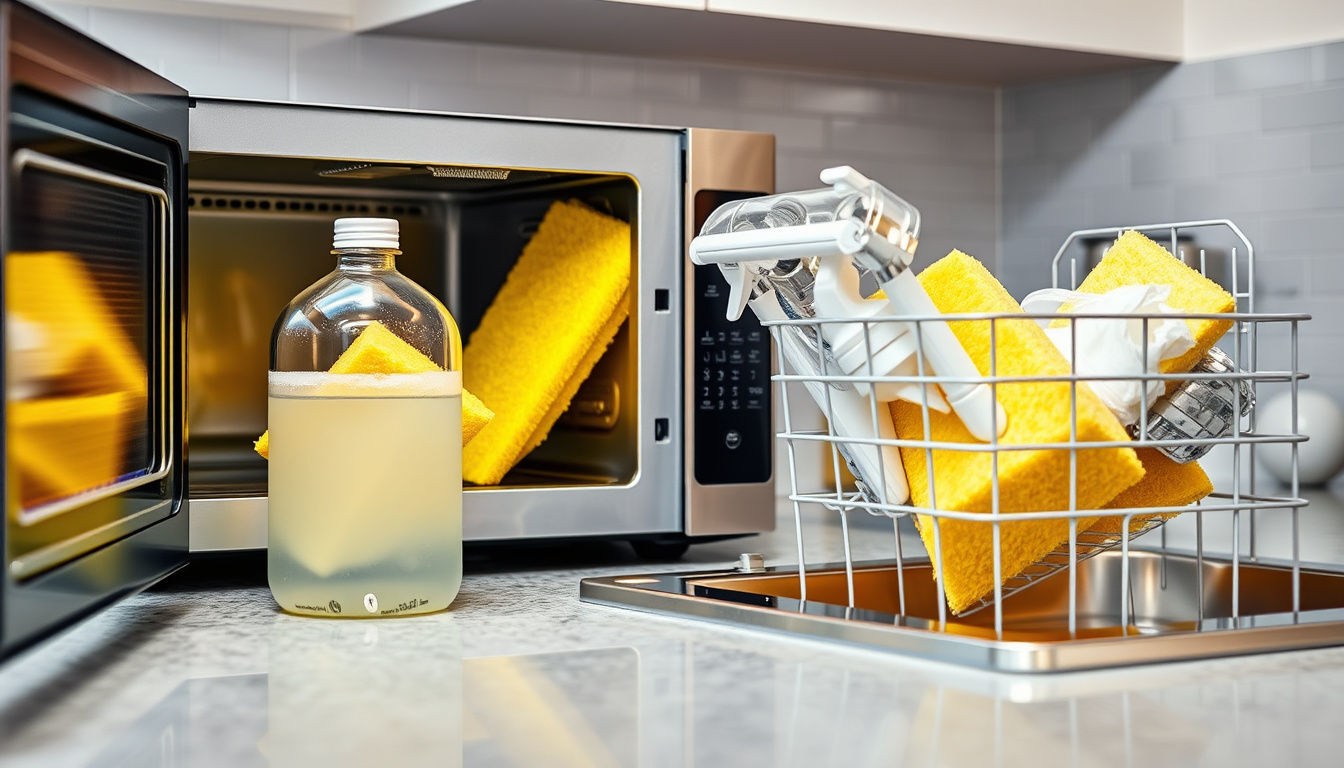
Kitchen sponges are workhorses that scrub away messes every day, but they also trap food particles and moisture that let bacteria multiply. The good news: you don’t need to toss a sponge after every use. Heat-based methods backed by USDA research can slash bacterial counts by 99.99999%, making your sponge genuinely clean again. This guide walks through what actually works, what the science says, and how often you should swap out that sponge for a fresh one.
Boiling time effective: 60 seconds · Microwave time recommended: 1-2 minutes · Hydrogen peroxide use: 2-3 inches soak
Quick snapshot
- Exact germ lifespan on sponges after sanitization (studies show regrowth patterns vary widely)
- Long-term bacterial regrowth rates post-2007 USDA study
- Effectiveness on viruses beyond bacteria, yeasts, and molds
- April 2007: USDA ARS published pivotal sponge sanitization study
- Ongoing guides still reference the 2007 data as the benchmark
- Appliance makers (Whirlpool, Maytag) publish updated microwave guides
- Replace sponges every 1-2 weeks even with regular sanitization
- Store in a ventilated spot after cleaning to prevent bacterial regrowth
- Sanitize daily if handling raw meat regularly
The table below summarizes key specifications for the most common sponge sanitization methods, with efficacy data from government research and appliance manufacturer testing.
| Method | Key detail | Source |
|---|---|---|
| Most effective sanitization | Boiling 60 seconds | USDA ARS |
| Microwave duration | 1-2 minutes | USDA ARS |
| Test Kitchen pick | Boil 5 minutes | Christal Cleaned |
| Bleach efficacy | 37-87% bacteria kill | USDA ARS |
| Sponge replacement | Every 1-2 weeks | Cosmo Appliances |
| Dishwasher temp threshold | 140°F minimum | Christal Cleaned |
What is the correct way to disinfect a sponge?
According to USDA Agricultural Research Service findings published on April 23, 2007, heat-based methods consistently outperform chemical soaks for kitchen sponge sanitization (CIDRAP reporting on USDA study). The two most effective approaches are microwave sanitization and dishwasher treatment with a drying cycle — both reducing bacteria by more than 99.99%.
Microwave method
- Rinse the sponge thoroughly with hot water and dish soap to remove visible debris
- Wet the sponge completely — it must be damp before microwaving to avoid fire risk
- Check for any metal particles or scrub pads with metal components that could spark
- Microwave on high power for 1-2 minutes depending on sponge size
- Allow the sponge to cool for 10-15 minutes before handling
Microwaving a wet sponge for just 1 minute eliminates 99.99999% of bacteria according to USDA ARS testing — numbers that most home-cleaning methods can’t touch.
Boiling water steps
- Bring a pot of water to a rolling boil
- Fully submerge the sponge in the boiling water
- Maintain boil for at least 60 seconds (some guides recommend up to 5-7 minutes for thorough sterilization)
- Remove with tongs and allow to air dry completely
Dishwasher option
- Place the sponge in the utensil holder or top rack
- Run the hottest wash cycle available
- Include the heated drying cycle — temperatures must reach at least 140°F to kill bacteria
- Remove and allow to dry in a well-ventilated area
The implication: heat-based sanitization isn’t optional — it’s the only method proven to knock bacterial counts down to negligible levels in a single treatment cycle.
Does boiling water sanitize sponges?
Yes, boiling water is an effective sanitization method for kitchen sponges, though the timing matters more than many people realize. Research from USDA and appliance guides indicate that 60 seconds of boiling proves more effective at killing bacteria than 2 minutes in the microwave (Lowe’s how-to guide). America’s Test Kitchen recommends a full 5 minutes of boiling after the water reaches a rolling boil for maximum confidence.
How long to boil
- Minimum 60 seconds submerged in actively boiling water for basic sanitization
- 5-7 minutes for thorough sterilization per kitchen appliance guides
- Use tongs or a utensil to avoid burns when placing and removing the sponge
Why some say no
Some sources reportedly question boiling’s effectiveness, though this likely stems from insufficient time in the water or improper submersion. The primary research from USDA ARS supports heat-based methods broadly, including boiling, as effective bacterial reduction techniques (CIDRAP).
Heat methods consistently outperform chemical soaks — the USDA study found bleach solutions killed only 37-87% of bacteria versus the near-total elimination from heat treatments.
The pattern: if you’re already boiling pasta or blanching vegetables, toss your sponge in for 5 minutes and you’ve solved two problems at once. The trade-off is time and attention — you need to stay near the stove.
How to sanitize a sponge in the microwave?
Microwave sanitization is fast and convenient, but a few safety precautions separate effective cleaning from a kitchen hazard. The USDA study found that 1 minute on high power kills 99.99999% of bacteria on wet sponges, and a University of Florida researcher confirmed that 2 minutes “knocks out most bacteria” entirely (CIDRAP quoting Gabriel Bitton, University of Florida professor).
Steps and safety
- Thoroughly rinse the sponge with hot soapy water first
- Ensure the sponge is completely wet before placing in the microwave
- Check for any metal scrub particles or embedded scouring pads that could cause sparking
- Microwave on high for 1-2 minutes depending on your microwave’s power
- Let the sponge cool for 10-15 minutes before touching — it will be very hot
- Store in a ventilated area once cooled to prevent bacterial regrowth
Time required
- 1 minute is sufficient for most home microwaves per USDA testing
- 2 minutes offers an extra margin of safety and is recommended for high-power models
- Allow cooling time adds another 10-15 minutes to the total process
Never microwave a dry sponge — the heat can cause it to catch fire. Always keep the sponge wet throughout the microwaving process.
The trade-off: microwave sanitization is the fastest method at 1-2 minutes, but it requires vigilance around moisture levels and metal detection that boiling doesn’t demand.
How to sanitize sponge in dishwasher?
The dishwasher offers a hands-off approach to sponge sanitization — just load it and let the machine do the work. USDA testing showed that dishwashing with a heated drying cycle kills 99.9998% of bacteria on sponges, making it nearly as effective as the microwave method (USDA ARS).
Best cycle
- Use the hottest wash cycle your dishwasher offers
- Run the heated drying cycle — temperatures must exceed 140°F for effective bacterial kill
- Place the sponge in the utensil holder or secure it on the top rack so it doesn’t fall
- Skip the dry cycle only if your dishwasher lacks one; the heat is essential
Limitations
- Requires running a full dishwasher load — not energy-efficient for a single sponge
- Must have a heated dry cycle available; eco or air-dry modes may not reach kill temperatures
- Best paired with regular dishes so the wash is worth the water and energy
What this means: the dishwasher works best as a maintenance method rather than an intensive cleaning solution. Run your sponge through during a full load of dishes, and you get sanitization without any dedicated effort.
How to sanitize sponges without vinegar?
Vinegar is a popular natural disinfectant, but if you don’t have it on hand, hydrogen peroxide and bleach solutions offer effective alternatives. Hydrogen peroxide at full strength creates a bubbling reaction that helps lift bacteria from sponge fibers, while properly diluted bleach solutions deliver measurable bacterial reduction (Cosmo Appliances guide).
Hydrogen peroxide
- Pour 2-3 inches of 3% hydrogen peroxide into a container
- Fully submerge the sponge and let it soak until bubbling subsides (typically 5-10 minutes)
- Rinse thoroughly with clean water after soaking
- Squeeze out excess moisture and allow to air dry
Other chemicals
- Bleach solution: 1 tablespoon per quart of water, soak for 5 minutes
- Dettol and similar disinfectants reportedly work but lack rigorous efficacy data
- Always rinse thoroughly after chemical soaks — residue can transfer to dishes
Chemical methods like bleach soaks kill only 37-87% of bacteria — significantly less effective than heat methods — yet they remain popular because they require no cooking setup or appliance use.
The implication: if you have access to a microwave, stove, or dishwasher, heat-based sanitization will outperform any chemical soak. Reserve chemical methods for situations where heat isn’t accessible.
Steps to sanitize a kitchen sponge
Following a consistent routine keeps your sponge genuinely clean between replacements. Here’s a step-by-step approach based on appliance manufacturer guides and USDA research findings.
- Rinse immediately after use — rinse the sponge under hot running water with dish soap after every meal prep session to remove food particles
- Squeeze out moisture — wring the sponge thoroughly after rinsing to remove trapped water and food debris
- Choose your sanitization method — select microwave (daily), boiling (2-3 times weekly), or dishwasher (when running a hot load)
- Sanitize using heat — microwave wet sponge 1-2 minutes, boil for 60 seconds to 5 minutes, or run through dishwasher sanitize cycle
- Allow to cool and dry — let the sponge cool for 10-15 minutes post-sanitization, then store in a well-ventilated spot
- Replace on schedule — swap out for a fresh sponge every 1-2 weeks, or sooner if you notice persistent odors or visible wear
If your sponge develops a lingering odor even after sanitization, that’s a sign of bacterial buildup that heat alone can’t fully address — it’s time for replacement.
Confirmed facts
- Boiling and microwave reduce bacteria to negligible levels (USDA ARS)
- Microwave: 99.99999% bacteria kill in 1 minute (USDA ARS)
- Dishwasher: 99.9998% bacteria kill with drying cycle (USDA ARS)
- Heat methods beat chemical soaks per USDA testing (CIDRAP)
- Replace sponges every 1-2 weeks per appliance guides (Cosmo Appliances)
What researchers still debate
- Exact germ lifespan on sponges post-sanitization
- Long-term effectiveness of 2007 USDA study benchmarks in modern kitchen environments
- Specific effects of Dettol and similar disinfectants on sponge materials
- Viral inactivation rates (most studies focus on bacteria, yeasts, and molds)
Expert perspectives on sponge sanitization
“Microwave heating and dishwashing with a drying cycle proved to be the most effective methods for inactivating bacteria, yeasts and molds on sponges.”
— USDA Agricultural Research Service, research agency
“Basically what we find is that we could knock out most bacteria in two minutes.”
— Gabriel Bitton, University of Florida professor (CIDRAP reporting)
The pattern across expert sources is consistent: heat is the gold standard for sponge sanitization. Both USDA researchers and academic microbiologists point to microwave and dishwasher methods as the most reliable ways to achieve near-complete bacterial elimination.
Related reading: Vinegar and Baking Soda: Myths Busted by Plumbers & Science · How to Clean Baseboard Heaters: Easy Step-by-Step Guide
Kitchen sponges harbor millions of bacteria, but USDA steps like microwaving or proven lab-tested methods kill 99.99999% effectively.
Frequently asked questions
How often should you sanitize sponges?
Sanitize your sponge after every 2-3 days of regular use, or daily if you handle raw meat frequently. Even with regular sanitization, replace the sponge every 1-2 weeks to prevent bacterial regrowth and material degradation.
Can makeup sponges be sanitized the same way?
Makeup sponges require gentler treatment than kitchen sponges. Microwave sanitization can damage makeup sponge materials, so use a diluted vinegar solution or a specialized brush cleanser instead. Check manufacturer guidelines for your specific product.
What kills sponge bacteria best?
Heat-based methods are the most effective. USDA testing showed microwave kills 99.99999% of bacteria, while a dishwasher sanitize cycle eliminates 99.9998%. Bleach solutions kill only 37-87%, making heat treatments roughly 100 times more effective.
Is Dettol effective on sponges?
Dettol and similar disinfectants can reduce bacteria on sponges, but rigorous kill-rate data for these products specifically on kitchen sponges is limited. Heat methods have more robust scientific backing if you want guaranteed effectiveness.
How to know if a sponge is clean?
A properly sanitized sponge should have no lingering odors, no visible discoloration, and no slimy texture. If the sponge smells musty or sour even after thorough drying, bacteria have likely regrown and the sponge should be replaced.
Why replace sponges regularly?
Even with perfect sanitization, sponge fibers break down over time, creating pockets where bacteria can hide and regrow. Most appliance and food safety guides recommend replacing sponges every 1-2 weeks as part of a complete kitchen hygiene routine.
For home cooks handling raw proteins daily, the choice is straightforward: microwave sanitization offers the fastest bacteria kill with minimal effort, while weekly boiling provides thorough deep cleaning. Skip the chemical soaks unless you lack access to a heat source — they’ll leave you with a false sense of security while bacterial counts remain dangerously high.