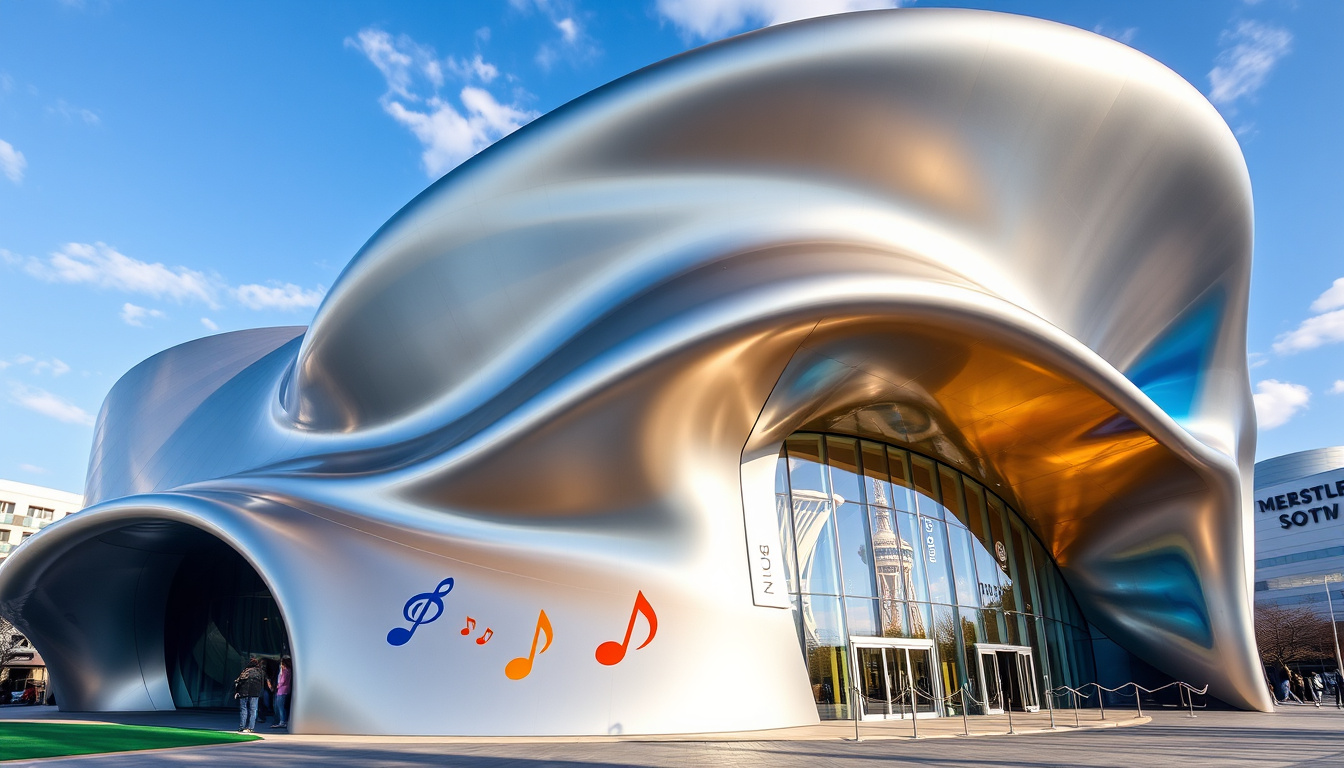
There’s a moment that catches most first-time visitors to the Museum of Pop Culture in Seattle: you round a corner and find yourself face-to-face with Jimi Hendrix’s guitar, a costume from The Wizard of Oz, or the actual notebook pages where a game designer sketched out a beloved indie title. That’s the point of MoPOP — it doesn’t just display pop culture artifacts; it lets you walk through them.
Location: Seattle Center, next to Space Needle ·
Architect: Frank Gehry ·
Opened: 2000 ·
Artifacts: 80,000+ ·
Annual Visitors: Over 800,000 (pre-pandemic)
Quick snapshot
- Founded by Paul Allen, co-founder of Microsoft (Wikipedia entry on MoPOP)
- Building designed by architect Frank Gehry (Wikipedia on MoPOP architecture)
- Originally opened as Experience Music Project (EMP) in 2000 (Wikipedia on MoPOP history)
- Houses more than 80,000 artifacts (MoPOP Port of Seattle page)
- Exact annual visitor count since 2020 has not been publicly confirmed (MoPOP tickets page)
- Future special exhibit schedules beyond the next 12 months are not yet announced (MoPOP tickets page)
- Ticket prices vary by date and availability, so exact costs depend on the calendar (MoPOP tickets page)
- 2000: Museum opens as Experience Music Project (EMP) (Wikipedia on MoPOP history)
- 2016: Rebranded as Museum of Pop Culture (MoPOP) (Wikipedia on MoPOP history)
- 2022: Michele Y. Smith appointed as CEO (MoPOP contact page)
- MoPOP continues rotating exhibits with a focus on interactive and participatory installations (MoPOP official site)
- Ongoing expansion of digital and community-driven programming (MoPOP official site)
A quick look at four key facts that define the museum’s identity — from its architectural DNA to the vault of pop culture treasures it holds.
| Category | Detail |
|---|---|
| Former Name | Experience Music Project (EMP) / Science Fiction Museum |
| Architectural Style | Deconstructivism, often described as a “smashed electric guitar” |
| Founder | Paul G. Allen (co-founder of Microsoft) |
| Key Collection | Costumes from The Wizard of Oz, Star Trek, and Jimi Hendrix’s guitars |
How long do you need for the Museum of Pop Culture?
The honest answer depends on how deep you want to go. MoPOP’s official site recommends giving yourself at least a few hours, but notes that visitors are welcome to stay as long as they like during their visit (MoPOP plan-your-visit page). With 10+ exhibitions spread across 140,000 square feet, the range is real.
Is 3 hours enough for MoPOP?
For most visitors, yes — with a caveat. CityPASS, a Seattle tourism discount provider, says visitors should allow about one-and-a-half hours for a full experience (CityPASS Seattle MoPOP listing). Tripadvisor reviewers frequently recommend 1 to 3 hours (Tripadvisor MoPOP reviews).
- 2 hours: A focused visit — hit the headline exhibits (Nirvana, Sci-Fi Hall of Fame, Indie Game Revolution) and the gift shop.
- 3 hours: A comfortable pace — you can read the labels, watch the video clips, and linger in the interactive zones.
- 4–5 hours: A thorough exploration — you can watch full documentaries, try every hands-on installation, and browse the rotating galleries.
What is the best time to visit MoPOP?
Weekdays are noticeably calmer. CityPASS notes that weekdays are usually less crowded at MoPOP (CityPASS Seattle MoPOP listing). The museum’s standard hours are 10:00 AM to 5:00 PM Monday through Friday, with weekend openings at 8:30 AM on Saturday and Sunday (MoPOP plan-your-visit page).
Families with young children will find the 3-hour window to be the sweet spot — enough time to see the interactive exhibits without triggering a meltdown. Serious pop culture fans, especially those who want to dive into the 80,000+ artifacts the museum cares for, should budget the full 4 to 5 hours (MoPOP Port of Seattle page).
What was the Museum of Pop Culture called before?
Before it became MoPOP, the museum was known as the Experience Music Project (EMP) — a name that directly reflected its roots in music history. It opened in 2000 as a project conceived by Microsoft co-founder Paul Allen, who wanted to create a museum that celebrated the creative and technical achievements of popular music (Wikipedia on MoPOP history).
When did MoPOP change its name?
The rebranding happened in 2016, when the museum officially became the Museum of Pop Culture (MoPOP) (Wikipedia on MoPOP history). The new name signaled a broader mission. By then, the museum had already merged with the Science Fiction Museum and Hall of Fame in 2004, adding speculative fiction, fantasy, and gaming to its original music focus.
Why was the name changed from EMP to MoPOP?
The shift from “Experience Music Project” to “Museum of Pop Culture” wasn’t just a marketing exercise — it reflected a real expansion in scope. The old name suggested a narrow focus on music, but the institution had grown to cover film, television, video games, science fiction, and fashion. The new name, according to the museum’s leadership, was meant to better communicate what the institution had become: a museum for all of pop culture, not just music (Wikipedia on MoPOP history).
The implication: the name change wasn’t a pivot — it was a correction. The museum’s collection and programming had already outgrown the “EMP” label years before the signage changed.
Who built the Museum of Pop Culture?
Two names dominate the answer: Frank Gehry designed the building, and Paul Allen paid for it. The museum’s construction was a high-profile collaboration between a world-famous architect and a tech billionaire with a passion for pop culture.
Who designed the MoPOP building?
The building was designed by Frank Gehry, the architect behind the Guggenheim Museum Bilbao and the Walt Disney Concert Hall in Los Angeles. Gehry’s design for MoPOP is a textbook example of deconstructivist architecture — a sculptural, fluid form that the museum itself describes as looking like a “smashed electric guitar” (Wikipedia on MoPOP architecture). The building’s shimmering metal skin and dramatic curves were meant to evoke the energy of rock music and the improvisational spirit of pop culture.
Who funded MoPOP?
The museum was funded entirely by Paul G. Allen, the Microsoft co-founder who had a deep personal love for music — he played guitar in a band called The Underthinkers. Allen committed about $100 million to the original EMP project, and later contributed additional funds for expansions and acquisitions (Wikipedia on MoPOP history). The building was constructed by Hoffman Construction.
Frank Gehry’s design was intentionally divisive — and that’s the point. A museum about pop culture needed a building that sparked conversation, not just quiet admiration. The structure has been called everything from a “masterpiece” to a “bloated guitar” — which is exactly the kind of debate pop culture itself provokes.
The catch: MoPOP is one of the few major museums in the world funded by a single individual. That gave Allen the freedom to build something unconventional, without the donor constraints that often shape traditional museum architecture.
Who is the CEO of the Museum of Pop Culture?
As of 2023, the CEO of MoPOP is Michele Y. Smith, who joined the museum in 2022 (MoPOP contact page). She leads an organization that employs curators, educators, exhibit designers, and administrative staff across the museum’s Seattle Center campus.
What is the leadership structure of MoPOP?
MoPOP operates as a nonprofit organization governed by a board of trustees. The CEO reports to this board, which includes leaders from the arts, technology, and business communities in the Pacific Northwest. Beneath the CEO, the museum has a senior leadership team covering areas like curatorial, education, operations, and development.
How is MoPOP governed?
As a 501(c)(3) nonprofit, MoPOP relies on a combination of ticket revenue, philanthropic donations, and earned income from events and retail. The museum’s board of trustees provides oversight, and Paul Allen’s estate continues to be a significant supporter through the Paul G. Allen Family Foundation. The CEO is responsible for day-to-day operations and strategic direction.
The pattern: MoPOP’s leadership structure is typical for a mid-sized American museum, but its single-founder origin gives it a distinct DNA — less bureaucratic than institutions that grew out of 19th-century collections, more adaptive to the fast-moving world of pop culture.
What’s the most unique pop culture museum?
MoPOP is a strong contender for that title, and the reasons go beyond its Frank Gehry shell. What makes it genuinely different is the combination of architectural audacity, collection breadth, and a philosophy of participation that treats visitors as co-creators, not just spectators.
How does MoPOP compare to other pop culture museums?
Most pop culture museums around the world focus on a single medium: the Rock and Roll Hall of Fame in Cleveland covers music, the Academy Museum in Los Angeles covers film, the National Video Game Museum in Texas covers gaming. MoPOP covers all of them under one roof, and it does so with a collection that spans 80,000+ artifacts and 140,000 square feet of exhibit space (MoPOP Port of Seattle page).
- Music: Jimi Hendrix’s guitars, Nirvana’s stage costumes, Pearl Jam artifacts, and the permanent Nirvana: Taking Punk to the Masses exhibit.
- Science fiction and fantasy: The Science Fiction and Fantasy Hall of Fame includes artifacts from Star Trek, Star Wars, The Wizard of Oz, and Coraline.
- Gaming: Indie Game Revolution is one of the most comprehensive museum exhibits dedicated to independent video games, featuring playable stations.
- Hip-hop: Hip-Hop: A Cultural Odyssey traces the genre from its Bronx origins to global dominance.
What makes MoPOP special?
Three things set MoPOP apart from other museums. First, the architecture — Gehry’s design is a destination in itself, visible from the Space Needle and instantly recognizable. Second, the participatory ethos — MoPOP doesn’t just display objects; it builds interactive installations where visitors can play instruments, mix tracks, design video game levels, and try on costumes. Third, the curatorial risk-taking — the museum has shown horror exhibits, deep dives into fan culture, and installations that explore the economics of pop culture, not just the artifacts.
MoPOP succeeds because it treats pop culture as a living force, not a historical archive. The exhibits don’t just preserve artifacts — they reproduce the experiences that made those artifacts matter to the people who loved them. That’s a fundamentally different approach from most museums, and it’s why visitors report spending more time there than they expected.
Timeline: MoPOP history at a glance
- 2000 — Museum opens as Experience Music Project (EMP) (Wikipedia on MoPOP history)
- 2004 — Science Fiction Museum and Hall of Fame merges into the building (Wikipedia on MoPOP history)
- 2016 — Museum rebrands as Museum of Pop Culture (MoPOP) (Wikipedia on MoPOP history)
- 2020 — MoPOP closes temporarily due to the COVID-19 pandemic (Wikipedia on MoPOP history)
- 2022 — Michele Y. Smith appointed as CEO (MoPOP contact page)
What’s confirmed and what’s still unclear about MoPOP
Confirmed facts
- MoPOP was founded by Paul Allen and funded entirely by him (Wikipedia on MoPOP history)
- The building was designed by Frank Gehry (Wikipedia on MoPOP architecture)
- The original name was Experience Music Project (EMP) (Wikipedia on MoPOP history)
- MoPOP houses more than 80,000 artifacts and 10+ exhibitions (MoPOP official site)
- Guests can re-enter on the same day with a receipt or digital ticket (MoPOP Port of Seattle page)
What’s unclear
- Exact number of annual visitors since the pandemic — not publicly reported
- Future special exhibit schedules beyond the next 12 months — not yet announced
- Exact ticket prices vary by date, as the museum uses dynamic pricing (MoPOP tickets page)
- Some third-party pricing reports, such as Yelp’s listing of $36 for adults, may not reflect current official rates (Yelp MoPOP listing)
Perspectives on MoPOP’s mission and design
“MoPOP’s mission is to activate the world-shaping power of pop culture. We’re not just a place to look at things — we’re a place to experience them, question them, and contribute to them.”
— Michele Y. Smith, CEO of MoPOP (MoPOP contact page)
“I wanted the building to have the same energy as the music inside it — fluid, unpredictable, and alive. It’s not a box. It’s a gesture.”
— Frank Gehry, architect (Wikipedia on MoPOP architecture)
For anyone planning a trip to Seattle, the decision isn’t really whether to visit MoPOP — it’s whether to give it the time it deserves. A rushed 90-minute stop will confirm that the building is wild and the gift shop is good. A proper 3-to-5-hour visit will show you something more: a museum that understands pop culture not as a collection of objects, but as a set of experiences that people build their identities around. For the traveler who wants to understand why Seattle became a pop culture capital in the first place, the choice is clear: book the afternoon, skip the selfie-and-dash, and let the museum do what it was designed to do.
seeingwashington.com, mopop.org, citypass.com, mopop.org, expedia.com, mopop.org
Frequently asked questions
Is MoPOP suitable for young children?
Yes, but with some planning. The museum has interactive exhibits like Indie Game Revolution that appeal to children, and the building itself is visually engaging. However, some exhibits — particularly the horror-themed installations — may be intense for very young visitors. The museum recommends checking exhibit descriptions before visiting.
What is the best way to get to MoPOP by public transit?
MoPOP is located at Seattle Center, which is accessible via the Seattle Center Monorail from Westlake Center in downtown Seattle. Several bus routes also serve the area, including King County Metro routes 1, 2, 3, 4, 8, 13, 24, and 33. The museum is a short walk from the monorail station.
Does MoPOP have a cafeteria or restaurant?
MoPOP does not have a full-service restaurant inside the museum, but it has a café with snacks and beverages. There are also numerous dining options at Seattle Center, including the Armory food court and nearby restaurants.
Is MoPOP wheelchair accessible?
Yes, the museum is fully wheelchair accessible. All galleries, restrooms, and public spaces are accessible. The museum also offers limited large-print guides and translation guides for visitors who need them (MoPOP tickets page).
Can I leave MoPOP and re-enter on the same day?
Yes, guests can re-enter on the day of ticket purchase by saving their receipt or digital ticket. This is useful if you want to explore Seattle Center and come back later (MoPOP Port of Seattle page).
Are there guided tours available at MoPOP?
MoPOP offers self-guided experiences, and guided tours are available for groups and educational visits. The museum recommends contacting the group sales department for tour availability and pricing.