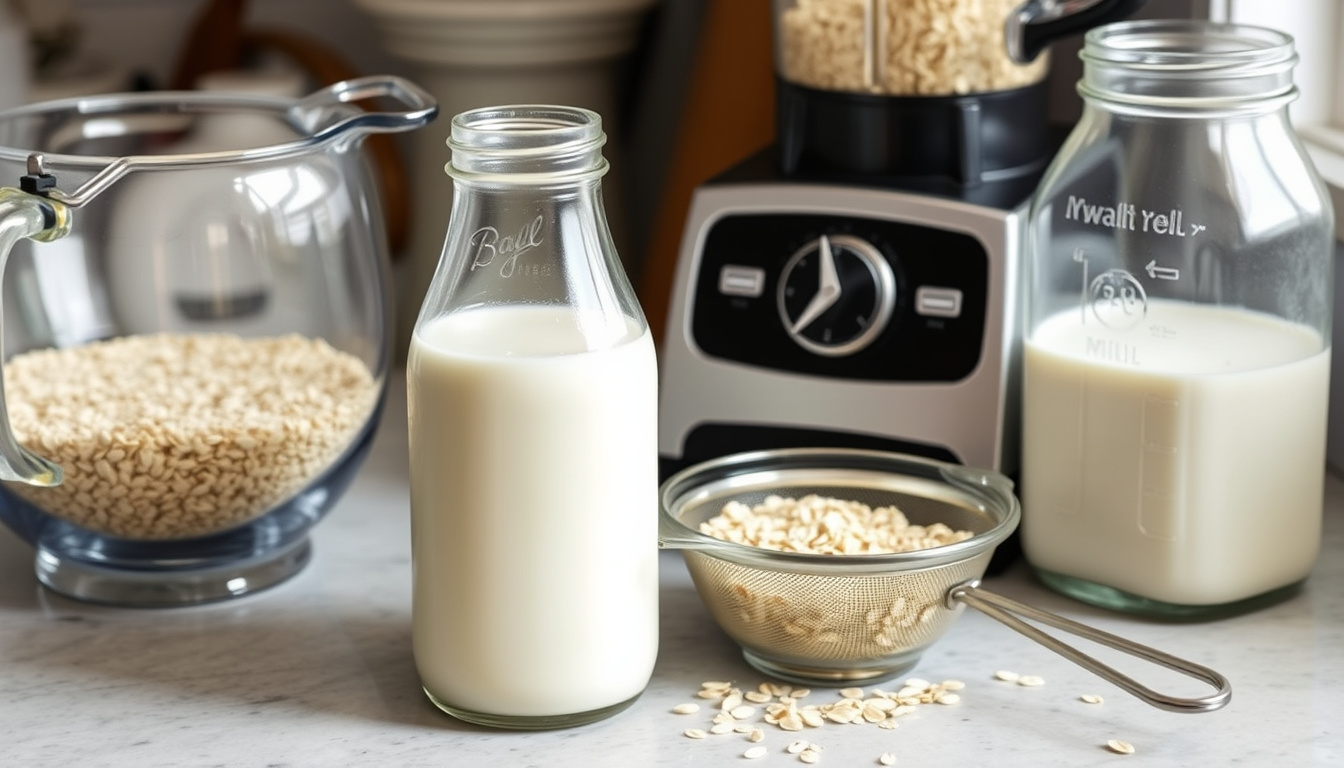
There’s a reason oat milk went from a niche barista secret to the second most popular plant-based milk in the U.S. It pours creamy, froths like a dream, and tastes faintly sweet without needing sugar. But once you see the price tag at the grocery store—often $4 to $6 for a half-gallon—the thought hits: can I just make this myself? The answer is yes, and it’s surprisingly simple. This guide walks through exactly how to make oat milk at home, what’s really in that carton, and when homemade actually beats store-bought.
Oats-to-water ratio: 1 cup oats to 3–4 cups water ·
Calories per cup (homemade): 120–150 kcal ·
Refrigerator shelf life: 3–5 days ·
Common store-bought calorie range: 80–130 kcal per cup
Quick snapshot
- Oat milk is a water extract of oats, not animal milk PMC / NIH (academic review)
- Homemade oat milk costs about $0.07 per cup Real Food Real Deals (food blog)
- Oat milk naturally contains beta-glucan, a soluble fiber PMC / NIH (academic review)
- Whether the added oils in commercial oat milk are harmful in moderate amounts
- Exact glycemic index of homemade oat milk (varies by preparation)
- Oat milk sales in the U.S. grew more than 600% from 2017 to 2020 PMC / NIH (academic review)
- Homemade may gain traction as consumers seek lower cost and cleaner labels
The table below summarizes what goes into a carton of oat milk versus what stays out when you make it yourself.
| Fact | Value |
|---|---|
| Vegan | Yes (when no dairy added) |
| Lactose-free | Naturally lactose-free — PMC / NIH (academic review) |
| Gluten content | May contain gluten if oats not certified gluten-free |
| Typical shelf life (homemade) | 3–5 days refrigerated — Real Food Real Deals |
| Common store-bought additives | Rapeseed oil, calcium carbonate, vitamins |
| Calories per cup (homemade) | 120–150 kcal (depending on dilution) |
How to make home oat milk?
Six ingredients, one blender, and 10 minutes are all you need. The process is forgiving, but two small tricks separate creamy oat milk from a slimy mess.
Ingredients needed
- 1 cup rolled oats (old-fashioned, not quick or steel-cut)
- 3–4 cups cold water
- Pinch of salt
- Optional: 1–2 teaspoons maple syrup or honey, ½ teaspoon vanilla extract, 2–3 pitted dates
Step-by-step blending instructions
- Don’t soak or rinse the oats. One recipe warns that soaking predisposes the milk to a rubbery texture — Real Food Real Deals. Another says not to rinse either—just blend dry oats with cold water.
- Blend for 30 to 40 seconds max. Longer blending releases excess starch and creates sliminess — The Banana Diaries (recipe site). Add ice cubes to keep the water cold.
- Strain immediately. Pour through a nut milk bag, butter muslin, or a fine-mesh strainer lined with cheesecloth. Avoid squeezing the bag hard—gentle pressing yields a cleaner texture — The Banana Diaries.
- Store in an airtight container and refrigerate for up to 5 days — Real Food Real Deals. Shake well before each use—it settles naturally.
Straining methods
- Nut milk bag – finest mesh, least sediment
- Butter muslin – good balance of speed and smoothness — Real Food Real Deals
- Fine-mesh strainer – quickest but may leave more grain
Flavor variations
- Salted vanilla: add ½ teaspoon vanilla and a pinch of sea salt
- Date-sweetened: blend in 2–3 pitted Medjool dates
- Chocolate: add 2 tablespoons cocoa powder and a sweetener of choice
Blend short, strain gently, use cold water. That’s the whole difference between barista-quality oat milk and a glue-like disaster. Homemade lacks the emulsifiers of commercial brands, so it won’t hold a froth as long—but for cereal, smoothies, and cooking, it’s more than good enough.
Is oat milk just oats and water?
At its simplest, yes. But the difference between homemade and commercial oat milk is where the additives creep in.
Basic ingredients
- Homemade: oats + water (and optionally salt, sweeteners, vanilla)
- Commercial: oats, water, and often rapeseed oil, calcium carbonate, dipotassium phosphate, and vitamins
A peer-reviewed review in PMC / NIH (academic review) confirms that oat milk is “a water extract of oats” rather than milk from animals. Commercial producers rely on enzymatic hydrolysis to break down starches and produce a sweeter, smoother liquid. That’s a step home blenders skip.
Common additions
- Salt enhances flavor—a pinch is standard
- Sweeteners (maple syrup, honey, dates) are optional
- Oil (used by most brands) adds creaminess and prevents separation
Store-bought vs homemade
- Store-bought includes stabilizers that extend shelf life to months — Domestic Dreamboat (recipe blog)
- Homemade relies on refrigeration and should be used within 5 days — The Banana Diaries
What this means: if you’re after plain, additive-free oat milk, homemade wins. If you need a product that froths reliably in a latte, the commercial stabilizers are doing work a home blender can’t replicate.
Why is everyone ditching oat milk?
The pendulum swung fast. After oat milk exploded in cafés, a backlash emerged—rooted in nutrition and additives.
Nutritional concerns
- High carbohydrate content. Oat milk has roughly 16 grams of carbs per cup, mostly from sugar (even unsweetened varieties break down starches into maltose). Cleveland Clinic (health institution) notes this can spike blood sugar more than almond or coconut milk.
- Added oils and sugars. Many commercial brands add rapeseed or sunflower oil and hidden sweeteners. Homemade oat milk sidesteps these entirely.
Gluten cross-contamination
Oats are often grown and processed near wheat. Unless labeled certified gluten-free, oat milk may contain traces of gluten — Beyond Celiac (patient advocacy group).
Environmental factors
- Oat milk has a lower water footprint than almond milk (~1/13th the water) and lower greenhouse emissions than dairy — PMC / NIH
- But oat farming still uses land and fertilizers—no plant milk is impact-free
The backlash is mostly aimed at commercial oat milk, not homemade. When you make your own, you lose the stabilizers and added sugars but keep the beta-glucan fiber and a clean ingredient list. The real question is what you want from your milk: convenience or control.
The pattern: consumers who switched to oat milk for health reasons are now re-evaluating because of hidden carbs and oils. Home preparation solves part of the problem but introduces a shelf-life trade-off.
Is oat milk good for diabetics?
This is where homemade and store-bought diverge significantly.
Carbohydrate and sugar content
Unsweetened store-bought oat milk contains about 16 grams of carbohydrates per cup (7 grams of sugar). Homemade oat milk, made from whole oats and water, also contains roughly the same carb load—but without added sugars.
Glycemic index
The glycemic index of oat milk is not officially determined, but a 2016 study on oat beta-glucan suggests that the soluble fiber can help blunt glucose spikes — PubMed (peer-reviewed study on beta-glucan). However, the rapid blending and straining process may make the starch more available, potentially raising the effective GI.
Comparison with other milk alternatives
The table below lines up the carb and calorie counts across six common milk options.
| Milk | Carbs per cup | Sugar per cup | Calories |
|---|---|---|---|
| Oat milk (unsweetened, commercial) | 16 g | 7 g | 120 |
| Almond milk (unsweetened) | 1 g | 0 g | 30 |
| Coconut milk (beverage) | 2 g | 0 g | 45 |
| Whole dairy milk | 12 g | 12 g | 149 |
Six milks, one pattern: oat milk is the highest in carbs among plant-based alternatives. For diabetics, homemade oat milk (no added sugar) is better than commercial, but almond or coconut remains a lower-carb choice. The catch: beta-glucan’s cholesterol-lowering benefits may offset some glucose concerns for people managing type 2 diabetes. If you’re curious about the nutritional profile of other everyday foods, reading Are Cucumbers Good for You? Daily Benefits & Nutrition can offer a useful comparison for building a balanced diet.
Is it worth making oat milk at home?
Cost, nutrition, convenience—each factor points in a different direction.
Cost comparison
- Homemade: ~$0.07 per cup — Real Food Real Deals
- Store-bought: $0.50–$0.75 per cup
- Annual savings for a person using 1 cup daily: ~$150–$250
Nutritional control
You decide whether to add oil, sweeteners, or preservatives. Homemade is also free of the gums and stabilizers that can cause digestive issues for some people.
Convenience vs effort
Each batch takes 10 minutes of active time plus clean-up. Store-bought is grab-and-go. The shelf life difference (5 days vs 6 months) means more frequent preparation. For a similar step-by-step comparison in another kitchen staple, see New York Strip Steak: Cooking Guide and Ribeye Comparison.
Upsides
- Cheaper per cup than almost any other plant milk
- No additives, preservatives, or hidden sugars
- You control flavor and sweetness
- Environmentally lower footprint than dairy or almond
Downsides
- Short shelf life (3–5 days)
- Less creamy than commercial versions with added oils
- Doesn’t froth as well for latte art
- Requires regular prep (every few days)
The trade-off: for the home cook who goes through a latte a day, making oat milk in batches is a no-brainer. For a family that prefers convenience, the store-bought carton may still justify its price. The difference is control—and for many, control is worth ten minutes of blending.
What we know for sure
Confirmed facts
- Oat milk is made by blending oats with water and straining — PMC / NIH
- Homemade oat milk has no added preservatives
- Oat milk contains beta-glucan, a soluble fiber — PMC / NIH
What’s unclear
- Whether the added oils in commercial oat milk pose long-term health risks
- The exact glycemic index of homemade oat milk (varies by preparation)
“Homemade oat milk is quick and affordable—about $0.07 per cup—but quality, texture, and nutritional content may be lacking compared with store-bought.”
— Real Food Real Deals (food blog)
“The key to non-slimy oat milk is blending for 30 to 40 seconds maximum and not squeezing the strainer bag too hard.”
— The Banana Diaries (recipe site)
“Oat milk is a water extract of oats—it’s not milk from animals, but it contains fatty acids, protein, minerals, and dietary fiber.”
— PMC / NIH (academic review)
For the shopper in Los Angeles weighing a $5.49 carton of oat milk against a $0.99 bag of rolled oats, the choice is clear: a 10-minute blender session saves money and puts ingredient control back in your hands. Or stick with the carton—just read the label first.
For those who prefer a heartier oat-based breakfast, making oatmeal at home offers a versatile alternative to oat milk.
Frequently asked questions
Can I make oat milk with steel-cut oats?
Yes, but the texture will be grittier. Rolled oats produce the smoothest results.
How do I make oat milk creamy?
Add 1–2 teaspoons of oil (coconut or avocado) during blending and use a nut milk bag for straining — Domestic Dreamboat.
Does oat milk curdle in coffee?
Sometimes—the acidity of hot coffee can curdle homemade oat milk. Let the coffee cool slightly first, or use a barista blend with stabilizers.
Is oat milk gluten-free?
Only if the oats are certified gluten-free. Regular oats may contain wheat cross-contamination — Beyond Celiac.
Can I freeze homemade oat milk?
Yes, but texture changes after thawing—it separates. Use frozen oat milk in smoothies or cooking rather than drinking.
How do I make oat milk froth?
Homemade oat milk froths poorly due to lack of stabilizers. For decent foam, add a pinch of xanthan gum or use a barista-style commercial brand.
What’s the difference between oat milk and almond milk nutritionally?
Oat milk is higher in carbs and calories but provides fiber. Almond milk is lower in calories but offers vitamin E and less sugar — Healthline.