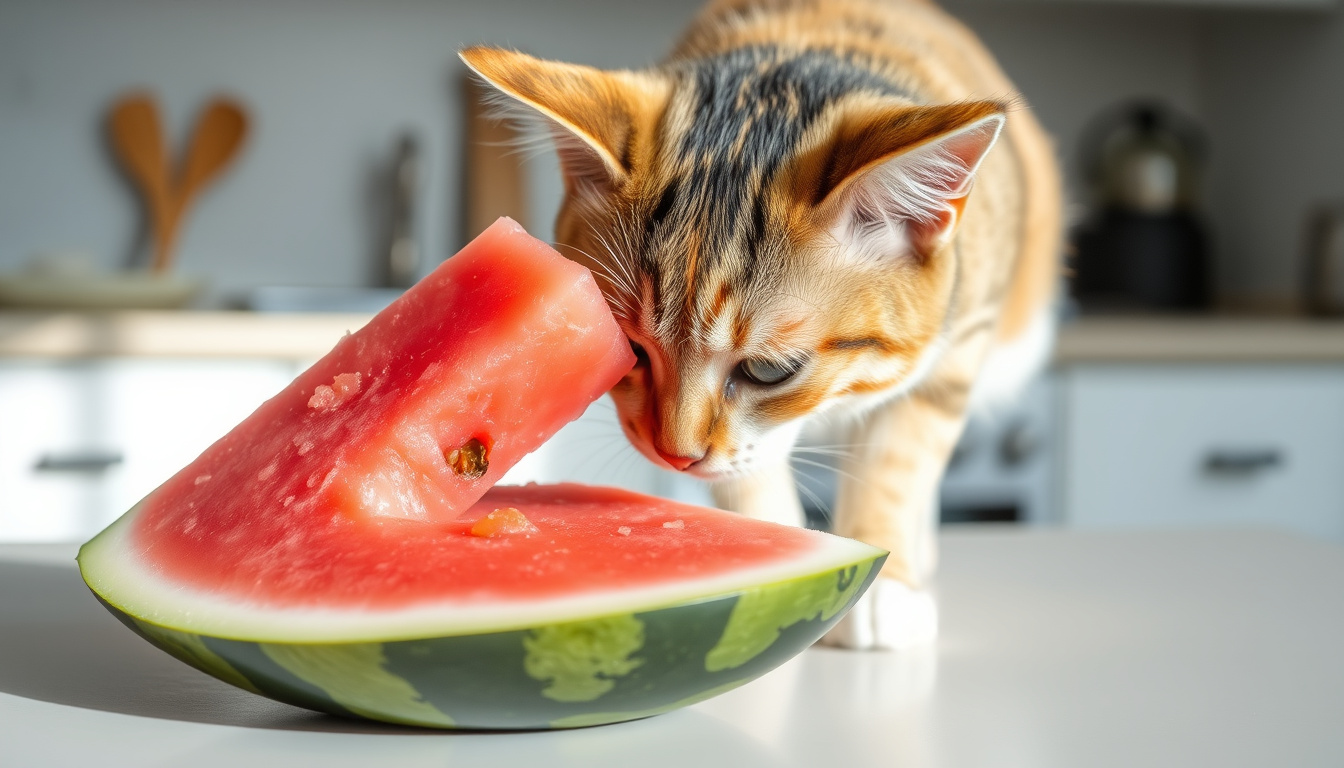
Your cat’s eyes lock onto that dripping slice of watermelon, and you freeze, wondering if it’s safe to share. Watermelon is generally non-toxic to healthy cats when given in small amounts, but the risks hide in the rind, the seeds, and the sugar — here’s exactly what you need to know before you offer a bite.
Water content of watermelon: 92% ·
Safe serving size for cats: 1–2 small cubes per 10 lb body weight ·
Common toxic fruits for cats: Grapes, raisins, citrus, cherries
Quick snapshot
- Summer fruit (Bottletree Animal Hospital)
- 92% water (Bottletree Animal Hospital)
- Low calories (30 kcal per 100g) (Bottletree Animal Hospital)
- Yes, in moderation (Hill’s Pet Nutrition)
- Non-toxic flesh (Purina US)
- Remove seeds and rind before serving (Purina US)
Five key numbers sum up the watermelon decision for cat owners — one standout: the water content is 92%, but the fruit offers virtually nothing else a cat needs.
| Fact | Value |
|---|---|
| Water Content | 92% (Bottletree Animal Hospital) |
| Safe Serving | 1–2 small cubes per 10 lbs body weight (Purina US) |
| Toxic Fruits | Grapes, raisins, citrus, cherries (Hill’s Pet Nutrition) |
| Calories per 100g | 30 (Bottletree Animal Hospital) |
| Sugar per 100g | 6g (Purina US) |
Are watermelons safe for cats?
Can cats eat watermelon flesh?
- Yes — the pink flesh is non-toxic to healthy cats when served in small, bite-sized pieces (Hill’s Pet Nutrition).
- Purina states that cats can safely eat the flesh as an occasional treat, but it should never replace a balanced meat-based diet (Purina US).
- Watermelon is mostly water, which may provide a small hydration boost, but cats get sufficient hydration from their regular food and water bowls.
Is watermelon rind safe for cats?
- No — the green rind is tough and difficult for cats to digest (Hill’s Pet Nutrition).
- It can cause stomach upset, vomiting, or even intestinal blockage if swallowed in larger pieces (PetMD).
- Always remove the rind completely before offering any watermelon to your cat.
Are watermelon seeds toxic?
- Watermelon seeds pose a choking hazard and can block the digestive tract (PetMD).
- Mature black seeds contain amygdalin, a compound that breaks down into cyanide — though the risk is low unless many seeds are eaten (Hill’s Pet Nutrition).
- Purina advises removing all seeds, including the small white ones, to be safe (Purina US).
A single swallowed seed probably won’t cause harm, but a handful — or a chunk of rind — can land a cat in the emergency vet. The risk-to-reward ratio strongly favors leaving both seeds and rind off the plate.
The implication: Watermelon flesh is fine as a rare treat, but the rind and seeds turn a safe snack into a real hazard. Cat owners should treat every cube as if only the flesh matters — because it does.
What fruit is not toxic to cats?
Safe fruits list
- Cats can eat small amounts of banana, blueberry, strawberry, apple (without seeds), and cantaloupe (Hill’s Pet Nutrition).
- Portion size still matters — all fruits should be cut into tiny pieces and given sparingly.
- Chewy notes that a 1-inch square of watermelon chopped into tiny pieces can be offered once or twice a week (Chewy).
Fruits to avoid
- Grapes and raisins can cause acute kidney failure in cats (Hill’s Pet Nutrition).
- Citrus fruits (oranges, lemons, limes, grapefruit) contain essential oils that irritate a cat’s digestive tract.
- Cherry pits contain cyanide compounds — the flesh is safe in tiny amounts, but the pit is dangerous.
Most cat owners don’t realize that “safe” and “healthy” are different things for obligate carnivores. A blueberry offers antioxidants for us, but for a cat it’s just sugar with no biological upside.
What this means: The safe fruit list is short, and even safe fruits add no nutritional value for a cat. Owners who want to treat their cat should stick to meat-based snacks like freeze-dried chicken or salmon.
What fruits are toxic to cats?
Grapes and raisins
- Even a small amount of grapes or raisins can trigger kidney failure in some cats (Hill’s Pet Nutrition).
- The exact toxic dose is unknown, so all grapes and raisins must be kept away from cats entirely.
Citrus fruits
- The peel, seeds, and pulp contain psoralens and essential oils that can cause vomiting, diarrhea, and depression of the central nervous system.
- Lemons, limes, oranges, and grapefruit are all considered unsafe for cats.
Cherries
- The pit contains cyanogenic glycosides that release cyanide when chewed (Hill’s Pet Nutrition).
- The flesh itself is non-toxic in very small amounts, but the risk of pit ingestion makes cherries a fruit to skip entirely.
The pattern: Every toxic fruit on this list shares one trait — a part that a cat would never encounter in its natural diet (pits, seeds, oils, or high acidity). Obligate carnivores simply lack the digestive tools to handle them.
How much watermelon can cats eat?
Recommended serving size
- Hill’s Pet gives specific serving sizes by weight: under 8 lbs → ½ teaspoon; 8–12 lbs → 1 teaspoon; over 12 lbs → 1 tablespoon (Hill’s Pet Nutrition).
- A more general rule: 1–2 small bite-sized cubes (about ½ inch each) per 10 lbs of body weight (Purina US).
- Treats of any kind should make up no more than 10% of a cat’s daily calorie intake.
Frequency of feeding
- Watermelon should be an occasional treat — once or twice a week at most (Chewy).
- Some cats may experience vomiting or diarrhea even from small amounts, so watch for signs of digestive upset after the first serving (PetMD).
The trade-off: A cube of watermelon once a week is unlikely to cause harm, but the sugar adds up quickly. For a 10-lb cat, a single tablespoon of watermelon is roughly the same sugar load as half a teaspoon of granulated sugar relative to body weight.
How to prepare watermelon for cats?
- Step 1: Remove seeds and rind
- Cut away all green and white rind — it’s indigestible and a choking risk (Purina US).
- Pick out every seed, including the small white ones that are easy to miss.
- Step 2: Cut into small cubes
- Slice the flesh into cubes no larger than ½ inch (Chewy).
- For extra safety, mash the cubes slightly so they’re easy to swallow.
- Step 3: Serve at room temperature
- Cold watermelon can upset a cat’s stomach — let it sit for 10 minutes after cutting.
- Offer one cube and wait 30 minutes to check for any reaction before giving more.
Why this works: By removing the rind and seeds and controlling portion size, you eliminate the two main hazards while still letting your cat enjoy the taste and hydration of the flesh.
Upsides
- Non-toxic flesh in small amounts (Purina US)
- Provides hydration on hot days
- Very low calorie density (30 kcal/100g)
- Easy to prepare in minutes
Downsides
- No essential nutrients for obligate carnivores
- Natural sugar can cause weight gain or blood sugar spikes
- Choking/blockage risk from seeds and rind (PetMD)
- May cause vomiting or diarrhea in sensitive cats (PetMD)
- Not suitable for diabetic or obese cats (PetMD)
Confirmed facts vs. what remains unclear
- Watermelon flesh is non-toxic to healthy cats (Purina US)
- Seeds and rind can cause choking or intestinal blockage (Hill’s Pet Nutrition)
- Cats are obligate carnivores — fruits offer no essential nutrients (Bottletree Animal Hospital)
- Exact safe serving size that works for all cats — varies by weight and individual tolerance
- Long-term effects of regular watermelon consumption in cats
- Whether watermelon provides any meaningful hydration benefit beyond a cat’s normal water intake
- Dose of seeds that could cause cyanide poisoning — no established toxic threshold for cats
- How cats with pre-existing conditions (except diabetes/obesity) respond to occasional fruit treats
“Watermelon is nontoxic to cats in moderation, but it shouldn’t be a regular part of their diet.”
— Purina US (pet nutrition experts)
“Yes, cats can safely eat watermelon, but the health benefits aren’t the same as they are for people because cats are obligate carnivores.”
— PetMD (veterinary health network)
“A cat’s digestive tract is not designed to digest plant sugars well — that’s why even safe fruits can cause diarrhea.”
— Hill’s Pet Nutrition (veterinary diet specialists)
For cat owners, the choice is clear: offer only a tiny piece of seedless, rindless flesh as an occasional treat, or risk digestive upset. For cats with diabetes or kidney issues, the safer option is to skip watermelon entirely and stick to a meat-based diet.
For a detailed breakdown of safe serving sizes and preparation steps, refer to this vet-approved watermelon safety guide.
Frequently asked questions
Can cats eat watermelon rind?
No. Watermelon rind is tough and indigestible for cats. It can cause stomach upset, vomiting, or intestinal blockage. Always remove the rind before serving (Hill’s Pet Nutrition).
Are watermelon seeds bad for cats?
Yes. Seeds pose a choking hazard and can block the digestive tract. Mature black seeds also contain amygdalin, which can release trace amounts of cyanide. Remove all seeds before feeding (Purina US).
Can cats have watermelon juice?
Only if it’s freshly squeezed from the flesh with no added sugar or preservatives — and even then, it’s better to offer a small cube of solid flesh so the cat doesn’t ingest excessive sugar quickly. Stick to water for hydration.
Is watermelon good for cats with kidney disease?
No. While watermelon is hydrating, its sugar content and lack of feline-specific nutrition make it unhelpful for cats with kidney disease. Cats with kidney issues need a carefully controlled diet prescribed by a veterinarian (PetMD).
Can kittens eat watermelon?
Generally discouraged. Kittens have developing digestive systems and a higher choking risk. Hill’s Pet advises against feeding watermelon to kittens (Hill’s Pet Nutrition).
How often can cats have watermelon?
Once or twice a week is the maximum frequency recommended by veterinarians. Treats should not exceed 10% of daily caloric intake (Chewy).
What should I do if my cat eats too much watermelon?
Watch for vomiting, diarrhea, or lethargy. Remove access to any remaining watermelon. If symptoms persist for more than 24 hours or your cat seems unable to defecate, contact your veterinarian immediately (PetMD).
Can cats eat other melons like cantaloupe?
Yes, cantaloupe is also safe in very small amounts, but follow the same precautions: remove rind, remove seeds, cut into tiny cubes, and feed only occasionally. Cantaloupe has slightly more sugar than watermelon (Hill’s Pet Nutrition).