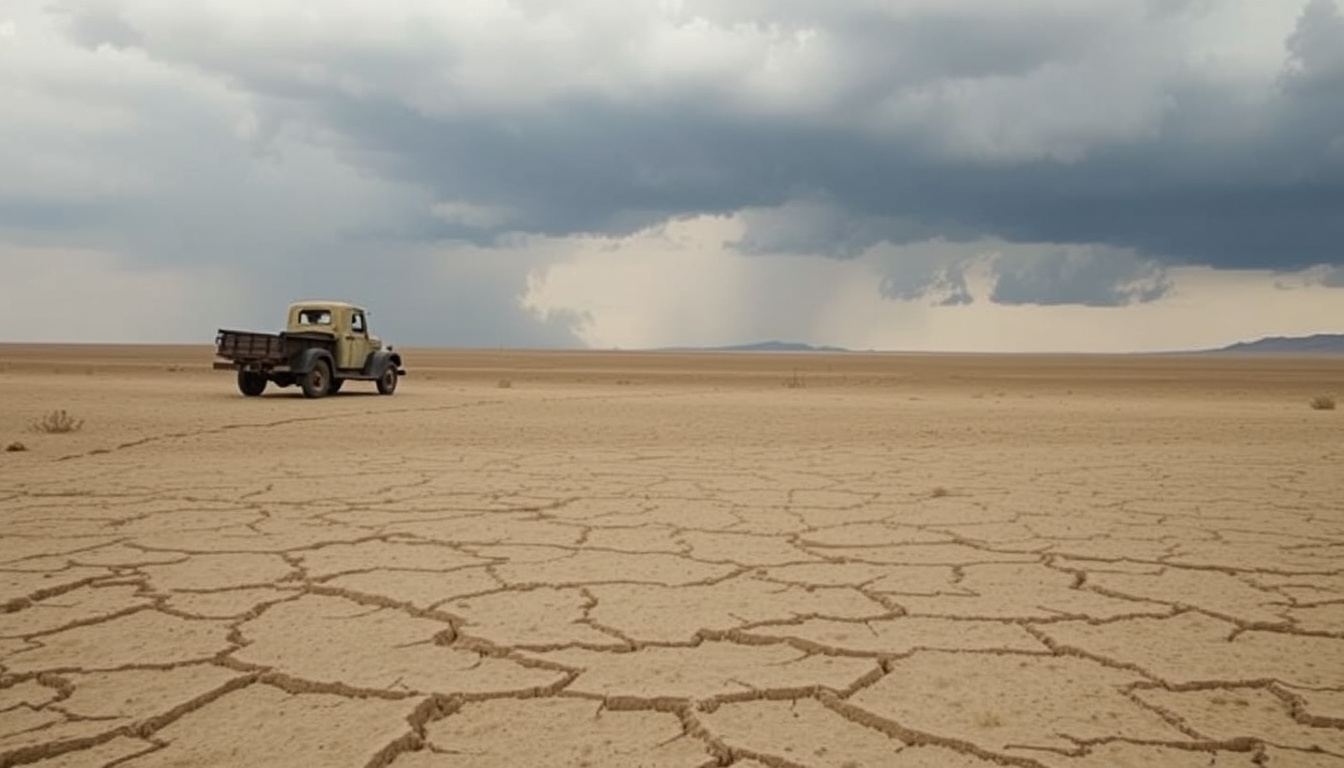
Few books have been burned in the United States, rejected by county governments, and simultaneously hailed as a literary masterpiece. John Steinbeck’s The Grapes of Wrath did all three within months of its publication in 1939, and the controversy has never fully faded. This guide unpacks the story, the censorship battles, and the unforgettable final lines that continue to spark debate.
Author: John Steinbeck ·
Publication year: 1939 ·
Awards: Pulitzer Prize for Fiction (1940) ·
Pages: 464 (standard edition) ·
Genre: Novel, Social Realism
Quick snapshot
- Steinbeck wrote the novel; it was published March 14, 1939 (Encyclopedia.com (reference publisher))
- Won the Pulitzer Prize for Fiction in 1940 (Wikipedia (community encyclopedia))
- Banned in Kern County, California, in August 1939 (NPR (public radio news))
- Exact number of copies burned or destroyed (GFCMSU Research (academic library))
- Whether the Kern County ban was largely symbolic (JSTOR Daily (academic publisher))
- Steinbeck’s personal view on the 1940 film adaptation (GFCMSU Research (academic library))
- 1939: Published; banned in Kern County and other cities (GFCMSU Research (academic library))
- 1940: Wins Pulitzer; film released (Wikipedia (community encyclopedia))
- 1941: Kern County ban rescinded (JSTOR Daily (academic publisher))
- Still appears on American Library Association’s challenged lists (HISTORY (media outlet))
- Ongoing relevance of labor and migrant themes in policy debates (HISTORY (media outlet))
Five key details at a glance, one pattern: Steinbeck’s novel remains a lightning rod for cultural and political collisions.
| Label | Value |
|---|---|
| Author | John Steinbeck |
| Published | 1939 |
| Awards | Pulitzer Prize for Fiction (1940) |
| Pages | 464 (hardcover) |
| Genre | Novel, Social Realism |
| Setting | Oklahoma to California (Dust Bowl) |
What is The Grapes of Wrath story about?
Plot overview
- The Joad family, tenant farmers in Oklahoma, lose their land during the Dust Bowl and Great Depression.
- They travel Route 66 to California, seeking work and a better life.
- In California, they face exploitation, poverty, and shattered dreams.
The narrative follows Tom Joad, just released from prison, as he leads his family westward. Along the way they encounter migrant camps, police harassment, and the crushing machinery of industrial agriculture (Encyclopedia.com (reference publisher)).
Key characters
- Tom Joad – the protagonist, pragmatic and defiant.
- Ma Joad – the family’s emotional anchor.
- Jim Casy – a former preacher who becomes a labor organizer.
Each character embodies a facet of Steinbeck’s social commentary: the resilience of the poor and the corruption of institutional power (Wikipedia (community encyclopedia)).
Themes
- Economic injustice and the failure of the American Dream.
- Human dignity and solidarity among the dispossessed.
- Critique of capitalism and large-scale agriculture.
The implication: Steinbeck turned a regional crisis into a universal story about the human cost of unchecked economic forces.
What is the famous line from The Grapes of Wrath?
The “I’ll be there” line
- In the novel’s final scene, Rose of Sharon, after her baby is stillborn, offers her breast milk to a starving stranger.
- The line spoken is not a quotation from a single character but a collective, wordless act.
The last sentence of the book is: “She looked up and said, ‘Yes.’” (University of Virginia (academic library)).
Context and significance
- The closing image is often misremembered as “I’ll be there” – no such line appears.
- The scene symbolizes solidarity and resilience in the face of utter loss.
- It sparks ongoing debate about hope versus despair in the novel’s message.
The pattern: the misquoted line reveals how readers project their own longing for reassurance onto a book that offers none.
The novel’s most famous “line” – a silent act of nursing – is the one that gets misremembered. It suggests that what we need from literature often differs from what it actually delivers.
Why are grapes of wrath so controversial?
Political criticism
- Many observers, including the Associated Farmers of California, denounced the novel as “communist propaganda” (NEA (federal arts agency)).
- Steinbeck was accused of exaggerating conditions to promote socialist ideas.
- Some critics saw the book as an attack on capitalism and the American Dream.
Obscenity and vulgar language charges
- The novel uses coarse dialogue and sexual references that alarmed censors in the 1930s.
- The Buffalo, New York public library banned it in 1939 “on the grounds that vulgar words were used” (GFCMSU Research (academic library)).
- Similar complaints led to bans in Kansas City and other cities (HISTORY (media outlet)).
Reception by agricultural interests
- The Associated Farmers of California declared the book “a pack of lies” (NEA (federal arts agency)).
- One Kern County board member called it a “libel and lie” (NPR (public radio news)).
- Large growers feared the novel would inspire labor organizing among migrant workers.
The implication: the controversy wasn’t a side effect—it was central to Steinbeck’s aim of exposing a system he saw as exploitative.
Why did grapes of wrath get banned?
Censorship in Kern County
- On August 31, 1939, the Kern County Board of Supervisors voted 4 to 1 to ban the book from county libraries and schools (NPR (public radio news)).
- No other California county issued a ban, making Kern County’s action exceptional (JSTOR Daily (academic publisher)).
- The ban was rescinded in January 1941 after a change in board composition (JSTOR Daily (academic publisher)).
Challenges in school districts
- Beyond Kern County, school boards across the country removed the book from classrooms and libraries.
- The American Library Association has listed it among the most challenged books of the 20th and 21st centuries (HISTORY (media outlet)).
- International bans: Ireland banned the novel in 1953; a Turkish bookseller was prosecuted for selling it in 1973 (HISTORY (media outlet)).
Reasons cited for banning
- Vulgar language and sexual content were the most commonly listed reasons.
- Political subversion: the novel was seen as an indictment of the capitalist system.
- The title itself, drawn from “The Battle Hymn of the Republic,” was viewed as a radical call to action.
The pattern: each ban only increased the novel’s mystique and readership—a pattern that repeats itself in censorship history.
What is the last sentence of The Grapes of Wrath?
The final passage
- The novel ends with Rose of Sharon, after her baby’s stillbirth, nursing a starving man.
- The exact last sentence: “She looked up and said, ‘Yes.’” (University of Virginia (academic library)).
- The passage is one of the most debated in American literature.
Meaning and symbolism
- The act of nursing a stranger represents the ultimate act of giving.
- It signals that human connection and solidarity persist even in total deprivation.
- Critics argue about whether the ending is hopeful or bleak; the ambiguity is intentional.
The catch: the ending offers no resolution—only a gesture that asks the reader to decide what it means.
The last sentence is frequently misquoted as “I’ll be there.” That misquote has become cultural shorthand for a message the novel doesn’t actually make, revealing how audiences often soften Steinbeck’s unflinching realism.
Confirmed facts
- John Steinbeck wrote The Grapes of Wrath.
- Published in 1939 (Encyclopedia.com (reference publisher)).
- Won the Pulitzer Prize for Fiction in 1940 (Wikipedia (community encyclopedia)).
- Banned in Kern County, California (1939-1941) (NPR (public radio news)).
- The last line of the novel is “She looked up and said, ‘Yes.’” (University of Virginia (academic library)).
What’s unclear
- The exact number of copies burned or destroyed (GFCMSU Research (academic library)).
- Whether the Kern County ban was largely symbolic (JSTOR Daily (academic publisher)).
- Steinbeck’s personal view of the 1940 film adaptation.
- The full scope of international bans beyond Ireland and Turkey.
“The book is a lie, a libel and a lie.”
— Kern County Board of Supervisors member, as reported by NPR (public radio news)
“She looked up and said, ‘Yes.’”
— John Steinbeck, The Grapes of Wrath (final sentence), cited by University of Virginia (academic library)
“Steinbeck’s masterpiece is also one of the most frequently challenged books in American history.”
— University of Virginia exhibit, University of Virginia (academic library)
For readers today, Steinbeck’s unflinching portrait of injustice forces a choice: engage with uncomfortable truths or risk forgetting the human cost of economic dislocation. The novel remains a litmus test for how a society handles uncomfortable truths.
clairebearian.medium.com, muse.jhu.edu, study.com, bbark.deepforestproductions.com
Frequently asked questions
Who is the main character in The Grapes of Wrath?
The protagonist is Tom Joad, a young man recently released from prison who becomes the moral center of the Joad family’s journey.
What is the setting of The Grapes of Wrath?
It begins in Oklahoma during the Dust Bowl and follows the Joads along Route 66 to California, where they confront exploitation and poverty in migrant labor camps.
Is The Grapes of Wrath based on a true story?
Steinbeck drew on firsthand accounts of Dust Bowl migrants, particularly through articles he wrote for the San Francisco News in the 1930s. The characters are fictional, but the conditions are historically grounded.
What does the title ‘The Grapes of Wrath’ mean?
It comes from Julia Ward Howe’s “The Battle Hymn of the Republic” — “He is trampling out the vintage where the grapes of wrath are stored.” It suggests divine judgment and the righteous anger of the oppressed.
Did The Grapes of Wrath win any awards?
Yes, it won the Pulitzer Prize for Fiction in 1940 and helped John Steinbeck earn the Nobel Prize in Literature in 1962.
How can I cite The Grapes of Wrath?
Common citation format (MLA): Steinbeck, John. The Grapes of Wrath. Viking Press, 1939. Check your institution’s preferred style guide.
What other works did John Steinbeck write?
Steinbeck wrote Of Mice and Men, East of Eden, Cannery Row, and The Pearl, among others. He remains a cornerstone of 20th-century American literature.