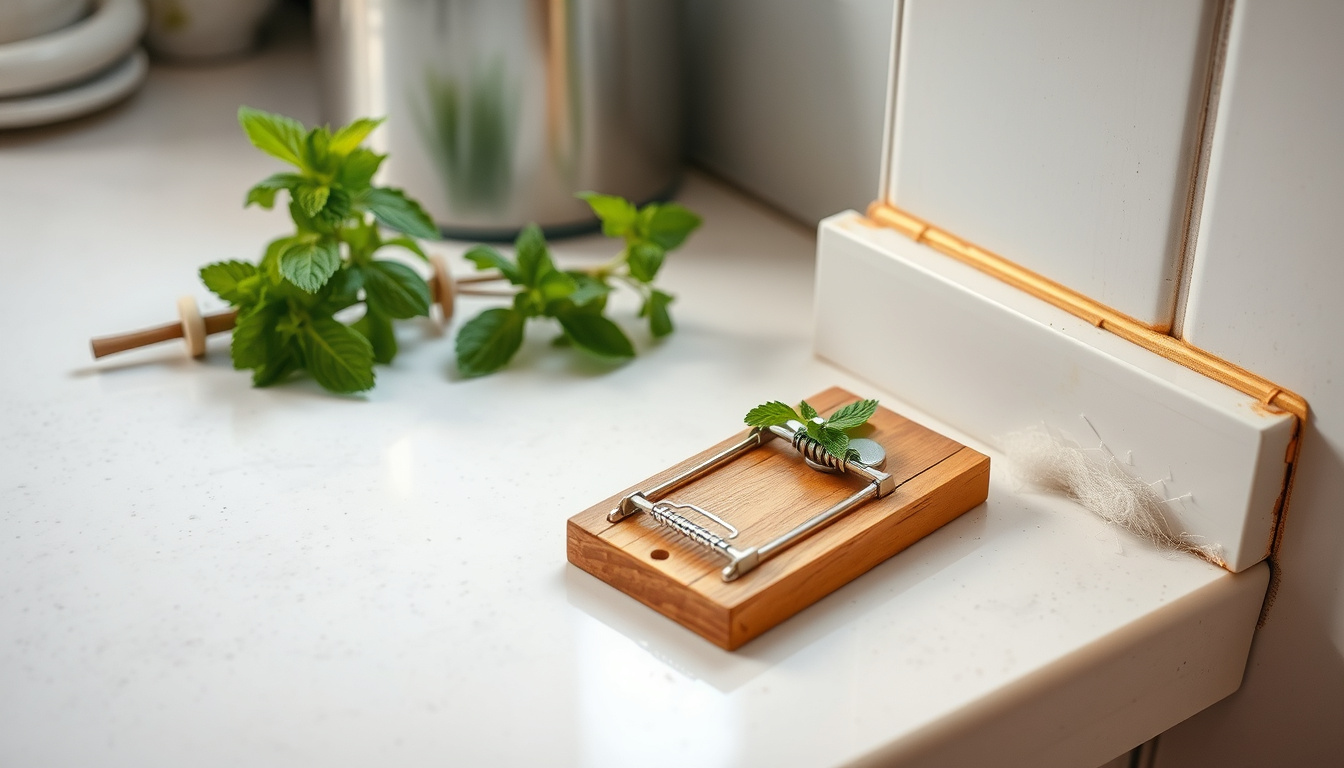
Few things are as unsettling as hearing scratching in the walls at night. Mice can squeeze through gaps as small as 6 mm, according to Whites Agri (Irish pest control specialists), so even tiny holes can become doorways. This guide lays out a dual-action approach: sealing your home against future visitors while using fast, humane traps to handle the current problem—backed by expert advice from Irish sources.
Minimum gap mice can enter: 6 mm ·
Common natural repellent (unproven): Peppermint oil ·
Permanent exclusion material: Steel wool or cement
Quick snapshot
- Mice enter through gaps as small as 6 mm (Whites Agri)
- Peppermint oil is widely used as a natural repellent but is unproven (Irish Examiner)
- Snap traps are effective when placed correctly (Woodie’s)
- Sealing entry points with steel wool or cement prevents re-infestation (Whites Agri)
- Effectiveness of ultrasonic devices is debated
- Whether mice will crawl on sleeping people is anecdotal
- The 5-day rule is not universally accepted
- Droppings, gnaw marks, and scratching sounds indicate a problem (Irish Pest Control Association)
- Mice can chew through electrical cables, causing fire risks (Irish Pest Control Association)
- Seeing two mice often means a hidden nest (Irish Examiner)
- Ongoing monitoring and regular inspections (Rentokil Ireland)
- Trim vegetation and keep grass short (Rentokil Ireland)
- Store food in airtight containers (Rentokil Ireland)
Five key facts summarise what you need to know about mice and how to tackle them.
| Fact | Value |
|---|---|
| Minimum gap mice can enter | 6 mm |
| Average droppings per mouse per day | 60 |
| Most active time | Night (nocturnal) |
| Common natural repellent | Peppermint oil |
| Permanent exclusion material | Steel wool or cement |
What is the fastest way to get rid of mice?
Snap traps and bait stations
- Snap traps kill mice instantly when placed correctly. Use peanut butter as bait and position traps along walls where activity is seen (Woodie’s (Irish DIY retailer)).
- Bait stations can reduce population in 24–48 hours, but they require careful placement to avoid non-target animals.
For a quick, humane option, live-catch traps are available. Captured mice must be released at least 500 m from the house, and the trap should be checked daily while wearing gloves (Irish Examiner (home and garden guide)).
Ultrasonic devices and their effectiveness
- Ultrasonic repellents are often marketed as a fast solution, but evidence of their effectiveness is mixed. The Irish Examiner (home and garden guide) notes that natural repellents like peppermint oil are also unproven.
The catch: no electronic plug-in device has been shown to reliably clear an active infestation. Mechanical traps and exclusion remain the gold standard.
Professional pest control for rapid results
- For large infestations, professional extermination is the fastest option. The Irish Pest Control Association (IPCA, national regulatory body) warns that mice are a public health threat because they contaminate surfaces with droppings and urine.
Professionals use a combination of traps, baits, and exclusion methods, and they can access commercial-grade products not available to the public. The electronic Irish Statute Book (national legislation) places a duty on local authorities to take action for the destruction of rats or mice where possible.
Irish homeowners who ignore a mouse problem face not only property damage but also legal obligations. The IPCA advises that glue boards are illegal in Ireland (Irish Pest Control Association), so always choose legal, humane methods.
What smells do mice hate?
Peppermint oil as a natural repellent
- Peppermint oil is widely cited as a mouse repellent. The Irish Examiner (home and garden guide) describes it as a common but unproven remedy. Some products can be sprayed lightly over floors and skirting before sealing areas back up (Irish Examiner (pest control guide)).
Ammonia and vinegar deterrents
- Ammonia-soaked cotton balls may deter mice, and vinegar is often used as a cleaning agent to remove scent trails. However, the Irish Examiner (home and garden guide) notes that natural repellents such as cayenne pepper, chilli powder, and cloves are also unproven.
Commercial scent-based repellents
- Commercial sprays and granules often contain peppermint or other essential oils. Their effectiveness is inconsistent, and they should never replace proper sealing and sanitation.
The trade-off: relying on smells alone will not eliminate an infestation. They work best as a temporary deterrent alongside physical exclusion.
Does 2 mice mean an infestation?
Signs of a larger infestation
- Mice breed rapidly; a pair can produce dozens of offspring in months. The Irish Pest Control Association (IPCA, national pest control authority) states that mice are a public health threat because they leave droppings and urine on food-preparation surfaces.
- Seeing two mice often indicates a hidden nest. Look for droppings, gnaw marks, and scratching sounds, especially at night when mice are most active.
Reproduction rates of house mice
- A female mouse can have 5–10 litters per year, each with 5–6 pups. Within a few months, a single pair can become a full-blown infestation.
When to call a professional
- If you see droppings in multiple rooms, hear scratching in walls, or find chewed wiring, it’s time to call a licensed pest control operator. The electronic Irish Statute Book (national legislation) gives local authorities the power to enforce rodent destruction.
What this means: two mice are rarely just two. Act fast before the problem escalates.
How do you draw a mouse out of hiding?
Using food baits like peanut butter
- Peanut butter is a highly effective bait because of its strong smell. Place traps along walls, perpendicular to the baseboard, where mice travel (Woodie’s (Irish DIY retailer)).
Reducing hiding spots and clutter
- Remove clutter, vacuum floors and recesses regularly, and wipe counters nightly. The Irish Examiner (home and garden guide) recommends keeping dry goods, bread, fruit, pet food, and condiments in sealed containers.
Setting traps along walls and runways
- Mice travel along walls, so place traps in those runways. Check traps daily and wear gloves when handling (Irish Examiner (pest control guide)).
The pattern: draw mice out by removing all other food sources, then use bait they can’t resist. Combine this with exclusion to prevent re-entry.
What gets rid of mice permanently?
Sealing all entry points with durable materials
- Steel wool, cement, and wire mesh prevent re-entry. The Whites Agri (Irish pest control specialists) guide recommends sealing gaps larger than 6 mm. Rentokil Ireland (professional pest control) advises installing galvanised wire mesh on airbricks and vents.
- The Irish Examiner (home and garden guide) suggests sealing gaps around plumbing, drainage, and electrical outlets with expanding foam.
Integrated pest management (IPM) approach
- IPM combines exclusion, sanitation, and trapping. Rentokil Ireland (professional pest control) recommends trimming vegetation, keeping grass short, cleaning spills, and emptying bins regularly.
Ongoing monitoring and maintenance
- Regular inspections ensure long-term control. Check for new gaps, droppings, or signs of gnawing. The Irish Pest Control Association (IPCA, national pest control authority) notes that mice chew hard objects to wear down their continuously growing incisor teeth, so they will test new openings.
Confirmed facts vs. what’s unclear
Confirmed facts
- Mice can enter through 6 mm gaps (Whites Agri)
- Peppermint oil is a commonly used repellent, though unproven (Irish Examiner)
- Snap traps are effective when placed correctly (Woodie’s)
- Sealing entry points prevents re-infestation (Whites Agri)
What’s unclear
- Effectiveness of ultrasonic devices is debated
- Whether mice will crawl on sleeping people is anecdotal
- The 5-day rule is not universally accepted
Expert perspectives
Mice are a public health threat because they leave droppings and urine on food-preparation surfaces and in larders.
Irish Pest Control Association (IPCA, national regulatory body)
Trim vegetation, keep grass short, clean spills and dirty dishes, and empty bins regularly. Store food in airtight plastic or metal containers.
Rentokil Ireland (professional pest control)
These two voices—one from the national pest control body, one from a leading service provider—underline the same message: prevention through sanitation and exclusion is the only lasting solution.
blog.phonebook.ie, completepestcontrol.ie, exterminate.ie, rentokil.ie, exterminate.ie, irishexaminer.com
Frequently asked questions
What is the 5 day rule for mice?
The 5-day rule is a guideline suggesting that if you still see mouse activity after five days of trapping, it’s time to reassess your approach. However, it is not universally accepted, and some experts recommend a longer observation period.
Will mice crawl on sleeping people?
Anecdotal reports suggest that mice may crawl on sleeping people, especially if they are hungry or seeking warmth. However, this is rare and not well documented. The best prevention is to keep mice out of the bedroom entirely through sealing and sanitation.
How do you draw a mouse out of hiding?
Use strong-smelling baits like peanut butter placed in traps along walls. Remove other food sources so the bait becomes irresistible. Check traps daily and wear gloves (Woodie’s).
Does 2 mice mean an infestation?
Yes, it often does. Mice breed rapidly, and a pair can produce dozens of offspring in a few months. Droppings, gnaw marks, and scratching sounds indicate a larger problem (Irish Pest Control Association).
What gets rid of mice permanently?
Seal all entry points with steel wool, cement, or wire mesh. Combine with integrated pest management: remove food sources, trim vegetation, and monitor regularly. Rentokil Ireland recommends professional help for large infestations.
How to get rid of mice with sound?
Ultrasonic devices emit high-frequency sounds meant to repel mice. Evidence of their effectiveness is mixed, and they are not a reliable standalone solution. Physical exclusion and trapping remain the most dependable methods.
How to get rid of mice with vinegar?
Vinegar can be used as a cleaning agent to remove mouse scent trails, which may help deter them from returning. However, it is not a repellent or elimination method. Always combine vinegar cleaning with sealing and trapping.
Related reading
- Dining Table Set for 4: Top Retailers in Ireland Compared – practical home tips for Irish readers.
- Best Home Owners Insurance Company in Ireland: Compare 2026 – protect your home against damage, including rodent-related issues.
For Irish homeowners, the choice is clear: seal every gap, eliminate food sources, and use proven traps. Skip the quick fixes that don’t work—and if the problem persists, the IPCA and local authorities are there to help. Act now, or the mice will make the decision for you.